Now taking calls — fast callback for urgent roof damage · (805) 463-1431
Emergency Roof Tarping in Simi Valley, CA
Simi Valley, CA

Emergency Roofing Services Simi Valley, CA

Water coming through your roof? Call now and we'll connect you with a local licensed pro to tarp it fast.

Emergency roofing services Simi Valley, CA start with a secured tarp that stops water from getting into your home. We connect you with a local licensed pro who can cover the opening fast.

Don't wait for the next storm to find out how bad it is. Call (805) 463-1431 and get the opening covered.

Roof Tarping Service for Leaking and Open Roofs

A roof tarping service covers the damaged part of your roof with a reinforced poly tarp so no more water gets in. It is a temporary dry-in that holds until the roof is dry and a permanent repair can be done.

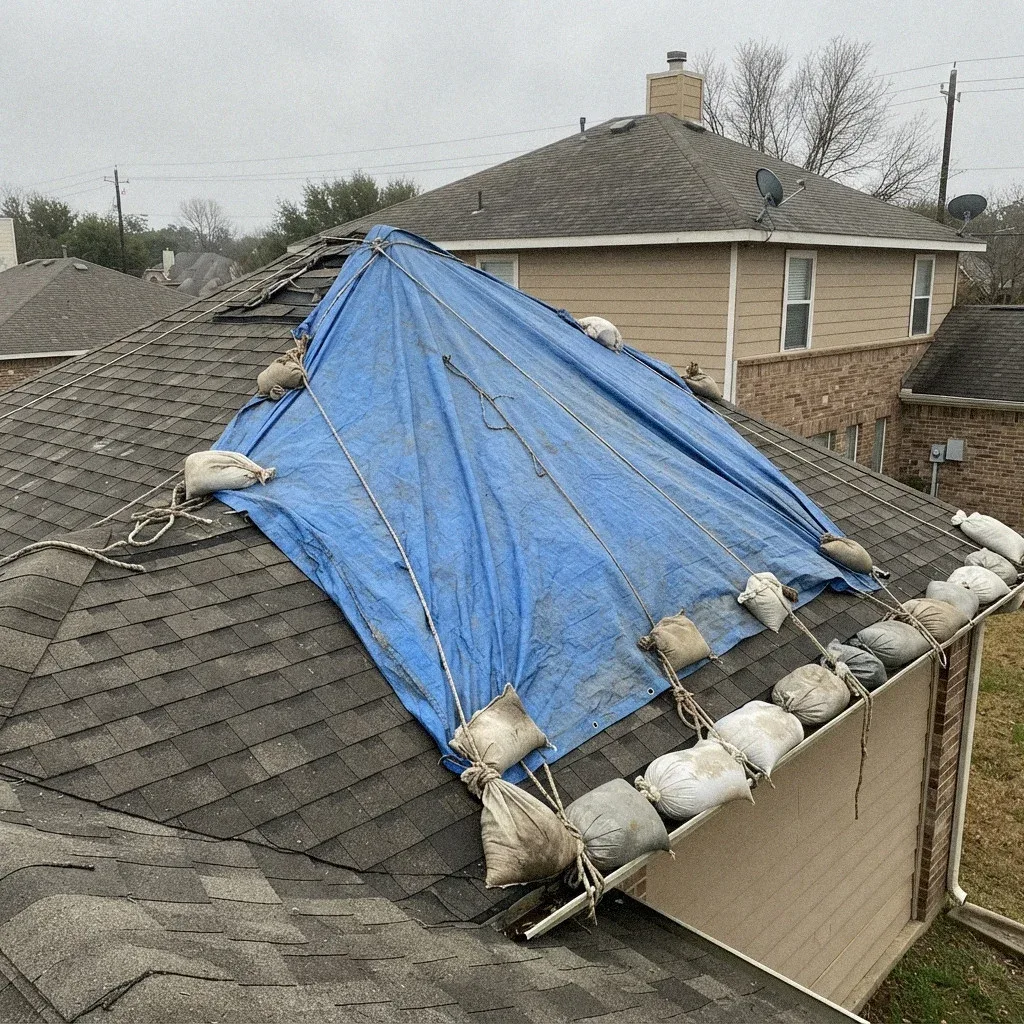
The tarp is stretched past the opening onto sound roofing on every side. Furring strips or battens are driven into the framing, and a ridge lap keeps water from running underneath.

Emergency Roof Tarp Service Day or Night

An emergency roof tarp service means a licensed pro comes out the same day once your roof is actively letting water in. Calls placed in the morning are typically tarped before evening, and after-hours calls get the same urgency.

Tarping can happen in active rain and after dark when a leak can't wait. Wet, low-light work goes slower and more carefully, but the job still gets done that night.

Emergency Tarping That Holds Through the Storm

Emergency tarping holds when it is anchored into the roof framing, not just weighted down. A hardware-store tarp rarely survives a night of valley wind off the hills above Wood Ranch or Tapo Canyon.

The right setup depends on your roof. On tile, battens hold the tarp clear of broken edges, on composition shingle, furring strips anchor into solid framing, and sandbags add hold on lower edges and steep hillside pitches.
Warning Signs

Signs You May Need Emergency Roof Tarping

Water Coming In Now

Water is dripping or running through a ceiling, often after wind loosens tile or shingle. Call once the drip turns into a steady stream.

A Spreading Ceiling Stain

A dark ring growing across a bedroom or hallway ceiling means water has found a path through the tile and underlayment. The tarp stops the source, and it needs to go on before the next rain.

Decking Open to the Sky

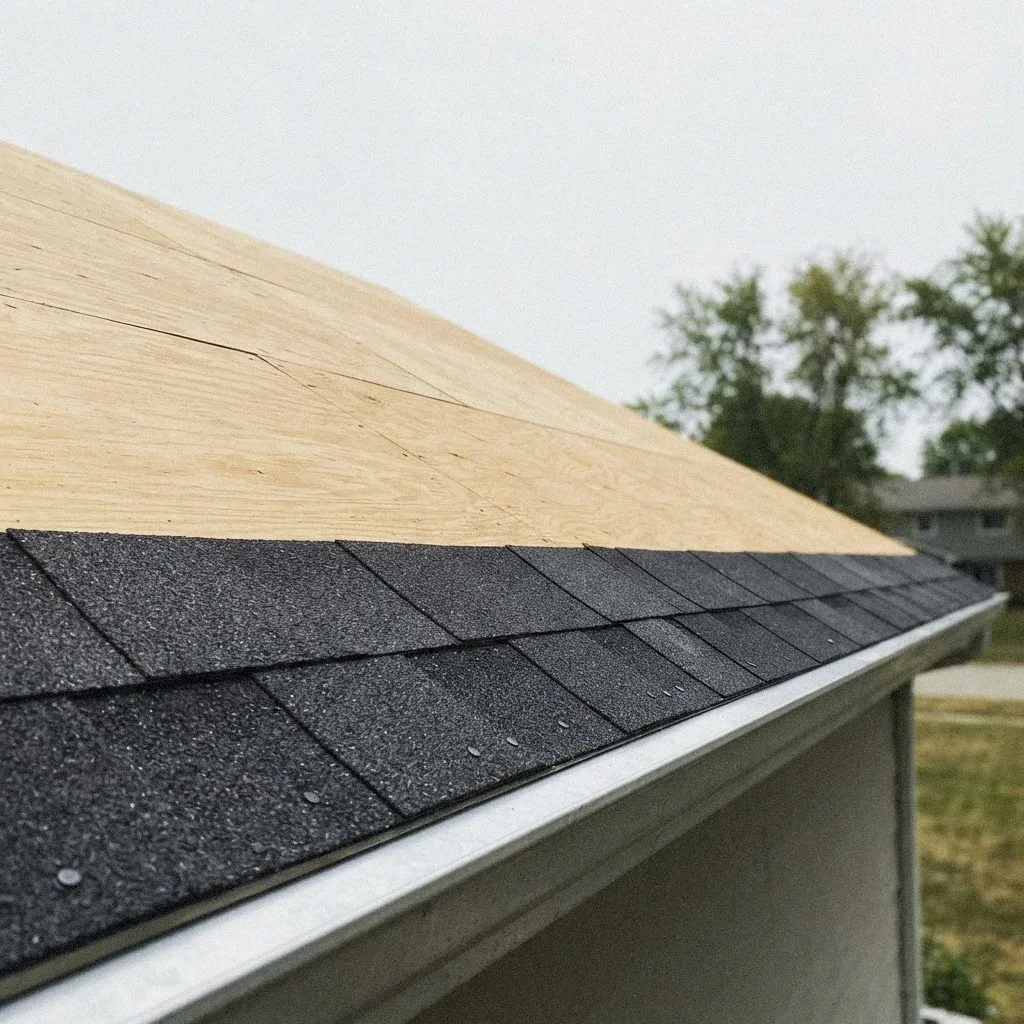
A missing ridge cap or loose tile can leave bare plywood decking uncovered. Exposed decking soaks up moisture every hour it sits open, so cover it first.

How It Works

Our Emergency Roof Tarping Process

Call Us About the Roof

Tell us your roof type, tile or shingle, and where the opening is. That helps the pro bring the right tarp, furring strips and sandbags on the first trip.

Check the Opening

The pro checks how far water has tracked under the roofing and whether the decking is solid enough to anchor into.

Secure the Tarp

A reinforced poly tarp goes beyond the damage onto sound roofing, fastened to framing with a ridge lap. Sandbags go on lower edges.

Plan the Permanent Fix

Before leaving, you hear what was found, how long the tarp should last, and what the permanent repair will involve.

Why this matters

Most Simi Valley homes have tile over decking installed decades ago, and that decking wasn't built to sit wet. Anchoring the tarp into framing keeps a temporary fix from turning into a second emergency call.

Licensing & Local Standards

Code-Compliant Emergency Roof Tarping in California

A Stopgap, Not a Finished Repair

A reinforced poly tarp goes over the open section as a temporary dry-in that holds through the next round of weather. Material, anchoring and overlap are chosen to survive wind and rain until the licensed pros we connect you with can return for a permanent fix.

Matched to Your Roof Type

On tile, battens hold the tarp clear of broken tile edges so movement doesn't cut through it. On composition shingle, furring strips anchor the edges into solid framing instead of loose decking.

Extra Hold on Hillside Lots

Sandbags along the lower edge add hold on the steep pitches common on hillside lots above places like Bridle Path.

Plain Numbers

Emergency Roof Tarping: Estimated Cost by Job Size

Most emergency roof tarping jobs in Simi Valley fall inside these ranges. The inspection costs nothing and the exact figure is written down before any work starts.

Emergency Roof Tarping — estimated ranges, per job
Roof TypeSlope and AccessFire Exposure
A crew that only reroofs sees fewer surprises than one that splits time between gutters, fences, and everything else. Repetition builds pattern recognition: the same failure points show up job after job, so a specialist catches them before they become a mid-project change order. Clears ash and leaf litter from gutters and valleys, no repairs made an estimated $245–$1330
General handymen and dedicated roofing crews are not interchangeable. One juggles many trades and treats a roof as one task among several. The other sees nothing but roofs, all week, every week, which shapes how fast problems get spotted and how cleanly they get fixed. Removes old tile, reuses sound pieces, replaces cracked ones only an estimated $350–$1820
A low bid that skips proper flashing detail or attic ventilation can look attractive on paper and cost far more once the first hard rain finds the gap. Comparing quotes on price alone hides the difference between a shortcut and a finished job. Reroof with new ridge caps and valleys, gutters left untouched an estimated $455–$2520
Tile and shingle roofs fail in different, predictable ways after enough years of sun and wind. A crew that handles nothing but roofing recognizes those patterns quickly, which tends to mean fewer change orders once the old material comes off. Full reroof plus new gutters, downspouts rerouted away from foundation an estimated $630–$3640

Cost tail: a deposit that covers most of the job upfront leaves you with little leverage if work stalls or the crew doesn't return. Tie payments to finished stages instead, and hold back real money until the roof passes its final look-over, not just a phone call saying it's done.

Questions & Answers

Frequently Asked Questions

How fast can someone tarp my roof today?

Same-day response is standard once your roof is actively letting water in. A call placed in the morning is typically tarped before evening, and after-hours calls get the same urgency.

How does the tarp stay on my roof?

Furring strips or battens are driven through the tarp into solid roof framing, so wind off the hills can't work it loose. Sandbags add hold on lower edges or flatter sections, and a ridge lap keeps water from running under the top edge.

How long will a temporary tarp last?

A correctly anchored tarp is meant to last for weeks, through more than one storm system in the wetter months from roughly November into spring. It is not a long-term roof surface, and Santa Ana winds can loosen an edge, so get a follow-up check before the next rain.

What happens after my roof is tarped?

The tarp only stops new water from reaching exposed decking. Once the roof is dry, the real leak source, such as a broken tile, failed flashing or worn underlayment, still has to be traced and sealed permanently.

Will someone tarp my roof at night or in rain?

Yes. Tarping happens in active rain and after dark when a leak can't wait. The work goes slower because wet tile or shingle is a real hazard, but the job still gets done that night.

How much does emergency roof tarping cost in Simi Valley?

Emergency roof tarping in this area typically falls between an estimated $350–$1400 per job. The free inspection is what turns that range into an exact number, and you see it in writing first, with the per-sheet rate for any bad decking on it.

Background

Read Up on Emergency Roof Tarping

Every property here falls within some flood zone by the city's own description, which puts drainage and gutters on equal footing with the roof surface itself. A roof that sheds water perfectly but empties into a clogged or undersized gutter system still lets water find its way into the house.

Architectural vs Three-Tab Shingles in Simi Valley
Materials & Types

Laminated vs Three-Tab Shingles, Compared

Both shingle types cover a Simi Valley roof, but they part ways in bundle weight, layers, and how much wind they can take. Here is what actually separates architectural from three-tab before you call a roofer.

Read article
Cedar Shake Roofs in Simi Valley: What to Know
Materials & Types

Owning a Cedar Shake Roof in Simi Valley

Cedar shake demands more attention than a tile roof does. Here's what cupping, splitting, keyways, and spaced sheathing mean for a Simi Valley home, and when repair no longer holds up.

Read article
Roof Color Guide for Simi Valley Homes
Materials & Types

Picking a Roof Color for Your Simi Valley Street

Roof color is a decision made on a sample card and then lived with from the sidewalk for twenty years. Undertone, contrast, and the houses either side of yours matter considerably more than the name printed on the swatch.

Read article
Get Started Today

Ready For The Next Step

This page covers what the service generally involves, but no two Simi Valley roofs wear the same way. A clay tile roof in Wood Ranch ages differently than a shingle roof near Sinaloa Lake, even under the same Santa Ana winds. Framing and past repairs matter too. The clearest next step is a direct look from the licensed pros we connect you with, who can tell you whether this service fits your roof or something else does.

Call (805) 463-1431
Free inspections & same-day service available
Call (805) 463-1431 Schedule Online