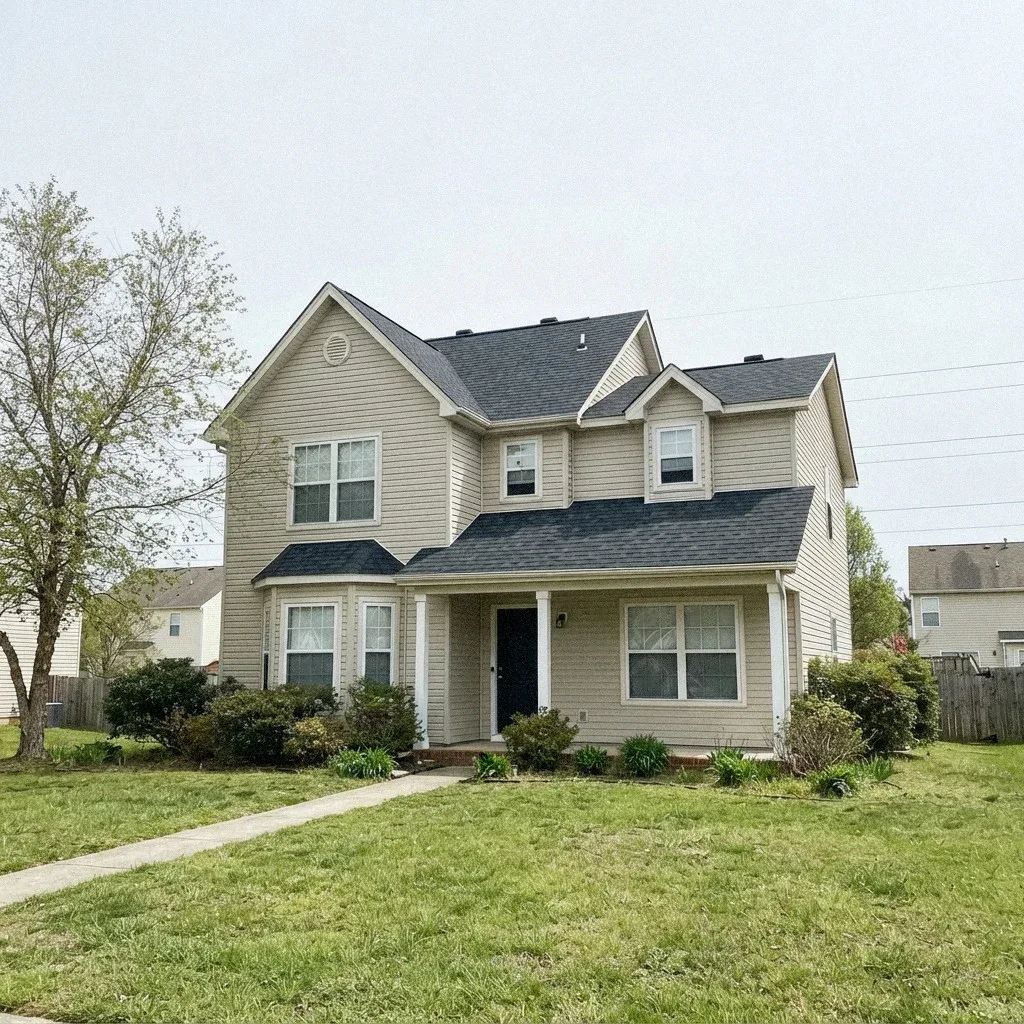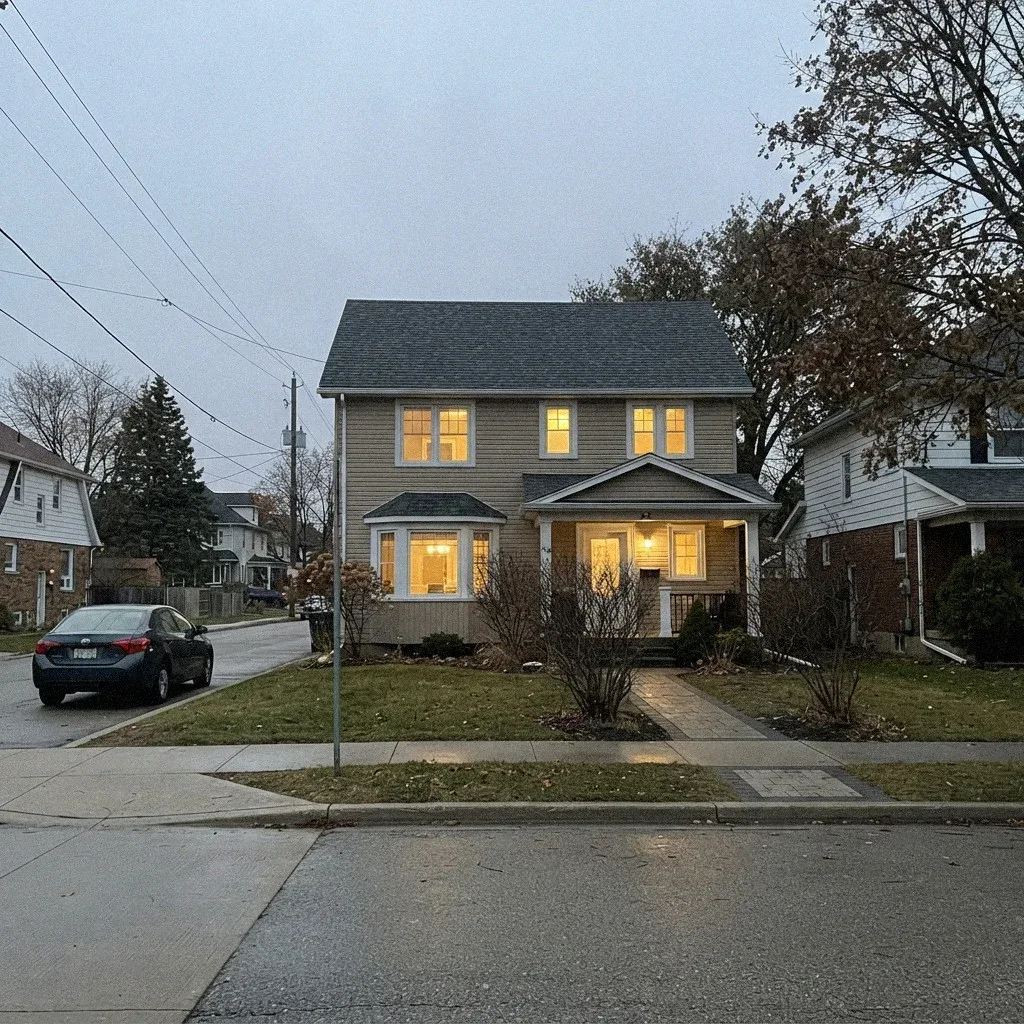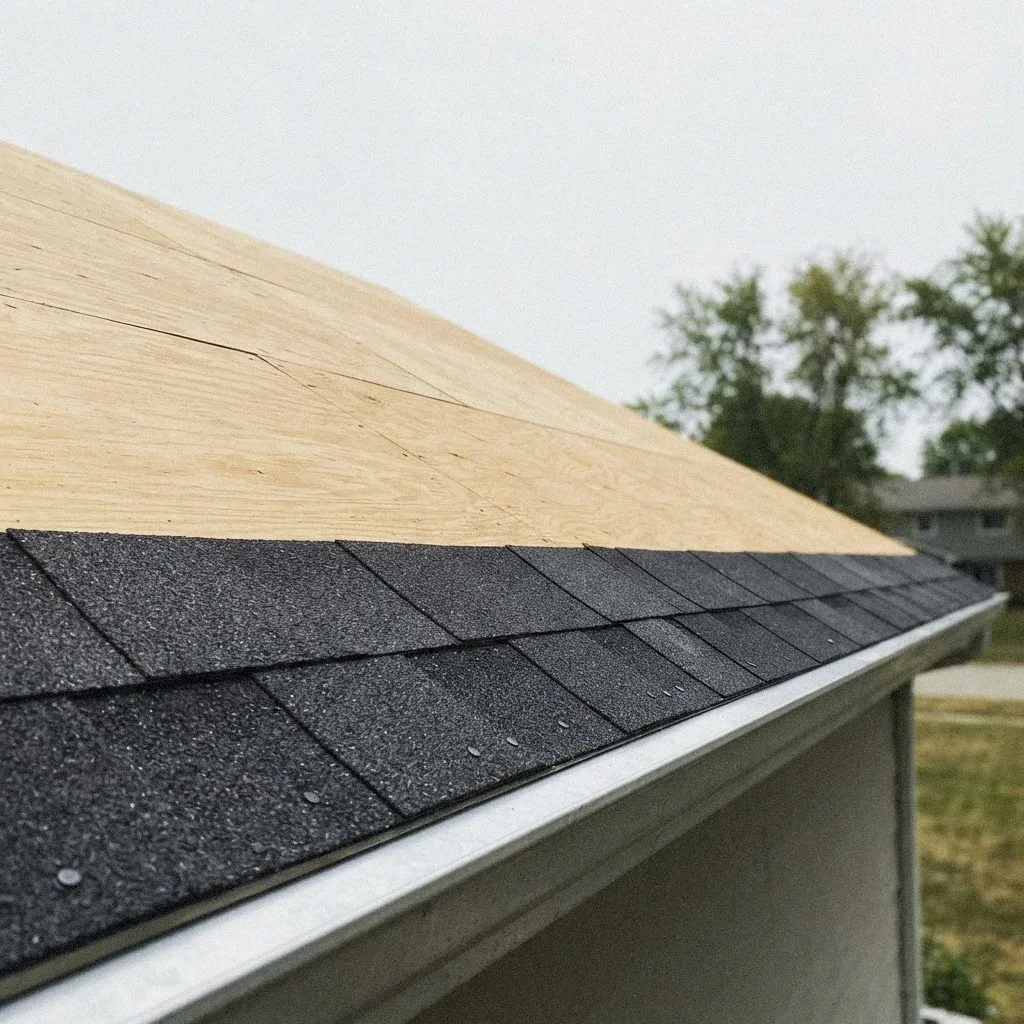
From the street, most Simi Valley homes wear one of two shingle styles, and the split matters more than it looks. Walk a block near Rancho Simi Community Park and you will spot both: flat, uniform strips on some roofs, a thicker, textured surface on others. That difference comes down to how the shingle is built, not just how it is colored, and it shapes cost, wind performance, and how long the manufacturer stands behind it.
What Three-Tab Actually Is
Three-tab is a single fiberglass mat coated in asphalt and granules, then slotted into three tabs so one strip mimics three separate shingles once installed. Every tab is the same thickness because there is only one layer. That flat profile is why three-tab roofs read as smooth and uniform from the ground, whether you are looking at a tract home off Sycamore Road or a rental near Los Angeles Avenue.
What Laminated Shingles Add
A laminated shingle, also called a dimensional shingle, glues a second fiberglass mat cutout onto the base layer before the granules go down. That second piece does not run the full width of the shingle, so it builds a bulkier, layered strip rather than a flat one. Homeowners in Wood Ranch and Bridle Path often pick this style specifically for the heavier, textured look it gives a roof.
Bundle Weight Per Square
One square, meaning 100 square feet of finished roof, weighs noticeably more in laminated form than in three-tab. That double-layer lamination is why: two fiberglass mat layers bonded together, versus one flat layer punched with cutouts to fake a tab pattern. Crews on a Simi Valley re-roof feel that bundle weight difference on the ladder before they ever open a bundle. Heavier isn't automatically better, but it's the physical reason the two products behave differently once nailed into the nailing zone and exposed to Santa Ana wind gusts.
Wind Rating Differences
Wind rating comes from manufacturer testing, not from the shingle style alone, so a poorly rated laminated shingle can still underperform a well-rated three-tab. That said, the double-layer lamination generally gives architectural shingles a structural edge, which matters on exposed hillside lots near Santa Susana Knolls where Santa Ana winds push harder than they do down in the flatter parts of the valley.
The Nailing Zone Explained
Every shingle carries a printed nailing zone, a horizontal band the manufacturer marks for nail placement. Nail above or below that zone and the shingle can lift in wind even if the product itself is rated well. This detail matters just as much on a three-tab roof near Tapo Canyon as it does on a laminated roof in Wood Ranch, because the zone is about installation accuracy, not shingle type.
Reading The Shadow Line
The shadow line is the shaded strip that forms where a laminated shingle's second layer sits raised above the base, catching light differently than the flat surface around it. From the street this reads as texture and depth. Three-tab has no shadow line because there is nothing raised to cast one; the whole surface sits at one level, which is part of why it looks flatter from Los Angeles Avenue.
Starter Course And Ridge Cap
Both shingle types start the same way at the eaves, with a starter course sealing the lowest edge against wind-driven rain before the first full course goes down. At the roof's peak, ridge cap shingles finish the job, capping the seam where two slopes meet. Skipping either step leaves an opening for water no matter which shingle style covers the rest of the roof.
Stated Warranty Length
Manufacturers back architectural shingles with longer stated limited warranties than three-tab, tied to the extra layer and the heavier total asphalt content in each shingle. Three-tab warranties run shorter, reflecting the simpler single-layer build. A homeowner near Rancho Sierra Vista comparing quotes should read the stated warranty length on the product itself rather than assume it based on price alone.
Why Three-Tab Still Sells
Three-tab has not disappeared because it is still the cheaper shingle per square, and that keeps it in use on structures where the dimensional look matters less. A detached garage in Wood Ranch or an older rental property near Tapo Canyon can carry a serviceable three-tab roof for a fraction of what a full laminated re-roof costs, which is reason enough for some owners to stick with it.
Matching Shingles To A Roof
Choosing between the two comes down to what the existing roof structure can carry, what the budget allows, and how much the shadow line and added thickness matter to the owner. A hillside home near Bridle Path with a heavier frame may take a laminated roof without issue, while a lighter structure or a strict budget can make three-tab the more practical fit.
Getting An Informed Opinion
Before settling on either style, it helps to have the roof looked at directly rather than guessing from a sample chip. The licensed pros we connect you with can walk a Simi Valley roof, check what it is already carrying, and explain how each shingle option would actually sit on that specific structure, from the eaves near Arroyo Simi to the ridge line above it.
Dealing with this in your home?
Simi Valley roofs face a different clock than shaded lots elsewhere. Tract homes off Erringer Road and near Rancho Simi Community Park sit exposed under direct sun for decades, with Santa Ana winds testing every loose tile between First Street and the Santa Susana foothills. Red flag warning days push that timeline faster than most homeowners expect.