Roof Problems
Reading a Ceiling Stain in Simi Valley
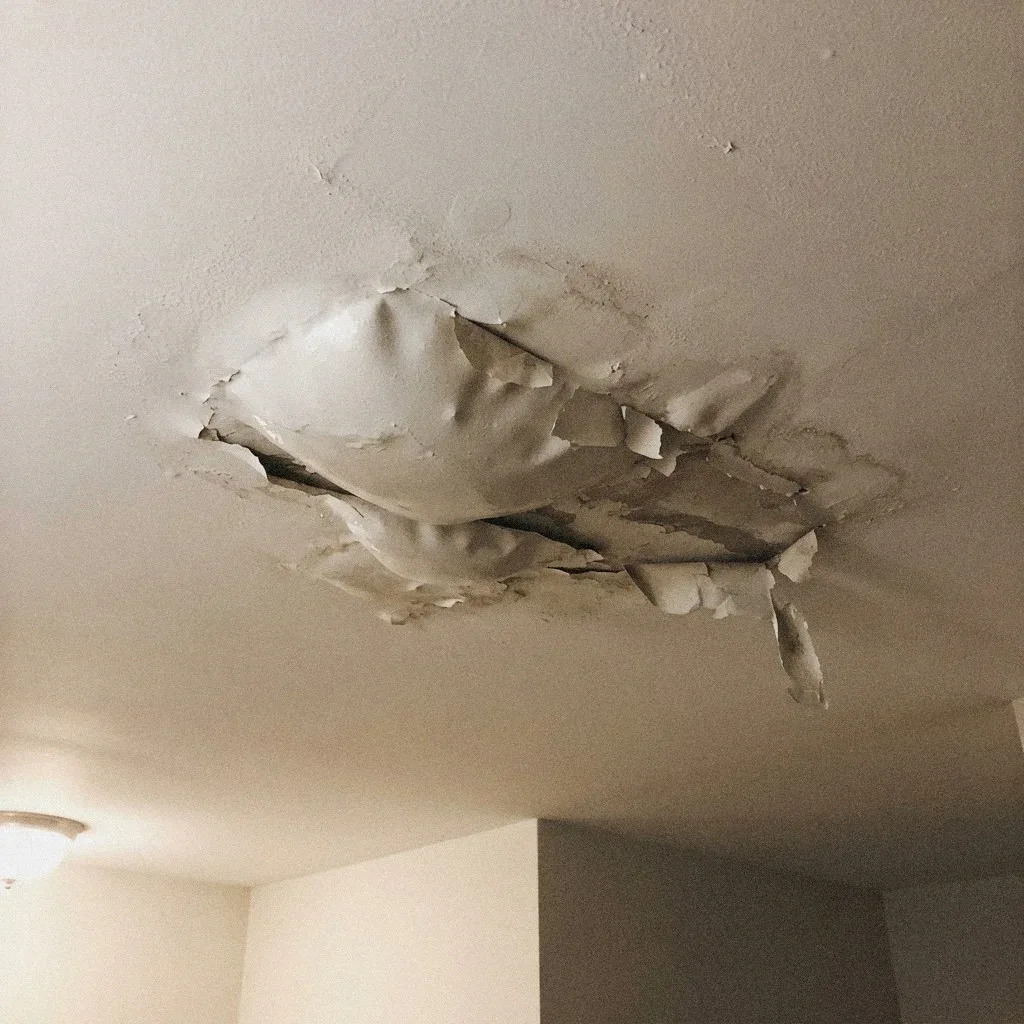
A ceiling stain in Simi Valley carries clues before anyone climbs into the attic. Color, ring pattern, and whether it is spreading say more than a guess.
Read article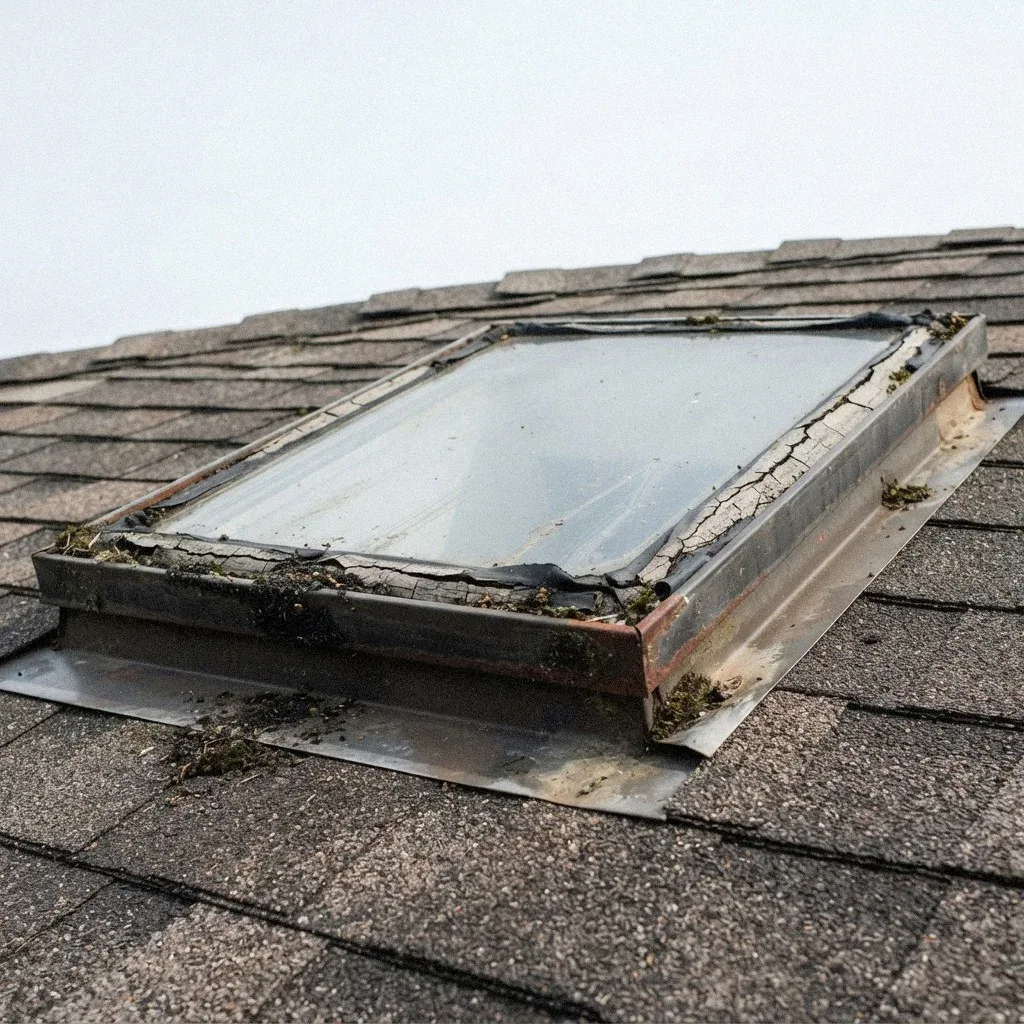
Know if it's a leak or just condensation before you pay for either.
Skylight Repair & Replacement in Simi Valley, CA is not one job with one price, whether you're in Bridle Path, Big Sky, Downtown Simi Valley, or elsewhere around Simi Valley, and the work is matched to the building and to the way water actually moves through it here. That is what separates a lasting repair from a temporary one.
For a private home, residential roofing sets out what a visit involves. For a shop, office, or tenanted building, commercial roofing is the right starting point.
A brown ring at the corner of a skylight frame after a Simi Valley downpour is worth a close look before anyone assumes the worst. Sometimes it traces to a curb-mounted unit's flashing apron pulling loose from years of valley heat cycling the metal. Other times the stain is old, left from a storm that has already been sealed. Either way, the source needs confirming before a repair gets ordered on a house near Wood Ranch or Big Sky.
Fogged glass between the panes on a deck-mounted skylight is a failed gasket on the sealed unit itself, not a roof problem. It shows up as a cloudy or milky look that never clears, even on a dry Santa Susana afternoon. No amount of resealing the curb fixes it, because the moisture is trapped inside the glazing, not coming through the roof deck. That points straight to unit replacement, not a flashing repair.
A skylight's flashing kit and rubber seals age on their own clock, driven by direct sun exposure rather than by rain. On a tract home in Bridle Path or Santa Susana Knolls, twenty summers of Santa Ana wind and baking heat can crack a gasket long before the tile or comp shingle nearby shows any wear. That mismatch is why a skylight often needs attention mid-roof-life, on its own schedule.
An inspection from inside the house and up on the roof checks the light well, the glazing seal, and the deck around the curb to trace where water is actually getting in and how far it has traveled.
When the unit and the surrounding tile or shingle both have years left, the flashing apron gets pulled and replaced around the curb or deck mount, with new seals set before anything closes back up.
When the glass is fogged between panes, the seal has failed and cannot be resealed. If the curb has also softened, the old skylight is pulled and a replacement unit is set and sized to the existing roof opening, matched to the surrounding tile or shingle field.
When a reroof is already planned, skylight replacement gets scheduled into that same tear-off so the flashing apron ties into new material once, instead of two separate jobs on the same section of roof.
Homes across Simi Valley, from Wood Ranch to Santa Susana, carry skylights that spend twenty-plus summers under direct sun with almost no relief. That kind of exposure ages a glazing seal and gasket faster than it wears down the tile or shingle field the skylight sits in. A homeowner who assumes the skylight will last as long as the roof around it often gets caught off guard by a leak that traces back to the unit, not the field.
Simi Valley roofs carry a mix of clay tile and composition shingle, and the flashing kit around a skylight has to match whichever field it sits in. A tile roof needs a flashing apron built to step over and under the tile profile near the curb, while a shingle roof calls for a lower-profile kit. Fitting a shingle-style kit into a tile field, or the reverse, is a common source of a leak at the head.
Simi Valley homeowners often ask why a roofer pushes to wait a season versus fix it now. If the tile or shingle field around the skylight still has years left, reflashing now stands on its own. If that field is already near the end of its life, the smarter call is to hold off and roll the skylight into the same tear-off, so the curb only gets opened up once instead of twice.
Here is roughly what skylight repair & replacement runs locally. Treat it as a guide — the property itself decides where inside the range you land.
| License Number | Workers Comp Proof | Progress Payments |
|---|---|---|
| A state contractor license means the business is registered, bonded, and carrying liability insurance. That status can be checked before any work starts, and it says more about who is showing up than a friendly sales pitch does. | Resets a few slipped tiles, seals small gaps, no full valley rebuild | an estimated $280–$3420 |
| Insurance matters in two directions. It covers the property if something goes wrong mid-job, and it keeps a worker's injury off the homeowner's own policy. Asking to see current coverage before signing anything costs nothing and confirms both. | Tear-off plus patched decking sections, no whole-roof sheathing swap | an estimated $400–$4680 |
| A license number is only useful if somebody checks it. The state board publishes current status, expiry, bond and any disciplinary history, and looking it up takes a minute. A contractor who hesitates when asked for that number has answered the question anyway. | Full tear-off, all-new deck panels, ember-resistant underlayment throughout | an estimated $520–$6480 |
| Unlicensed work can look fine on the surface for months. The trouble surfaces later, when a warranty claim has no company standing behind it, or a lien appears on a job the homeowner already considered paid and finished. | Whole-roof reroof, hauling included, permit filed with the city | an estimated $720–$9360 |
A bid that looks low because it skips a permit is not a bargain — it can leave the work uninspected and the homeowner exposed if something fails later. Confirm permit status in writing rather than taking a verbal assurance.
An intermittent leak often means wind-driven rain is getting past the flashing apron only during certain storm angles, rather than a constant failure. It can also mean condensation on the glass forming on cold mornings and dripping once the house warms up. Tracking whether the water shows up on every rain or only some tells the licensed pros we connect you with where to start looking.
If the glazing seal and curb are sound and the leak is coming from worn flashing, reflashing is usually the cheaper fix and can often be done without disturbing the tile or shingle field. If the glass is fogged, the frame is cracked, or the curb has rotted, replacing the whole unit is the more lasting option. An inspection from the roof and inside the light well settles which situation applies.
A skylight's seals tend to give out well ahead of the surrounding roof, especially on older curb-mounted units that have sat through many Simi Valley summers of direct sun. A tile or shingle field can run for decades with basic upkeep, while a skylight's gasket and glazing seal are more likely to need attention every so often in between. That's a normal mismatch, not a sign the whole roof is failing.
Pairing skylight replacement with a reroof makes sense because the roofing material around the curb already has to come up for the new field to go down. Doing both at once means one new flashing apron ties into new material in a single pass. Replacing the skylight on its own later usually means disturbing the surrounding tile or shingle a second time.
A sun tunnel, also called a solar tube, is a narrow reflective duct that channels daylight from the roof down through a light well, without the glass and frame of a full skylight. It works well in a hallway or closet where a full skylight would be oversized. A skylight and a sun tunnel solve a similar problem in different ways, and the right pick depends on the room and the roof framing above it.
A curb-mounted skylight that won't close flush or lock down tight is typically a worn crank mechanism, hinge, or gasket, not a framing or curb failure. The pros we connect you with can usually adjust or swap that hardware in one visit. If the frame itself has shifted or the curb has softened from trapped moisture, that points toward a full unit swap instead of a simple hardware fix.
Fire season changes what a roof needs to do, not just how it looks. Ash and debris settle into valleys and gutters after nearby burns, and a roof that sheds embers matters as much here as one that sheds rain.
Roof damage in Simi Valley rarely announces itself. It shows up as a granule pile in the gutter, a faint stain on a ceiling corner, or a tile that shifted slightly out of line months before anyone climbs up to look.
A ceiling stain in Simi Valley carries clues before anyone climbs into the attic. Color, ring pattern, and whether it is spreading say more than a guess.
Read article
A roof baking under Simi Valley sun for twenty years often shows its wear before anyone climbs a ladder. Shadow lines, streaking, and a wavy ridge tell most of the story.
Read article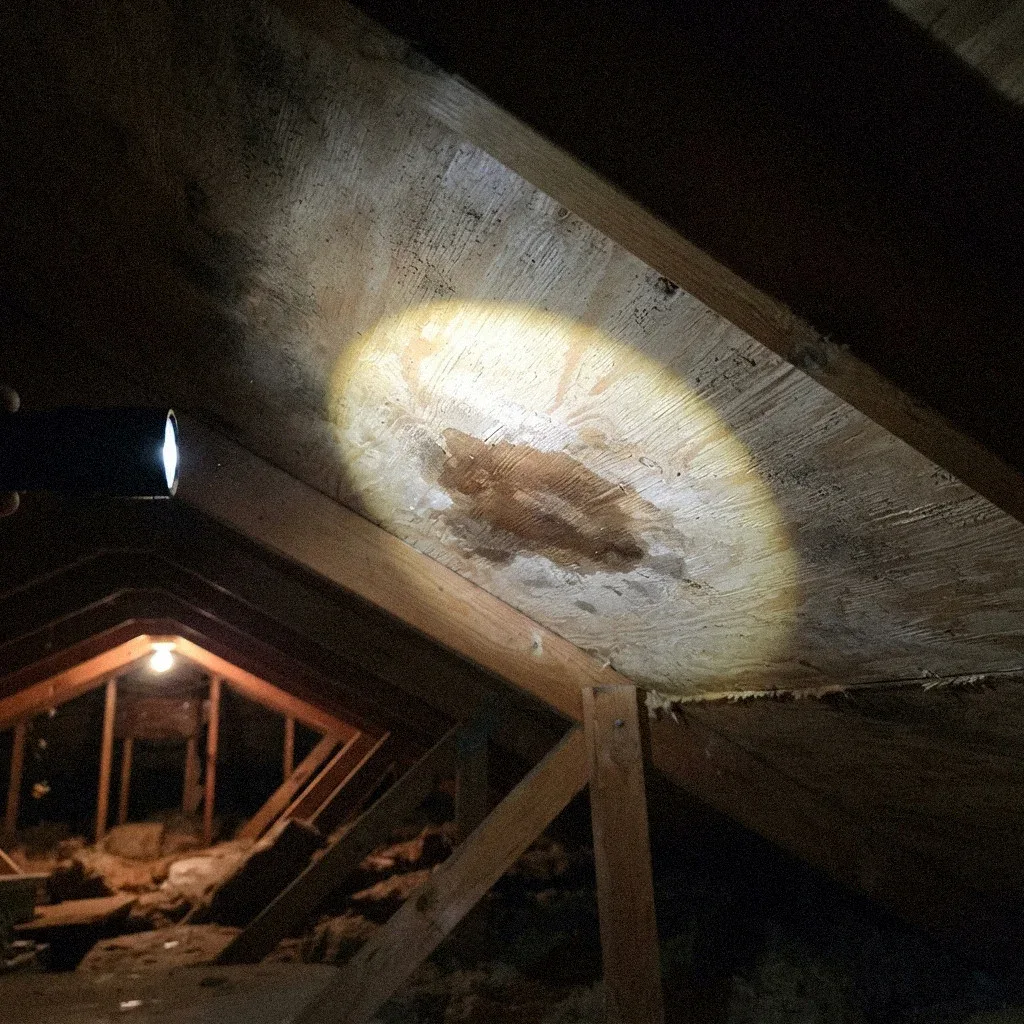
Simi Valley roofs rarely fail from one storm. They lose years to shaded valleys, clogged debris, weak flashing, and attic moisture that never gets a chance to dry out.
Read articleThis page covers what the service generally involves, but no two Simi Valley roofs wear the same way. A clay tile roof in Wood Ranch ages differently than a shingle roof near Sinaloa Lake, even under the same Santa Ana winds. Framing and past repairs matter too. The clearest next step is a direct look from the licensed pros we connect you with, who can tell you whether this service fits your roof or something else does.
Call (805) 463-1431