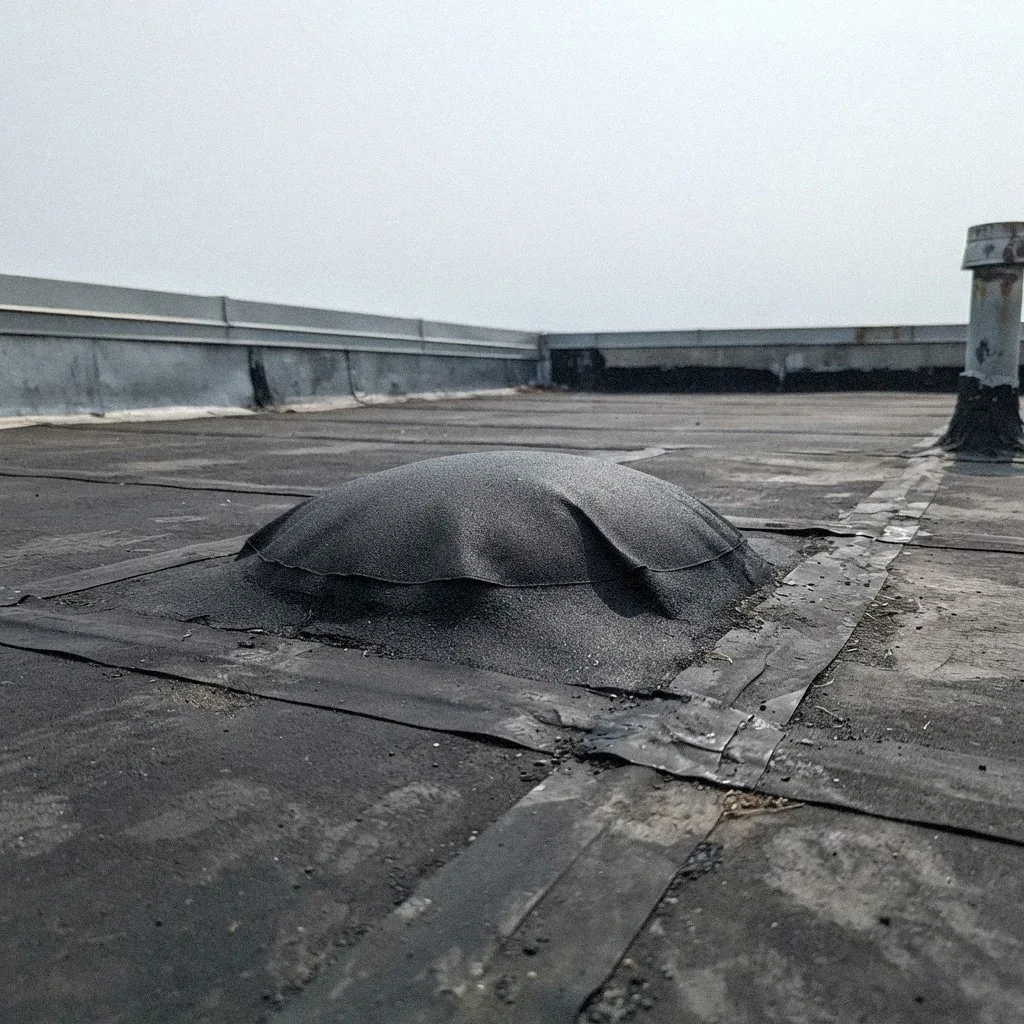
A Homeowner's Guide to Low-Slope Roofing in Simi Valley, CA
How TPO, PVC, EPDM, modified bitumen, and coatings perform on Simi Valley's flat roof sections.
Simi Valley low-slope roofs use TPO, PVC, EPDM, modified bitumen, or built-up systems instead of shingles, because flat sections near Tapo Canyon and Wood Ranch need a sealed membrane, not runoff.
Membrane Systems Side by Side
Simi Valley homes rarely show low-slope roofing on the main house, but it shows up on additions, patio covers, and garages across Wood Ranch, Bridle Path, and the Presidential Tract, plus on commercial buildings along the Los Angeles Avenue corridor. These sections take direct Santa Ana sun for years without the runoff a pitched clay tile roof gets, so the membrane and what sits beneath it carry the full weight of the valley heat with nowhere to shed it.
Membrane systems get attached to the roof deck three different ways, and the method picked shapes how the roof performs once Santa Ana winds start pulling at the edges. A fully adhered membrane is glued down across its entire surface. A mechanically attached membrane is fastened at intervals and left to float between rows. A ballasted system uses loose stone or pavers to hold the sheet in place without fasteners or full adhesive coverage at all.
None of this is cosmetic work in Simi Valley. A low-slope roof near Rancho Simi Community Park or out toward Big Sky sits through months of dry, sun-baked days followed by short, hard winter storms that dump rain fast rather than steadily. The membrane, the drainage path, and the flashing details all have to hold up under that swing between prolonged heat and sudden downpour, not just survive one or the other.
How the Membrane Gets Attached
TPO membrane is a single-ply sheet, typically white or light gray, joined at the seams with hot air rather than glue or tape. It has become the default choice on newer flat-roof additions and commercial buildings around Simi Valley partly because the reflective surface pushes back against the valley heat that bakes a dark roof for months at a stretch. PVC membrane works on the same welded-seam principle and holds up especially well where grease or chemical exposure is a factor.
EPDM is a black rubber sheet that relies on seamed or taped joints rather than welding, and it still shows up on older Simi Valley additions and outbuildings where it was the standard choice decades ago. It handles the valley's heat cycling reasonably well, but its seams age differently than a welded TPO or PVC joint, and a homeowner near Santa Susana Knolls checking an older roof should expect those seams to need closer attention over time.
- TPO membrane comes in wide rolled sheets, mechanically attached or fully adhered over cover board, with hot-air welded seams that shed wind gusts common on hillside lots near Rocky Peak and Sage Ranch Park.
- PVC membrane also uses welded seams but resists grease and chemical exposure better than TPO, which matters for a restaurant kitchen on the Los Angeles Avenue corridor more than for a garage roof in Big Sky or Bridle Path.
- EPDM is a rubber sheet, usually black, with adhered rather than welded seams. It has a long history on flat additions over garages and porches in older Simi Valley tracts near Sinaloa Lake and Santa Susana Knolls.
- Modified bitumen is a reinforced asphalt sheet, torch-applied, hot-mopped, or self-adhered, and it turns up on additions to older tract homes near Wood Ranch where a small flat section was added onto a sloped roof.
- Built-up roofing stacks asphalt and ply sheets into one mass, topped with gravel or a coating. It's heavier, older technology, mostly found on legacy commercial buildings rather than the tract housing that dominates most Simi Valley neighborhoods.
- A roof coating is maintenance, not a system on its own. It restores UV resistance on a membrane baked by years of valley heat and seals minor seam gaps, which can delay a recover on a Presidential Tract or Patricia flat roof.
Seams, Edges, and Water Exits
Built-up roofing and older modified bitumen systems still turn up on commercial buildings and some house additions around Simi Valley, built from alternating layers of asphalt and reinforcing felt rather than a single welded sheet. These systems have a long history and can perform for decades, but repair work means matching layers rather than welding a patch, and finding a contractor who still handles that layering correctly matters more than it does with newer single-ply membranes.
Roof coating extends an existing system rather than replacing it outright, and it's a common request on homes near Wood Ranch and Bridle Path where the roof is sound but sun-worn. A reflective coating applied over an aged membrane or over built-up roofing can cut surface temperature and slow further breakdown, but it doesn't fix a failing seam or a soft deck underneath, and a contractor should check for that before recommending a coating instead of a replacement.
- Ballasted systems lay membrane loose under stone or pavers, needing a structure built for that dead load. That's rare on Simi Valley's residential additions and more of a legacy commercial approach than something used on hillside lots.
- Fully adhered systems glue membrane straight to cover board or insulation for a clean, wind-resistant surface with no added weight, which fits most flat additions and small commercial roofs around Wood Ranch and the Community Center area.
- A mechanically attached system fastens cover board and membrane through to the deck along seam lines, then the next sheet overlaps and welds across the fastener row, keeping wind resistance and material cost roughly balanced.
- Tapered insulation boards build a slope into a roof section that has none on its own, steering water toward a drain or scupper instead of letting it collect near a low spot by a parapet wall or curb.
Deciding to Recover or Strip It
Insulation choice changes how a low-slope roof performs over Simi Valley's long dry season. Tapered polyiso boards create slope where the framing has none, pushing water toward drains instead of letting it sit and cook under the sun near Tapo Canyon or Big Sky. A dense board layered on top protects the membrane from foot traffic and hail-sized debris, and it also gives roofers a firmer surface to walk when checking a roof after red flag warning days.
Tapered insulation is what actually gives a flat roof its drainage slope, since the roof deck itself is usually dead level. Panels are cut and arranged so water is pushed toward drains instead of sitting in the middle of the field, which matters on additions around Sinaloa Lake and Presidential Tract where flat roof sections tie into larger tile-roofed homes. California's Title 24 energy standards also come into play here, since the insulation values chosen during a re-roof have to meet current code minimums.
| Condition | Best Move | Why |
|---|---|---|
| Dry, sound existing membrane | Recover often possible | Confirm layer count first |
| Wet or saturated insulation | Tear-off required | Recover seals in moisture |
| Two existing roof layers | Tear-off required | Code caps stacked layers |
| Ongoing ponding or flat pitch | Tear-off, add taper | Recover won't fix drainage |
| Membrane already patched twice before | Tear-off, not another layer | Recover would trap trouble underneath |
How Long Each System Lasts
A hot-air welded seam joins TPO or PVC sheets into a single surface, and heat plus pressure decide whether that joint holds through another Simi Valley summer. Crews test seams with a probe to catch weak spots before they show up as a leak near Sinaloa Lake or Rancho Simi Community Park. EPDM seams use adhesive instead of heat, which means the surface prep and the working time in the glue matter more than they do with welded systems.
Roof drain and scupper placement decides whether water leaving a Simi Valley roof during a fast winter storm actually gets off the roof instead of pooling. A pitch pan, the small metal-and-sealant boot used to seal pipes or conduit that penetrate the membrane, is another common failure point if it isn't rebuilt during a re-roof rather than just recaulked. Walkway pads protect the membrane where maintenance crews regularly cross the roof to service rooftop equipment.
Curbs, Pitch Pans, and Foot Traffic
Choosing between a recover and a full tear-off depends on what's under the current membrane and how it held up through the valley's heat and the occasional hard rain. A recover works over dry, structurally sound insulation and cuts demolition cost, but it seals over any hidden damage instead of exposing it. A tear-off costs more up front but lets the contractor see the deck, insulation, and drains directly, which matters most on roofs that have gone many years without inspection.
How long a low-slope system lasts in Simi Valley depends more on installation quality and maintenance than on which material was chosen. TPO and PVC roofs installed with proper welds and drainage can run for decades under steady sun exposure, while a neglected coating or an EPDM roof with failing seams can fail early regardless of its rated lifespan. Regular checks after red flag warning days and windstorms catch small issues, like a lifted termination bar or a clogged scupper, before they become a full leak.
Low-Slope Systems, Quick Reference
- Roof drains and scuppers carry water off a flat section; overflow drains or a second scupper set higher act as backup if the main path clogs with leaves blown in during Santa Ana wind events near Big Sky Park.
- Pitch pans are small metal boxes packed with sealant around pipes or vent penetrations. They fail before the membrane does and need periodic resealing, not a one-time install and forget approach.
- Walkway pads spread foot traffic load near rooftop units and access hatches, guarding the membrane from punctures that unprotected sheet material can't take, especially on commercial roofs near the Los Angeles Avenue corridor.
- Termination bars hold membrane edges tight at walls, curbs, and parapets, while the field seams themselves rely on a proper hot-air weld to keep water out between the anchored edges and the open roof surface.
- Recover adds membrane over sound existing roofing; tear-off strips down to the deck. A low-slope roof holding water or already carrying old layers usually forces tear-off, whatever a Simi Valley homeowner's budget preference might be.
- Service life depends on material and install quality, but low-slope membranes typically run shorter than a well-installed clay tile roof, which is common on sloped sections of the same Simi Valley home.
Frequently Asked Questions
Does a small flat roof section need a permit?
The City of Simi Valley's re-roofing rule is based on square footage, not on how small the job feels. Replacing more than 10 percent of the total roof area, or more than 100 square feet, requires a permit through the Building and Safety Division. A licensed pro pulling permits for you can confirm whether a specific low-slope repair or replacement crosses that line before work starts.
Can my flat roof be recovered instead of torn off?
TPO and PVC seams are hot-air welded, fusing sheets into one continuous surface, which holds up well against the valley's Santa Ana wind uplift. EPDM seams rely on adhesive tape rather than heat. Modified bitumen seams get torched, hot-mopped, or self-adhered depending on the product a Simi Valley roof already has.
Why does water pool on my flat roof?
Ponding usually traces back to a roof built without enough slope, a drain near Arroyo Simi debris that's clogged, or insulation that has settled unevenly after years of valley heat. Structural sag from age can also flatten the intended pitch. A tapered insulation rebuild is the only permanent fix.
Which membrane lasts longest on a Simi Valley roof?
TPO and PVC generally run 20 to 30 years when seams are welded correctly and drains stay clear. EPDM can last longer with adhered seams. Modified bitumen and built-up roofing sit toward the shorter end. Santa Ana wind cycles and constant valley sun shorten all of these compared to shaded, milder climates.
Will a coating actually add years to my roof?
A coating renews UV resistance and can bridge small seam gaps on a membrane that's still structurally sound, buying time before a full recover. It won't fix ponding, rebuild insulation, or seal a torn seam. Homeowners near Sinaloa Lake or Tapo Canyon should treat it as upkeep, not a repair for real damage.
Not sure what's under your flat section?
Get a low-slope roof section checked by the licensed pros we connect you with before the next Santa Ana wind event.
Call (805) 463-1431