Repairing Your Simi Valley Roof or Replacing It
How age, damage spread, and deck condition settle a Simi Valley repair-or-replace decision.
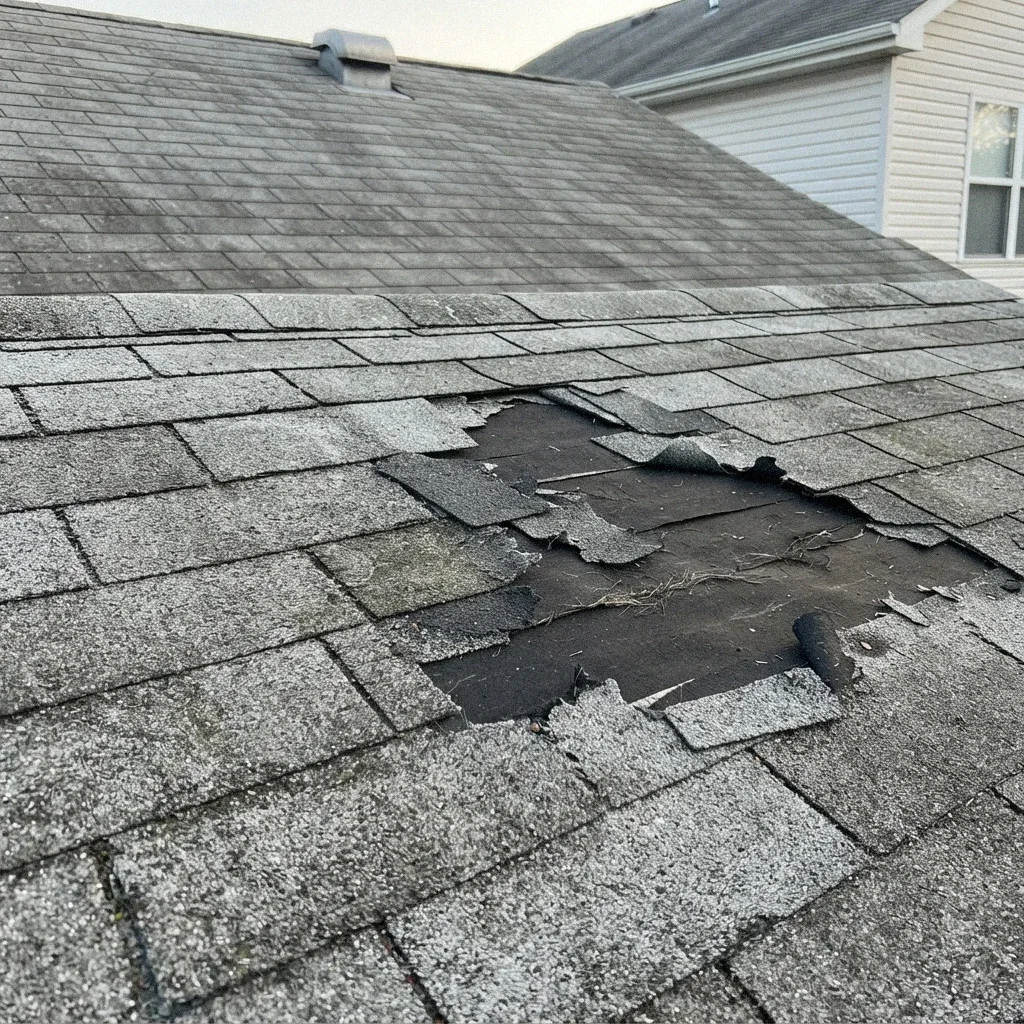
Repair if the damage is confined to one area, the deck underneath is solid, and the shingles still have several years of service life. Replace once damage spans multiple slopes, the deck has softened, or the roof is already at its layer limit.
How Much Life Is Left
A roof in Simi Valley wears out from the top down and the outside in. Twenty summers of Santa Ana wind and direct valley heat dry out asphalt shingles and bake the underlayment long before a leak shows up inside. The question homeowners in Wood Ranch and Bridle Path actually need answered is not whether the roof looks tired, but how many honest years of remaining service life are left under it, and whether a repair buys real time or just delays a job that is coming anyway.
Start by naming the damage instead of guessing at it. A few cracked tiles after a windy week on Rocky Peak, a section of underlayment exposed near a chimney flashing, a gutter clogged with ash after a fire season near the Santa Susana Mountains — these are patch-scale problems. Widespread granule loss across every slope, tiles that crumble when lifted, or repeated leaks in more than one spot point toward a roof that has moved past what a repair can reasonably fix.
Deck condition settles the argument faster than anything else. If the plywood or board sheathing under the roofing material is still solid, a targeted repair or a later full reroof both stay realistic options. Soft, spongy, or delaminated decking found once the old material comes off changes the job into tear-off and deck replacement regardless of what the surface looked like, and it usually pushes the cost conversation firmly toward full replacement rather than patch work.
Reading What The Damage Shows
Layer count matters just as much on a Simi Valley tract home built in the 70s or 80s as it does anywhere else in the state, because California's residential code caps how many roofing layers a structure can carry before a full tear-off becomes mandatory. A house that already has one layer over the original roofing has less room to add a second overlay, and a roof at the layer limit cannot legally be covered again with a new layer — it has to come off first.
The City of Simi Valley's Building & Safety Division requires a construction permit before most re-roofing work, and its own published guidance sets the threshold at re-roofing more than 10 percent of total roof square footage, or over 100 square feet, whichever applies. That threshold is worth knowing before assuming a small patch near Tapo Canyon or Las Llajas Canyon can skip the permit process — the city's online portal handles the application either way.
- Roof age compared to the shingle's expected service life sets the baseline. A roof past 20 years in the Simi Valley heat has little cushion left, and any repair on it is really just buying a short stretch of time rather than solving anything long term.
- How much of the roof is affected matters more than where the damage sits. One cracked flashing near a valley is a spot repair. Granule loss or curling spreading across several slopes near Tapo Canyon or Big Sky signals the shingles are failing as a whole, not in one place.
- Deck condition sets a hard floor under any repair decision. Plywood that has softened from water sitting under a damaged section won't hold nails or staples reliably, so a patch job over bad sheathing just fails again within a season or two.
- Layer count is a fixed ceiling, not a judgment call. Once a Simi Valley roof already has two layers of roofing material on it, code requires a full tear-off before anything new goes on, which rules out a simple layover as an option.
- Finding a shingle that matches an older roof gets harder every year past installation. Homes in Santa Susana Knolls or the Presidential Tract built decades ago may carry a color or profile the manufacturer stopped making, and a mismatched patch is obvious from the street.
- Selling changes the math even on a roof with years left in it. A resale disclosure noting roof age or a list of past repairs can slow escrow or invite a buyer's request for credit, which sometimes tips the decision toward replacing before listing rather than after.
Deck Health And Layer History
Shingle and tile matching quietly ends more repair plans than the actual damage does. A patch on an asphalt shingle roof only blends in if the replacement piece matches the color, profile, and granule wear of shingles that have spent years fading under the same sun as the rest of the house. Many older lines get discontinued, and a mismatched patch stands out clearly against surrounding shingles, especially on street-facing slopes in neighborhoods like Big Sky or the Presidential Tract.
Clay and concrete tile roofs, common across older Simi Valley tract sections, carry a different version of the same problem. Individual tiles crack or slip without warning the rest of the field is failing, and a competent spot repair on tile is often more forgiving than shingle patching because tiles are a mechanical fit rather than a bonded surface. The risk shifts to sourcing a matching tile profile if the original run has aged out of production, which is a real possibility on homes dating to the valley's main building boom.
- One way to compare options is cost per remaining year: what the repair costs divided by how many more years it realistically buys. A low repair bill on a roof already near the end of its shingle life often costs more per year than paying for a full reroof upfront.
- Deferred maintenance shifts this math fast. Gutters left clogged with debris from nearby hillside lots, or moss allowed to sit through a rainy winter, wear down a roof's remaining life quicker than sun exposure alone, so an old repair estimate can go stale within a year.
- Insurance rarely drives a roof replacement decision in Simi Valley the way a single hailstorm might elsewhere. Most roof failure here traces back to sun exposure, age, and Santa Ana wind lifting shingle edges over time, not a one-time weather claim.
- A full tear-off clears out every existing layer and starts the service-life clock over for the whole roof at once. An overlay costs less at the time of the job but carries forward any hidden deck problems the old layer was already hiding.
Repair Or Replace, Side By Side
The number that ends the debate is a simple ratio: total repair cost divided by years of service you honestly expect afterward. A $700 patch that buys three more dry seasons on a Simi Valley tract roof pencils out very differently than the same $700 spent on a deck already showing plywood delamination near Tapo Canyon. Run that math before you run anything else, because it turns a gut feeling into a number you can defend.
A partial reroof, sometimes called slope-by-slope replacement, is a real middle option when wear or storm damage concentrates on one or two sides of the house rather than spreading evenly. A south-facing slope that has taken the brunt of direct sun near Mount McCoy or Simi Peak can wear years ahead of a shaded north slope on the same roof. Replacing just the worn slopes can be sound engineering, provided the roofer can match materials closely enough that the mixed-age roof still sheds water correctly at every seam.
| Condition | Repair Signal | Replace Signal |
|---|---|---|
| Roof age | Well inside expected service life | At or past expected service life |
| Damage extent | Confined to one slope or vent | Spread across several slopes |
| Deck condition | Firm sheathing around the site | Soft, spongy, or stained plywood |
| Shingle match | Line still sold, color close | Line discontinued or sun-bleached |
| Layer count | One layer, room for an overlay | Two layers, tear-off required |
Reroofing Around A Home Sale
Selling a home changes the calculation even when nothing about the roof itself has changed. A roof with genuine remaining life but a cosmetic problem, like tile discoloration from ash after a nearby wildfire season, might only need cleaning and a written note for resale disclosure rather than any real repair. Buyers and their lenders in areas like Santa Susana Knolls or Old Town often ask directly about roof age and condition, so a documented recent repair or inspection can matter more at closing than it does day to day.
Insurance-driven replacement runs on a different clock than a planned repair decision, and the two should not be confused. Damage from a specific event, like a tree limb coming down during a Santa Ana wind event or hail damage from an isolated storm, is often covered when a slowly aging roof with no single triggering event is not. A homeowner filing a claim after a defined event and a homeowner facing years of deferred maintenance are solving two different problems, even if the repair estimate looks similar on paper.
Repairing Before You List the House
Bringing this together for a Simi Valley roof: check deck condition first, since rotted or delaminated sheathing changes the entire job no matter what the surface material looks like. Count existing layers next, because a roof already at the state code limit cannot simply take another overlay and has to come off before anything new goes on. Then look honestly at the damage itself — isolated and matchable points toward repair, spread out and severe points toward replacement.
Next, price out both paths honestly. Get a repair quote and a reroof quote side by side, then divide each by the years each one plausibly gets you. Add in whether you're listing the house near Wood Ranch or Bridle Path soon, since a bare patch shows up on a resale disclosure differently than a documented full reroof does. Let that comparison, not instinct, pick the path.
What Simi Valley Permits Actually Require
- California's building code allows at most two layers of roofing material on most residential roofs. A Simi Valley home already carrying two applications needs a full tear-off before new shingles go down; a third layer over the existing two is not an option under the code.
- In Simi Valley, re-covering more than 10 percent of your roof's square footage, or over 100 square feet, triggers a construction permit through Building & Safety. Smaller spot repairs below that threshold generally move faster, which factors into whether patch repair or a fuller reroof makes sense on a tight timeline.
- Shingle pliability drops fast once a roof sits through repeated summers of valley heat. Older shingles crack instead of bending when lifted for a repair, which is one reason a patch on a 20-year-old roof near Wood Ranch often fails faster than the surrounding material.
- Moss and algae growth is less of a citywide issue here than in wetter climates, but shaded slopes near mature landscaping or hillside lots close to the Santa Susana Mountains can still hold moisture longer after the rare heavy storm, softening shingle edges over time.
- Roofing crews around Tapo Canyon and Santa Susana tend to book up before summer heat sets in, since shingle work in triple-digit afternoons is harder on materials and installers alike. Scheduling a replacement earlier in spring avoids the backlog that builds once temperatures climb and demand follows.
- Clay tile roofs are common on Simi Valley's 1970s and 80s tract homes, and converting one to composition shingle isn't a straight swap. Tile roofs often sit on different decking and framing than shingle roofs expect, so a conversion needs its own structural review first.
Frequently Asked Questions
How do I know if a repair will hold?
There's no fixed age or damage percentage that decides it in Simi Valley. What matters is the deck underneath: if the plywood or planking is still solid where the damage sits, and the rest of the roof near Big Sky or Sinaloa Lake still has honest years left, a patch holds up fine. Soft, spongy, or delaminated decking under a 20-plus-year-old roof usually means repair money is better spent on a reroof.
Can I add a second layer instead of tearing off?
Yes, but only in narrow cases. California building code caps roofing at two layers total on most homes, and Simi Valley's permit process treats a second layer as a recover, not a full tear-off. Many local tract roofs from the 70s and 80s already carry one layover, so check what's underneath before assuming a second is allowed.
Why can't my roofer match the old shingles?
It happens often on Wood Ranch and Bridle Path homes reroofed 15 to 20 years ago. When a shingle line gets discontinued, a patch stands out as a visible seam once Santa Ana sun bleaching sets in. If matching isn't possible, slope-by-slope replacement of just the affected section usually blends better than a small patch.
The deck feels soft near the leak, now what?
Soft decking under a repair site points to moisture that built up over more than one wet season, not a fresh leak. Sheathing loses its ability to hold fasteners once it's saturated repeatedly. At that point the job shifts from patching shingles to replacing plywood, which changes both the cost and the timeline.
Can I reroof just one side of the house?
A partial reroof covers only the slopes that failed, often the south and west sides that take the worst Santa Ana sun in Wood Ranch or Bridle Path, leaving shaded north slopes untouched. It saves money short-term but can leave mismatched shingle age across one roof, which matters if you sell within a few years.
Ready To Get A Straight Answer?
Weighing repair against replacement on your Simi Valley roof? Discuss the specifics with the licensed pros we connect you with.
Call (805) 463-1431