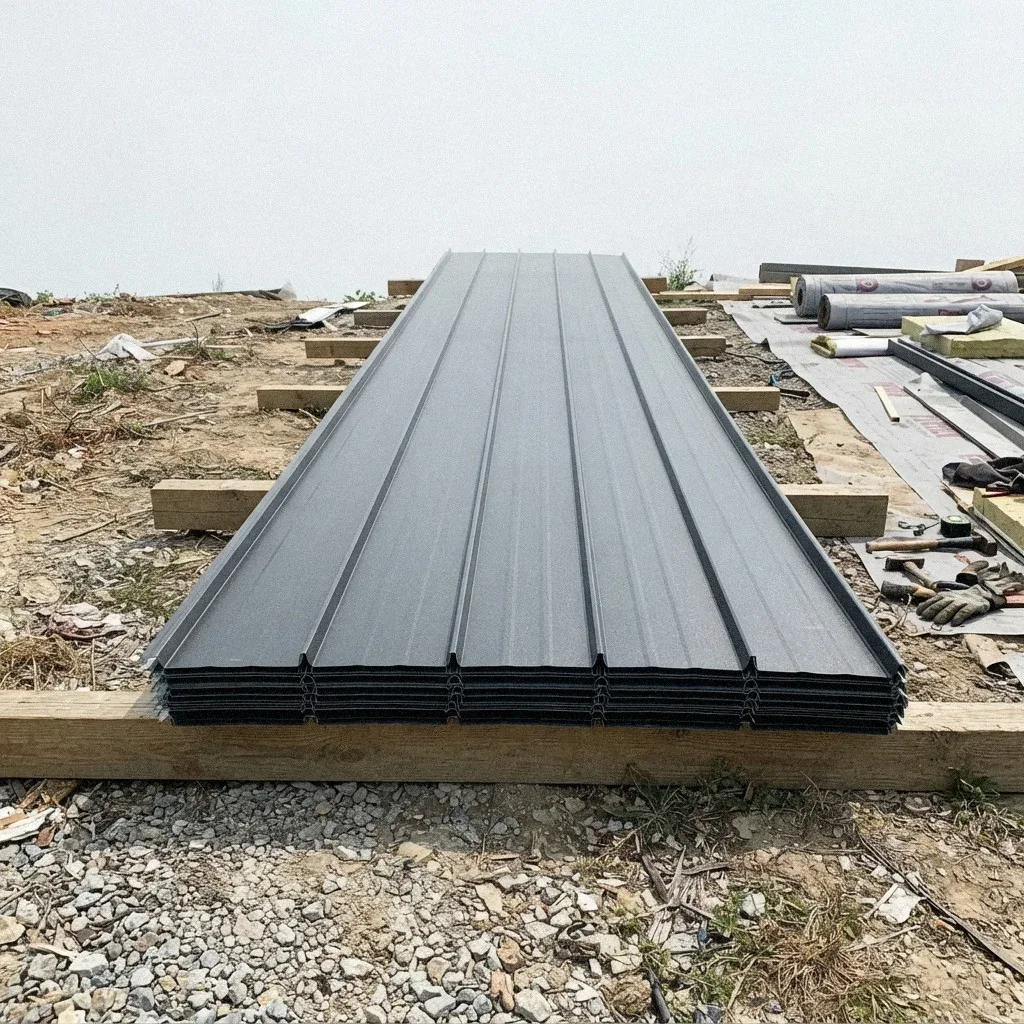
Choosing Between Metal and Composition Roofing in Simi Valley, CA
How standing seam metal and composition shingle compare for Simi Valley homes, from dead load to resale.
Composition shingle costs less and fits most Simi Valley homes already built for it. Standing seam metal weighs less, holds up better to valley heat and sun, and lasts far longer, at a higher install cost.
Which Lasts Longer Under Sun
Simi Valley reroofs usually come down to the same two contenders: asphalt composition shingle or metal, often standing seam. Tile still covers plenty of the tract homes built here in the 60s through 80s, but when a tile roof finally fails, homeowners are choosing between shingle and metal rather than replacing tile with tile. Each material handles the valley's Santa Ana winds, hard summer sun, and short but intense winter storms differently, and the differences show up over decades, not the first season.
Composition shingle remains the default choice across Simi Valley, from Wood Ranch to the Los Angeles Avenue corridor, because it's affordable, familiar, and easy for the licensed pros we connect you with to source and install quickly. Fire classification matters here given how close many hillside lots sit to open space near the Santa Susana Mountains, and most composition shingle products carry a Class A rating when installed over the right underlayment, which matters on red flag warning days.
Service life is the sharpest divide between the two. A composition shingle roof baking under direct valley sun for two decades, especially on south- and west-facing slopes common on hillside lots near Big Sky or Bridle Path, tends to show granule loss and curling well before a standing seam metal roof reaches the same point. Metal, properly installed with concealed clips, routinely outlasts shingle by a wide margin under this same sun exposure.
Weight on Your Roof Framing
Weight matters more once metal joins the discussion. Composition shingle adds more dead load to a tract home's rafters than most metal panel systems, which barely register on older framing common in neighborhoods like Wood Ranch or Santa Susana Knolls. That gap rarely forces a structural upgrade on its own here, but it explains why a metal recover often clears engineering review faster than a second layer of shingle would, especially on hillside lots above Tapo Canyon where every added pound gets scrutinized.
Panel gauge and shingle weight both affect wind performance during Santa Ana events more than most homeowners assume going in. Composition shingle stays moderate in weight per square, while exposed fastener panels and standing seam vary depending on gauge and metal type, with heavier gauges resisting oil canning and wind-driven flex better. Neither material is dramatically heavy by construction standards, but the weight difference influences how a roof performs in gusty conditions on exposed hillside parcels.
- Composition shingle in Simi Valley's heat and sun exposure tends to lose granules and dry out faster than the same product would in a milder climate. A Kynar-coated standing seam panel resists that fading and chalking, often running several times longer before the surface needs attention.
- Asphalt composition shingle adds real dead load to a roof frame, which matters on older tract houses where the original rafters were sized for a lighter original covering. Metal panels weigh a fraction of that per square, an easier match for framing that has already carried one roof.
- Exposed fastener panels cost less to install but depend on gasketed screws that back out as the panel moves through daily heat swings common in Simi Valley summers. A concealed clip standing seam system lets the panel float under the clip, so the fastener never sees that thermal movement directly.
- Shingle comes in weight classes with different wind ratings, and heavier grades hold up better on hillside lots exposed to Santa Ana gusts near Rocky Peak and the Santa Susana Pass. Panel gauge plays a similar role for metal, with thicker steel resisting oil canning and wind flutter on open slopes.
- Fire classification carries more weight here than in most climates, given how often Simi Valley sees red flag warning days near canyon-adjacent lots like Santa Susana Knolls. Both composition shingle and metal panel systems can meet a Class A rating, though the assembly underneath the covering matters as much as the surface material.
- Snow retention isn't a design factor at Simi Valley's elevation, so neither material needs the bar systems used in mountain climates. What matters more locally is impact rating, since hail is rare but wind-driven debris off nearby hillsides can strike a roof during a Santa Ana event.
Fastening, Thermal Movement, and Fire Rating
Panel profile and shingle grade aren't directly comparable, but both determine how a roof handles edges, valleys, and penetrations around chimneys and skylights. Exposed fastener panels are simpler and less expensive but rely on screws that can back out or leak over time in a climate with big daily temperature swings. Standing seam uses concealed clips with no exposed fasteners, which holds up better long-term but costs more to install and requires a crew familiar with seaming equipment.
Thermal movement is the issue that separates good metal installs from bad ones in Simi Valley's heat. Temperatures swing hard between a cool morning and a 95-degree afternoon, and standing seam with concealed clips is engineered to expand and contract along its length without buckling. Exposed fastener panels lack that give, so fastener holes can enlarge over years of cycling, which is one reason standing seam holds up better on homes that get full sun most of the day.
- Composition shingle repairs in isolation well. A section damaged by sun exposure or a fallen branch near a valley on a Wood Ranch or Bridle Path home can be cut out and replaced without disturbing the rest of the slope.
- Standing seam repairs are less forgiving. A dented panel from wind-blown debris usually has to come out end to end, since the interlocking seam runs the full length of the slope and can't be patched in the middle.
- Fire rating belongs to the whole assembly, not to the metal on top of it. Steel panels are non-combustible, but the Class A rating that matters on a parcel backing onto open slope depends on what sits underneath them, the underlayment and any barrier board included in the tested build-up. Composition shingle reaches Class A too, in its own tested assembly. The question worth asking is which rated assembly is going on, not which material.
- Panel gauge and clip spacing decide how metal handles the valley's heat swing between a cool morning and a 100-degree Santa Ana afternoon. Concealed clip systems let panels slide as they expand, cutting oil canning; exposed fastener seams work loose faster and need re-torquing sooner.
Cost Tier, Recyclability, and Resale Value
Appearance and any HOA rules often settle the decision before the technical comparison does. Composition shingle blends into nearly every Simi Valley streetscape, from Presidential Tract to Wood Ranch, without drawing attention. Metal roofing has become more visually acceptable over the past decade, especially standing seam finished with a Kynar coating in a muted color, but a homeowner in a neighborhood with an HOA or architectural committee should confirm approval before committing, since not every association treats metal the same as tile or shingle.
Noise and walkability differ more than people expect before living with either roof. Metal has a reputation for being loud in rain, which is mostly overstated once proper solid decking and underlayment are used underneath. Walkability favors shingle: it tolerates foot traffic for routine roof or gutter work without much thought, while metal panels can dent or scratch if walked on carelessly, so a contractor accessing a skylight or vent stack near Sinaloa Lake needs to know where it's safe to step.
| Category | Standing Seam Metal | Composition Shingle |
|---|---|---|
| Relative cost tier | Higher install tier | Lower install tier |
| Dead load on framing | Light, low psf | Heavier, more layers |
| Recyclability at tear-off | High scrap value | Mostly landfilled |
| Recover over shingles | Rarely fits code | Often allowed once |
| Walkability for repairs | Needs careful footing | Handles normal traffic |
Noise, Walkability, and Repair Access
Getting a roof fixed quickly after a windstorm usually comes down to what's already common on the block. Composition shingle dominates the older tracts around Simi Valley, so a roofer can usually match granules and grades without special ordering. Standing seam and exposed fastener panels are less common on residential streets here, so a damaged panel sometimes needs a custom brake run or a wait on gauge-matched stock, which can stretch a simple repair into a longer job.
Recover-over-shingle situations follow a fairly consistent rule: metal can often go directly over one layer of existing composition shingle if the deck underneath is sound, saving a full tear-off. Shingle over shingle is also common where code allows it. Recovering over tile is a different situation entirely and usually requires tear-off given tile's shape and weight, which matters for older Simi Valley homes still carrying their original clay or concrete tile roof.
Matching the Roof to Your Simi Valley Home
Setting dollar figures aside, the general cost ranking holds steady across Simi Valley: composition shingle costs less upfront, standing seam costs more, and exposed fastener panel systems land somewhere between the two. Concealed clip installation and Kynar coating both add labor and material cost over a bare shingle job. Homeowners near Big Sky or the Presidential Tract weighing a full tear-off tend to size that gap against how long they plan to stay in the house.
What happens to the old material matters too. Metal panels can typically be melted down and reused once they're pulled off, while shingle tear-off from a Simi Valley re-roof mostly goes to landfill, since local recycling outlets for asphalt shingle are limited. On resale, buyers touring homes in Bridle Path or Wood Ranch tend to read a metal roof as a selling point tied to lower future maintenance, while a newer shingle roof mainly just clears a home inspection without raising questions.
Metal Versus Composition, Side by Side
- Composition shingle covers most Simi Valley tract roofs built in the 70s and 80s, largely because it matched the original construction and local crews already carry the matching grade.
- Standing seam metal shows up more often on remodels and newer construction, including some hillside properties closer to Santa Susana and the Simi Hills where the profile suits a more modern design.
- Sun and heat wear composition shingle faster than age alone would suggest, especially on south-facing slopes. Metal reflects more of that heat and doesn't dry out or crack the way an aging shingle roof does after two decades of valley summers.
- A shingle recover skips a full tear-off only when the deck is sound and the added weight stays under the permit threshold; that rule applies whether the new layer is shingle or a lighter metal product.
- Metal panels are broadly recyclable once removed from a roof. Composition shingle recycling depends entirely on whether a hauler working the Simi Valley area accepts asphalt shingle waste at its facility.
- A buyer looking at resale in Simi Valley usually sees composition shingle simply because it's the roof most houses already carry. A newer metal roof can register as a selling point given how many years of service remain on it.
Frequently Asked Questions
Is metal roofing worth the extra cost here?
Sometimes. A metal recover installed above a single course of composition shingle can pass structurally, since panel systems generally weigh less than a second shingle layer would. What decides it in Simi Valley is deck condition underneath — homes from the 70s and 80s tract boom sometimes have sheathing worn thin by decades of valley heat, and a contractor needs to check that before signing off on skipping the tear-off.
Can you install metal roofing over old shingles?
Yes, if the existing composition shingle layer is dry, flat, and the deck underneath has no rot. Simi Valley building rules let a recover skip a permit only when the added weight stays under a set threshold. Past that line, or over a second layer already in place, a full tear-off is required before new material goes down.
Does metal roofing actually save money long term?
Metal costs more per square up front in Simi Valley than composition shingle, but the math shifts over a long hold. Shingle typically needs replacing well before metal ever does, so the owner pays for materials and labor twice while the metal roof is still performing. Over 30 years the totals move closer together.
Can I still walk on a metal roof?
Both hold up to foot traffic when the surface is cool and dry, which matters given how hot Simi Valley roofs get under direct Santa Ana sun. Composition shingle takes a boot step across most of the field without damage. Standing seam needs steps placed on the flat pan, never on a seam or rib, to avoid a permanent dent.
Will my HOA near Wood Ranch allow metal?
Most Simi Valley HOAs, including those covering tract sections near Wood Ranch, accept composition shingle without a second look since it matches what's already on the block. Standing seam draws more review on visible street-facing slopes because the profile stands out against older clay tile and shingle roofs nearby. Rear slopes usually clear faster.
Sorting out metal versus composition for your reroof?
Comparing standing seam and composition shingle for a Simi Valley reroof? Talk with the licensed pros we connect you with about your roof.
Call (805) 463-1431