Now taking calls — fast callback for urgent roof damage · (805) 463-1431
Wind-Lifted Ridge Caps control in Simi Valley, CA
Roof Defects

Wind-Lifted Ridge Caps in Simi Valley

Ridge caps in Simi Valley take their worst hits in late fall through winter, when Santa Ana wind events run strongest and most frequent across the valley. Caps loosened during one windstorm season are often the ones that finally crack or shift in the next.

In one paragraph

Wind-lifted ridge caps show as crooked, gapped, or missing tile along the roof's peak in Simi Valley, usually after a Santa Ana wind event loosens the mortar or fasteners holding them.

When Tile Slips

What Red Flag Days Reveal Fast

A roofing contract of any real size in California requires a licensed C-39 contractor, not a handshake and a truck. The state sets that bar because roofing failures are expensive to fix after the fact, and a license number is the first thing worth checking before anyone climbs a ladder.

Crooked or wavy line along the ridge

A visibly crooked or wavy line of caps along the ridge, seen from the street or driveway, means wind has already worked one or more caps loose from their mortar bed. It's usually worst on the windward side of the roof and gets more pronounced after each Santa Ana event.

Cap rocks or clicks when nudged

A cap that rocks or clicks when nudged from a ladder means the mortar bond or fastener underneath has failed, even if the tile still looks seated from below. This is an early-stage sign, and it usually means the ridge can still be reset rather than rebuilt.

Daylight gap between cap and field tile

A gap of daylight visible between a ridge cap and the field tile below it, most obvious from a ladder in direct sun, means the cap has lifted enough to break its seal against the roof deck and underlayment. Water and windblown debris can now work down through that opening on the next storm day.

Mortar bits collecting in the gutter

Broken mortar fragments or granules collecting in the gutter near the ridge line point to caps that have already cracked loose and are breaking apart in place, rather than sitting merely loose. This is further along than a simple lift and usually means individual caps need replacing, not just resetting.

Damp decking under the ridge board

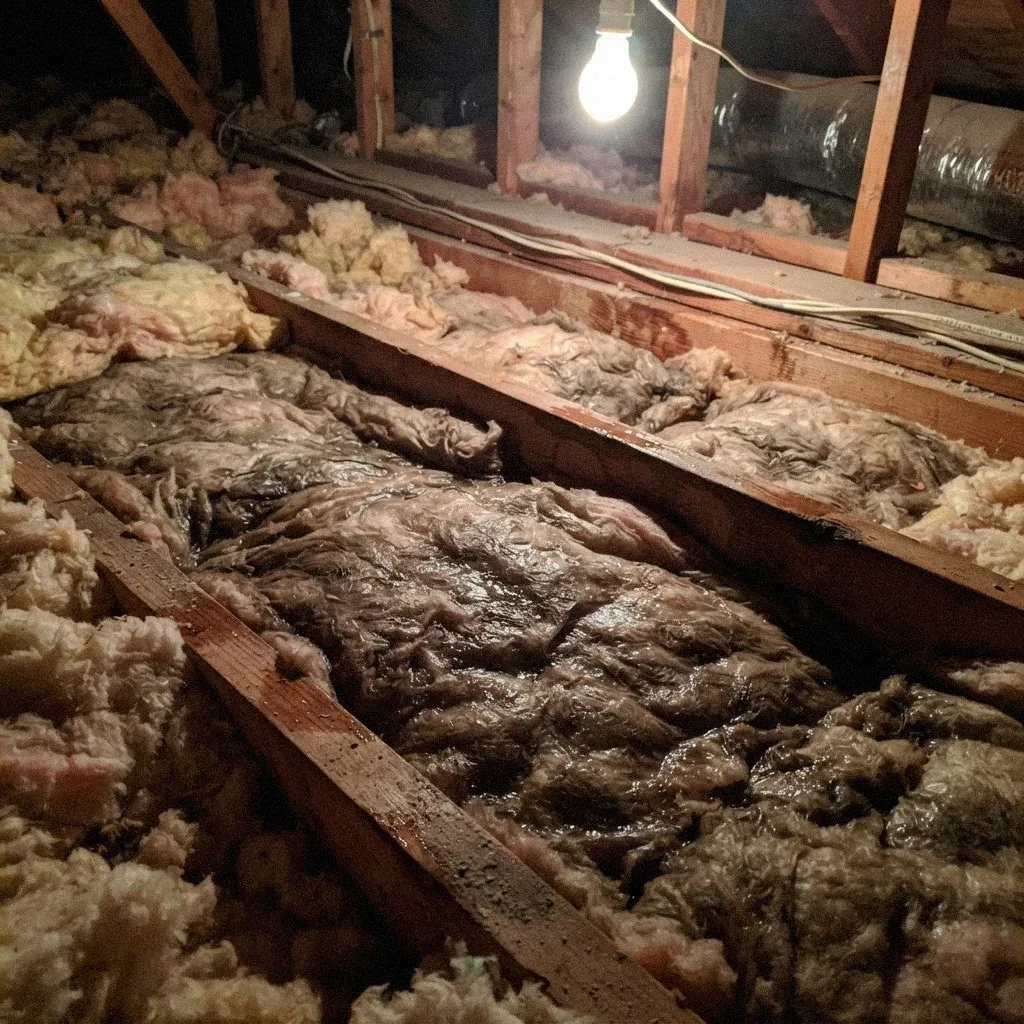
Attic decking that's damp or stained directly under the ridge board, especially after a wind-driven rain, means a lifted or gapped cap is already letting water past the underlayment at the peak. This calls for prompt attention, since the ridge is the hardest area on the roof to reach and inspect from outside.

What The Valley Floor Does To Roofs

Wind-lifted ridge caps show up as a crooked or gapped line of tile along the roof's peak, most common on hillside lots near Wood Ranch and Big Sky where Santa Ana gusts hit hardest. A loosened cap rocks underfoot and lets daylight show beneath it.

Hillside lots in areas like Wood Ranch and Big Sky sit higher and more exposed than valley-floor tracts, so their ridge caps face stronger, more sustained gusts. Decades of sun-baked mortar on older clay tile roofs makes the bond underneath more likely to give first.

Roof damage in Simi Valley usually builds quietly across dry seasons, not in a single dramatic event. Sun-baked tile can crack, fasteners loosen, and small gaps widen year after year until a hard rain finally finds them. Catching that slow wear early costs far less than waiting for water to show up inside.

Choosing Who Climbs Up There

Location
Appears along the ridge line, the highest horizontal or sloped seam where two roof planes meet at the peak.
Appearance
Tile caps sitting crooked, gapped from the field, cracked, or missing outright along the ridge.
Cause
Santa Ana wind gusts working against aging mortar bond or worn fasteners holding the caps in place.
Progression
Gradually across repeated wind events; a single strong Santa Ana storm can finish off caps already loosened over prior seasons.
Damage
Ignored caps crack, slide, or fall, opening the ridge board to rain and ember intrusion during red flag warning days across Simi Valley.
When
Ridge caps in Simi Valley take their worst hits in late fall through winter, when Santa Ana wind events run strongest and most frequent across the valley. Caps loosened during one windstorm season are often the ones that finally crack or shift in the next.
Guide price
an estimated $400–$2200

The Part of the Roof You Cannot See

Wind-lifted ridge caps get mistaken for general tile slippage on the roof field, since both show as tile out of alignment after a windy stretch through Wood Ranch or Bridle Path. Field slippage is fastener or batten failure spread across a slope, not a ridge problem. The separating test is location: ridge lift only ever shows along the horizontal or sloped cap line at the top of the roof, never mid-field. Tile slippage shows scattered across a slope, often lower down near an eave or valley, with no pattern tied to the ridge itself.

Where the Damage Usually Hides

A real fix resets each lifted cap in fresh mortar or mechanical fasteners rated for tile, reseating it tight against the ridge board and the field tile beneath it, so the roof sheds wind the way the ridge assembly was built to.

Where a cap has cracked or delamination has split the tile itself, that piece gets replaced rather than re-mortared, since gluing a broken cap back down only hides a piece that will fail again in the next windstorm.

Most roof problems here start with heat, not water. Years of baking sun dry out sealants and curl shingle edges long before a storm ever tests them. By the time a leak shows up indoors, the damage on top has usually been building for a while. The licensed pros we connect you with look for that early wear.

Repair now, or replacement budgeted?
The situation Usually the right call
One spot, and the rest of the roof soundA single repair visit
A roof that needs something doing to it every yearReplacement, budgeted rather than rushed
Anything that has reached the decking or the atticTear-off, with the decking made good as it goes

Reading Your Roof Before You Climb

From the ground or a driveway, a homeowner can watch for a crooked ridge line, missing caps after a windy night, or debris collecting near the base of a downspout. Getting on the roof to check mortar bond, fastener condition, or underlayment at the ridge itself is not a ladder job for anyone without training.

Why Wind-Driven Ember Damage Starts Small

Left alone, a lifted cap keeps working looser with every Santa Ana event until it cracks, slides, or falls, opening the ridge board to direct rain and ember intrusion on red flag warning days. What starts as a mortar reset can turn into ridge board and decking replacement.

See What Your Roof Actually Needs

Most wind-lifted ridge caps jobs in Simi Valley land between an estimated $400 and $2200, and the roof decides where inside that. Simi Valley's dry season leaves most tile and shingle roofs facing sun and Santa Ana wind wear, not insect damage, so a re-roof estimate here rarely carries a pest line item. If the licensed pros we connect you with find soft decking near Bridle Path or an older tract home, they'll flag moisture or age first, then check further before pricing any treatment. pricing guide.
FURTHER READING

Problems That Travel in Pairs

Broken Tile From Foot Traffic

Roof Defects. Broken tile from foot traffic is a cracked or displaced concrete or clay tile caused by someone stepping mid-span instead of over a rafter, usually in a line toward a vent, dish, or chimney.

Clogged Roof Valleys

Roof Defects. A clogged roof valley is the channel where two slopes meet, filled with leaves, needles and grit until water no longer runs down it.

Questions & Answers

Frequently Asked Questions

Why do my ridge caps keep coming loose?

You'll usually spot it after a Santa Ana wind event: ridge caps sitting crooked, shifted sideways, or gapped from the field tile instead of running in a tight, even line. From the ground, look for a broken shadow line along the roof's peak. From a ladder, check for cracked mortar or loose fasteners at the ridge. In the attic, water staining directly under the ridge board points to a lifted cap already letting rain in.

Does resetting a ridge cap need a permit?

Not always right away. A single loose cap on an otherwise sound tile roof can sometimes be reset without a full permit, but once a Simi Valley re-roof involves replacing a meaningful share of the underlayment or decking beneath the ridge, permit rules tie to that scope, not to the cap alone. A licensed pro on the roof needs to confirm the extent before anyone can say for certain.

Does one loose cap mean the whole ridge is bad?

Sometimes, and only a licensed pro can tell you which without getting on the roof. A cap that lifted in one wind event and cracked its mortar bed is a different repair than a whole ridge line that's been walked on, sun-baked, and resettled loosely for years. Both look similar from the ground in Simi Valley's Santa Ana winds, but the fix and the cost differ a lot.

Can a lifted ridge cap wait until spring?

Not on its own. A cap that's shifted but still mortared and seated tight may hold through another windy season, while one that's fully separated from the ridge board is an open path for water and embers during red flag warning days. The difference is whether the fastener and mortar bond underneath is still doing its job, which needs eyes on the ridge, not the ground.

Get Started Today

Want someone to confirm what it is?

Not every roof problem shows up as a drip through the ceiling. Some show up as a higher cooling bill, a sagging line along the ridge, or granules collecting where the downspout empties. Catching it there costs far less than catching it in the attic.

Call (805) 463-1431
Free inspections & same-day service available
Call (805) 463-1431 Schedule Online