Simi Valley Roofing Permits and Code Rules
What triggers a permit, who holds it, and the code items inspectors check either way.
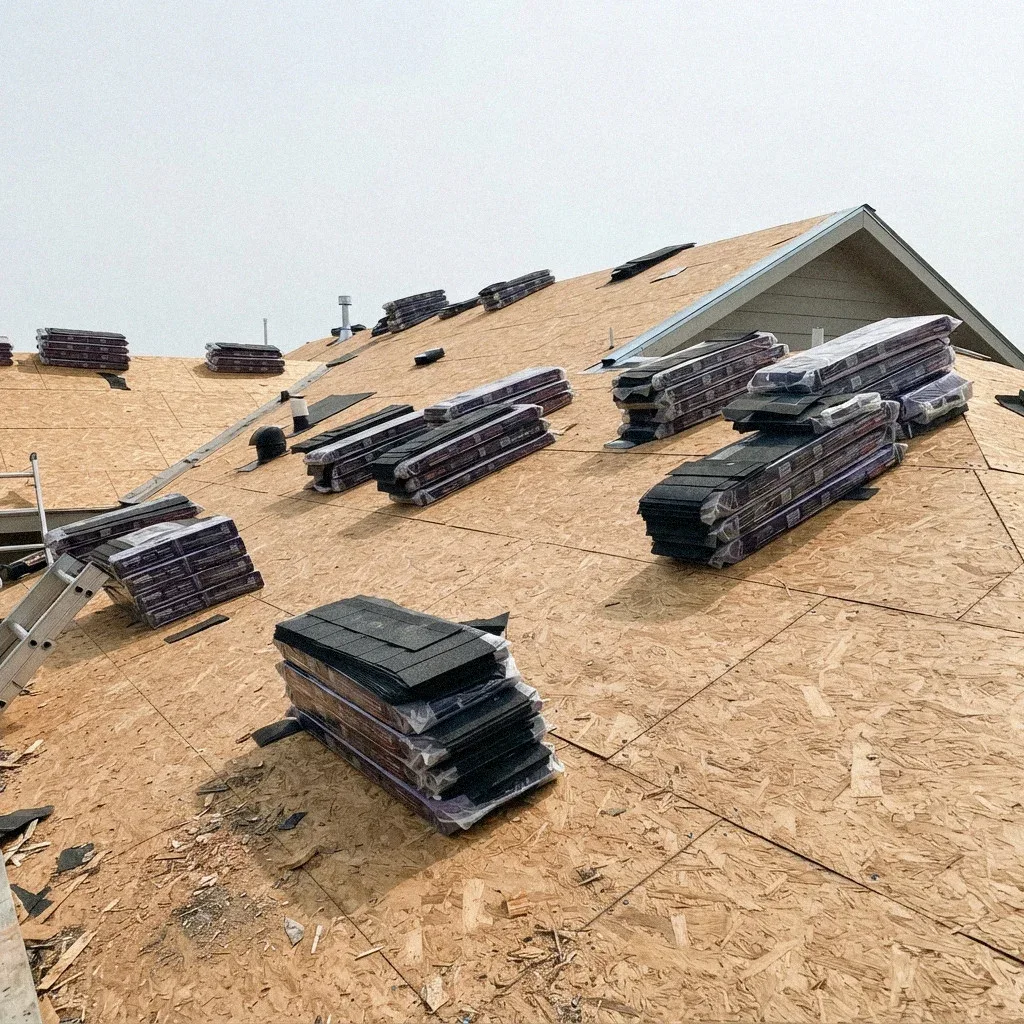
Simi Valley requires a permit from Building & Safety once re-roofing work covers more than a small fraction of the roof, based on the City's own violation FAQ. Plan review, an inspection card, and a final sign-off follow before the job is considered closed.
When Re-Roofing Needs a Permit
Simi Valley ties the permit question to scope, not cost. The Building & Safety Division inside Environmental Services processes roofing through the city's online portal, and its own violations FAQ sets the trigger: work touching over a tenth of the roof, or more than 100 square feet, needs a building permit before anyone climbs a ladder. A small patch after a Santa Ana wind event may fall under that line. A full tear-off on a Wood Ranch or Bridle Path tract home will not.
A permit trigger measured by area, not dollars, catches homeowners who assume a cheap job skips paperwork. Cost has nothing to do with it here. A contractor charging little for a small tile repair near Tapo Canyon can still be under the threshold, while a modest-priced job that recovers most of a roof in Santa Susana Knolls crosses it. The math runs on square footage against the roof's total area, so get that number before assuming either way.
Skipping the permit does not skip the building code. Fastening, underlayment, ventilation, and flashing rules apply to the material going down whether or not the city ever inspects it. A roofer who quietly recovers a house near Sinaloa Lake without pulling paperwork still owes the same wind resistance and water protection the code demands. The permit is how the city checks that the work happened correctly; it is not what makes the requirement exist in the first place.
Plan Review and the Permit Holder
Simi Valley's online portal is built around the person doing the work, and that person becomes the permit holder of record for everything filed under their name. A homeowner pulling their own permit for a small job on a Presidential Tract house takes on that same responsibility directly. Whoever signs the application answers for the inspections, the corrections, and the eventual closeout, so it matters who actually submits it, not just who pays the invoice.
Plan review for a straightforward reroof is lighter than for an addition or a room built from the ground up, because the city is checking a covering and its attachment rather than approving new structural framing. Where a Santa Susana or Old Town home is switching from a lightweight material to something heavier, like moving toward clay tile, that added weight can pull in a structural look at the framing underneath before the permit clears review.
- A permit trigger in Simi Valley is scope, not price: once re-roofing crosses the 10 percent or 100 square foot mark, the job needs a building permit filed with Building & Safety before crews touch the deck.
- Smaller patch repairs, like resetting a few slipped clay tiles after Santa Ana winds near Santa Susana Knolls, can fall under that threshold and skip the formal permit step, though the work still has to meet code.
- The size threshold applies the same way whether the roof sits on a flat tract lot near Tapo Canyon or on a graded hillside parcel closer to Simi Peak, since the trigger is roof area, not lot type.
- A full tear-off on a 1970s or 1980s tract home in Wood Ranch or Big Sky is well past any exemption threshold, so plan review and a permit apply before the old tile or shingle comes off.
- Solar-related roof work and cool roof or Title 24 compliance items get folded into the same permit process, since the roofing scope and the energy code requirements are reviewed together, not separately.
- The permit carries a name on it, and that name decides who answers for the work. A licensed roofing contractor pulls it under their own license, which is what puts them on the hook at inspection. An owner-builder permit moves that responsibility to the homeowner instead, and it usually means the homeowner is also who the city calls when something fails review.
From Rough Inspection to Final Sign-Off
Once a roofing permit is active, the city checks the work at points where mistakes get buried the fastest. An inspection before the final roofing material goes down lets an inspector see the underlayment and fastening on the deck itself, which nobody can verify once tile or shingle covers it. Flashing around chimneys and valleys typically gets a look at this stage too, since a hidden flashing error is one of the more common causes of a slow leak years later.
The final inspection is what closes the permit out. An inspector confirms the finished roof matches what was approved, signs the inspection card, and that signoff is what lets the city issue a certificate of completion for the job. Skipping this step leaves the permit open indefinitely, which becomes its own problem later, since an open permit with no final signoff reads as unresolved work to anyone who checks the property's permit history.
- Simi Valley's rule centers on square footage rather than a fixed layer count: re-covering more than 10% of the total roof area, or over 100 sq. ft., moves the job into permit territory and generally means stripping down to the deck.
- A recover over one existing layer can be an option on some tract homes in Simi Hills or Presidential Tract, but it's ruled out if the decking underneath is soaked, sagging, or already carrying two layers.
- A Wood Ranch or Tapo Canyon home already carrying two layers of comp shingle has one legal path left: strip both down to the deck. Adding a third layer on top isn't a paperwork problem, it's a structural one.
- Nailing pattern, underlayment type, and intake and exhaust venting get checked whether the roof sailed through plan review or barely cleared the exemption line near Santa Susana.
Layer Limits and Fastening Rules
California's building code limits how many roof coverings can stack on a Simi Valley house. Most re-roof jobs strip the old material down to the deck rather than adding a layer on top, and inspectors checking the work want to see that deck once it's exposed. A layer count that already sits at two typically forces removal regardless of what the new material weighs or how it's fastened. This matters most on older tract homes around Wood Ranch or Santa Susana Knolls that may have been recovered once already decades back.
Tile carries its own math here. A concrete or clay tile roof already asks a lot of the framing underneath, so adding weight with another covering is rarely the plan an inspector signs off on. Homes near Tapo Canyon or along the Arroyo Simi with original tile from the 60s through 80s often need the old tile pulled, the underlayment replaced, and the same tile reset rather than layered material added. The fastener schedule and flashing details get checked again at that point, not skipped.
| Roof Work | Permit Needed? | Code Item Checked |
|---|---|---|
| Small patch under 100 sq ft | Often exempt | Code items still apply on-site |
| Reroof over 10% of roof area | Permit required | Square footage decides it, not price |
| Second layer over existing shingles | Permit required | Layer limit and weight get reviewed |
| Full tear-off to bare deck | Permit required | Rough and final inspection both apply |
| HOA-governed property, any scope | Permit still required | Architectural approval runs alongside city process |
HOA Approval Is a Separate Step
A fastener schedule sets how a roof covering is nailed or screwed down, and it is what keeps tile and shingle in place through Santa Ana wind events rather than sliding or lifting at the edges. Flashing requirements govern the metal at valleys, chimneys, and roof-to-wall transitions, where the code cares less about appearance and more about keeping water from finding a path into the deck during the valley's short, hard winter storms.
An underlayment requirement sets the barrier layer beneath the visible roofing, and in a valley with long dry stretches and infrequent but intense rain, that layer is what handles the water when a storm finally arrives. Ventilation requirements govern how attic air moves, which matters here mostly for heat rather than moisture, since a poorly vented attic under a Simi Valley summer traps warmth that works against the roof covering and the insulation below it.
Unpermitted Work and Resale Trouble
HOA architectural approval runs separately from the city's permit process, and clearing one does not clear the other. A homeowner in a covenanted neighborhood like Wood Ranch or Big Sky may need sign-off on tile color or material from an architectural committee before the city permit even gets filed. Anyone near Old Town's historic core should also check whether the property falls under a historic district review, since that adds its own approval step beyond standard permitting.
A roof that went on without the paperwork usually surfaces years later, often during a home sale near Wood Ranch or Bridle Path when a buyer's inspection turns up roofing work with no matching permit in the city's records. That gap can slow escrow or force a retroactive permit and inspection before closing. A permit filed at the time of the work, with the inspection card properly signed off, avoids that problem entirely when the house eventually changes hands.
Simi Valley Permit Basics
- Inspection stages on a permitted Simi Valley re-roof follow whatever the issued permit lists, and a rough inspection typically happens once old material is stripped and sheathing repairs are visible.
- A mid-job inspection generally covers the underlayment requirement and fastener schedule before the new tile, shingle, or membrane goes down, catching problems while the deck is still exposed.
- Flashing requirement checks around chimneys, skylights, and valleys tend to happen at this same stage, since flashing gets covered once the roofing material is installed over it.
- The final inspection closes out the permit once the roof is complete, and passing it is what lets the city sign off with a certificate of completion for the job.
- HOA architectural approval is a separate step from city permitting. A homeowner in Wood Ranch or Big Sky may need to submit tile color or material choices to a homeowners association board before the city permit even matters.
- Unpermitted work tends to surface later, often during a home sale near Tapo Canyon or Sinaloa Lake, when a buyer's inspector or lender asks for permit records the seller can't produce.
Frequently Asked Questions
Does every roof replacement need a permit?
It depends on how much of the roof is affected, not the price paid. Simi Valley's Building & Safety Division sets the line at work covering more than a tenth of the roof area, or over 100 square feet, based on the city's own violations FAQ. Below that, a permit may not be required. Above it, or on any full reroof, count on filing one through the city's online permit portal.
Does my roofer or do I file the permit paperwork?
The roofing contractor doing the work usually pulls the permit and stands as the permit holder of record with the Building & Safety Division. A homeowner in Wood Ranch or along Cochran Street can request to see the application before work starts, since the contractor's license number has to be attached to it.
How many roofing layers are legally allowed?
It depends on square footage, not on tearing off versus layering. A Bridle Path or Sinaloa Lake home replacing its entire tile roof still needs a permit once the job passes the 100 square foot or roughly one-tenth threshold the city applies to re-roofing generally.
What do inspectors check during a roof job?
Fastener schedule, underlayment requirement, and ventilation requirement apply to the work itself, not to whether paperwork was filed. A small, exempt patch job near Santa Susana still has to meet the same nailing and flashing rules as a permitted one, even without an inspection card on file.
Does HOA approval replace the city permit?
Ask to see the permit number and check it against the city's online portal before work starts. For a job small enough to skip a permit, get the material type, square footage, and scope written into the contract so there's a record if the roof comes up during a future sale.
Not sure your reroof needs a permit?
Not sure if your job needs a permit or just has to meet code anyway? Ask the licensed pros we connect you with before work starts.
Call (805) 463-1431