Why Age And Sun Line Up
Simi Valley's short, intense winter storms overwhelm a leak that formed unnoticed months earlier, and the soaked sheathing near Arroyo Simi-adjacent lots finally sags where the plywood gave way.
Neighborhoods on hillside lots near Wood Ranch or the Santa Susana foothills see roofs baked hard by valley heat and Santa Ana winds, which dries out underlayment and flashing seals faster, giving water more chances to reach the decking underneath.
Plenty of homes here still carry the roofing installed when the tract was first built. Swapping an aging roof for a Title 24 cool-roof-rated system is common once a house passes the 20 to 30 year mark. The change affects attic temperature and utility bills as much as curb appeal.
Signs You Shouldn't Ignore
- Location
- Roof plane over valleys, chimneys, or old pipe boots, and the attic sheathing directly above the insulation.
- Appearance
- A wavy or sunken patch in the roofline, soft or bouncy footing on a ladder, and staining or daylight seen from the attic.
- Cause
- A cracked, slipped, or missing tile, worn underlayment, or a flashing or sealant failure that let water reach the sheathing.
- Progression
- Slow at first, then fast once winter rain floods the already-weakened wood; a single wet season can turn a small soft spot into a full sag.
- Damage
- Left alone, moisture reaches the insulation and ceiling drywall, and a weak enough patch risks giving way under anyone's weight on the tile.
- Time of year
- This tends to surface right after Simi Valley's winter rains, when a leak that quietly formed during the dry months finally floods a section of already-weakened decking and the sag becomes visible from the ground.
- Guide price
- an estimated $600–$4500
What to Ask Before Work Starts
Sagging decking gets mistaken for a foundation or framing settlement problem, since both can make a roofline look uneven from the street. The difference is location: decking sag sits between rafters in a defined patch, while framing settlement runs in a straight line following a wall or beam below. Sight the roof from two angles in the yard. A dip that follows one wall or the ridge in a straight run points to framing or foundation movement below. A dip that pools between two rafters, near a valley or chimney, points to rotted decking and needs a ladder inspection to confirm.
Where the Damage Usually Hides
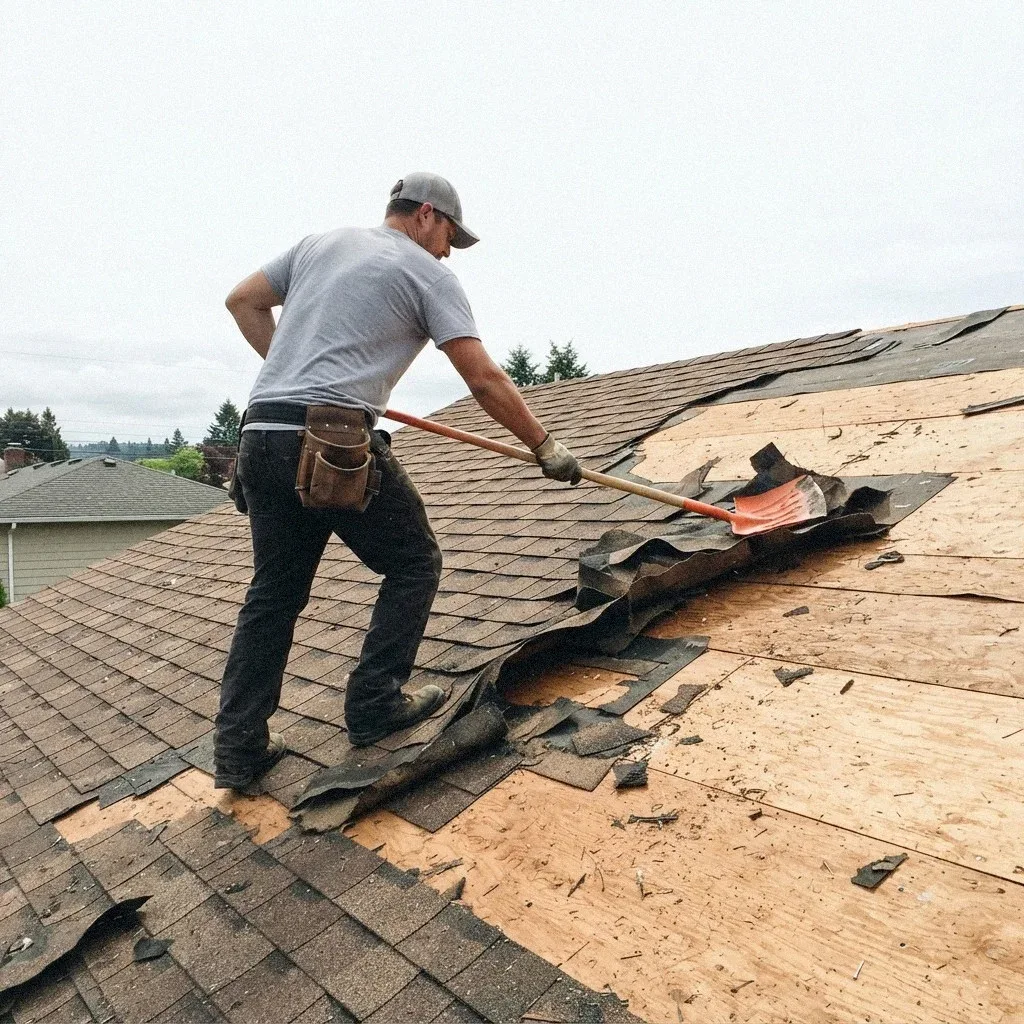
The rotted section of decking gets cut out and replaced with new sheathing fastened to sound rafters, matched to the surrounding thickness so the roof plane sits flat again once the covering goes back down.
Whatever let water in, whether a cracked tile, worn underlayment, or failed flashing at a valley or penetration, gets replaced as part of the same repair, since new decking under an unresolved leak just rots again.
Most roof problems here start with heat, not water. Years of baking sun dry out sealants and curl shingle edges long before a storm ever tests them. By the time a leak shows up indoors, the damage on top has usually been building for a while. The licensed pros we connect you with look for that early wear.
Repair now, or replacement budgeted?
| What you have |
The sensible option |
|---|
| One spot, and the rest of the roof sound | A single repair visit |
| A roof that needs something doing to it every year | Replacement, budgeted rather than rushed |
| Anything that has reached the decking or the attic | Tear-off, with the decking made good as it goes |
When A Repair Needs A License
From the ground, a homeowner can sight the roofline for a dip and watch for tile that looks cracked or out of line. Anything beyond that, pressing on the roof surface or opening the attic to check the decking, belongs to the licensed pros we connect you with.
When a Slab Foundation Home Ages Differently
Rotted decking that goes unaddressed can eventually let water reach ceiling insulation and drywall below, and a soft enough section can become a safety concern for anyone walking the roof for other repairs or maintenance.
Find Out What Repairs Would Run
Expect an estimated $600 to $4500 for sagging or rotted roof decking here, with the pitch, the access and how much decking is sound doing most of the moving. Simi Valley's dry season leaves most tile and shingle roofs facing sun and Santa Ana wind wear, not insect damage, so a re-roof estimate here rarely carries a pest line item. If the licensed pros we connect you with find soft decking near Bridle Path or an older tract home, they'll flag moisture or age first, then check further before pricing any treatment. pricing guide.