How a Simi Valley Roof Claim Actually Gets Paid
What actually decides what a Simi Valley insurer pays after roof damage.
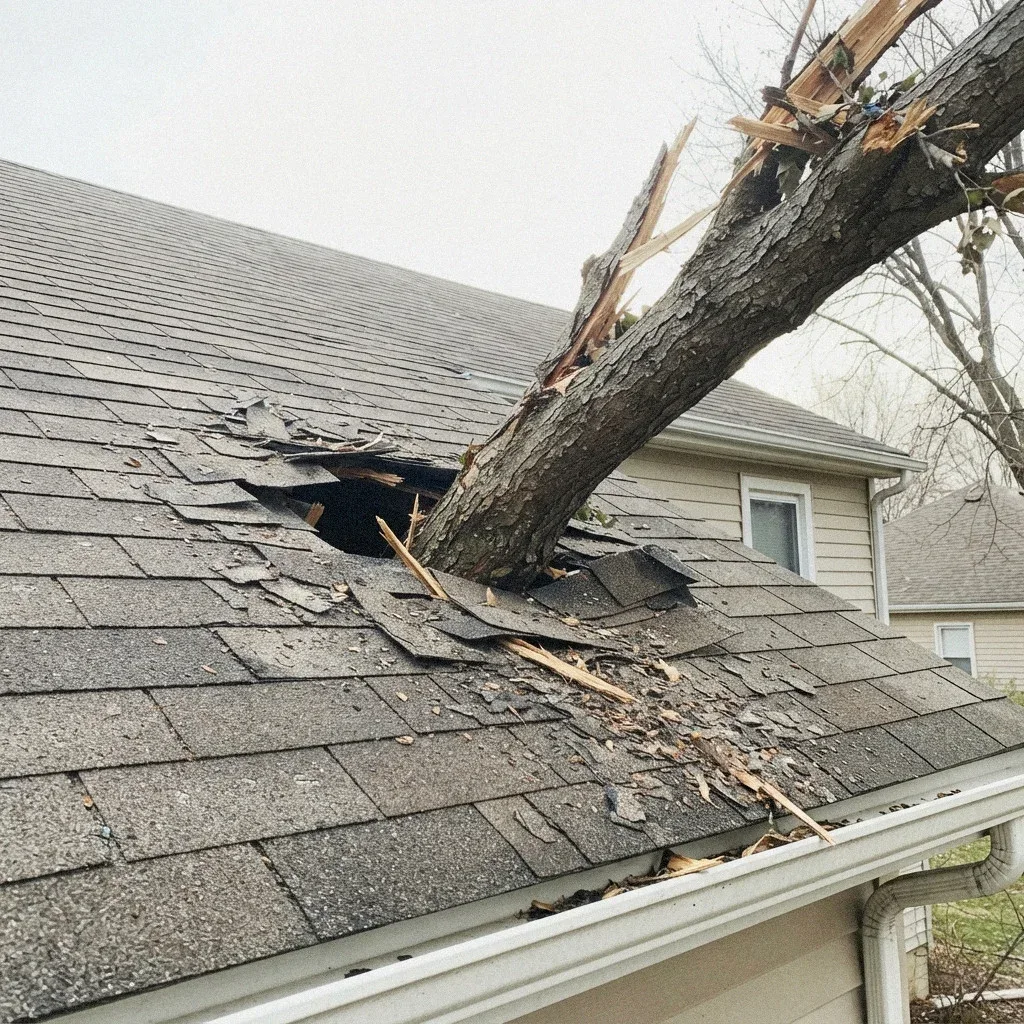
A Simi Valley roof claim starts with proving a covered peril, not gradual wear, caused the damage. The insurer inspects, writes a scope of loss, and pays in two parts if actual cash value applies.
Covered Peril Versus Wear and Tear
A roof insurance claim in Simi Valley comes down to one distinction: did a covered peril cause the damage, or did the roof simply age out under years of Santa Ana wind and sun. Policies pay for sudden events like a wind-torn tile or a branch through the decking. They do not pay for a wear and tear exclusion, which is what most insurers call a tile roof that has quietly baked for twenty years near Wood Ranch or the Tapo Canyon area.
Most homeowner policies here settle roof claims using replacement cost value, but the first check is often figured at actual cash value, with the remainder held back until repairs are finished and proven. That holdback exists so the insurer isn't fronting money for work that hasn't happened yet. A Simi Valley homeowner in Wood Ranch or Big Sky should expect this two-step payment pattern rather than one lump sum arriving right after approval.
The deductible comes off the top no matter which payment method applies, and it's the homeowner's share regardless of what caused the damage. Wear and tear itself isn't a covered peril at all, so a tile roof that's simply aged through twenty summers of Santa Ana wind and sun gets no payout on that basis alone. Coverage turns on a specific, sudden event, not the roof's calendar age.
Photographing Damage Before Anyone Arrives
Get photos and video before anything is moved, tarped, or swept off the roof, because that first look is the record an adjuster will compare everything against later. Wide shots of the whole slope, close-ups of each damaged area, and interior ceiling or attic shots if water got in all matter. A homeowner near Sinaloa Lake or Santa Susana who tarps for safety first should still photograph the damage underneath before covering it.
Some policies require a proof of loss, a signed statement laying out what's being claimed and its value, submitted within a window set by the policy itself. Missing that window can complicate a claim even when the damage itself was never in question. Homeowners should check their own policy for whether this step applies and how long they have, since the requirement and deadline vary by insurer rather than by any single statewide rule.
- A covered peril is a named cause of loss, like wind or a falling limb, that the policy agrees to pay for. The wear and tear exclusion removes coverage for damage that built up slowly, which matters on a Simi Valley tile or shingle roof that's spent 20 summers under direct valley heat.
- Replacement cost value is what a new roof costs to install right now, in today's material and labor prices. Actual cash value starts from that number and subtracts a deduction tied to the roof's remaining service life, which is why two claims on similar homes can pay out very differently.
- The deductible is the portion you cover before the insurer pays anything, charged once per claim, not once per repair line. Depreciation holdback is a separate amount the insurer keeps back until the roof is actually replaced, then releases against the completed invoice from the licensed pros we connect you with.
- The line item estimate breaks the roof into priced pieces: tear-off, underlayment, flashing, tile or shingle, disposal. Every dollar the insurer plans to pay traces back to a line in this document, so a missing line for valley flashing near a chimney means that repair goes unpaid unless someone catches it.
- Proof of loss is the signed, itemized claim statement you send the insurer, and it starts the clock the insurer works against under California's claim-handling rules. A late or incomplete proof of loss can stall a Simi Valley claim before the roof work even gets scheduled.
- A mortgage endorsement puts both the homeowner's and the lender's names on the claim check, since the lender has a financial stake in a home built on a slab foundation with a roof it holds as collateral. The lender typically has to sign off before funds get released for repair.
How the Field Adjuster Builds the Estimate
The insurer sends a field adjuster to walk the roof, take measurements, and photograph what they find, then translate all of it into a scope of loss and a line item estimate covering materials and labor. This document becomes the basis for the settlement. Tract homes across Simi Valley built in the 70s and 80s often share roofing details, so an adjuster unfamiliar with a specific slope or valley can undercount what a repair actually requires.
If the scope of loss leaves something out or prices a repair too low, the next step is a supplement: a written request, backed by measurements or photos, asking the insurer to revise the numbers before the claim closes. When a supplement stalls or gets rejected outright, a homeowner can request reinspection, and some policies include an appraisal clause offering a separate path when the two sides can't agree on value.
- Photograph every damaged area before tarps or repairs cover it, including wide shots of the whole roof from the yard and, if safe, closer shots from a ladder. Insurers weigh photo evidence heavily, and a roof near hillside lots in Wood Ranch or Bell Canyon can shift fast once wind or debris exposure continues.
- Write down the date you noticed the problem and any event connected to it, like a red flag warning day with strong Santa Ana gusts. Insurers use that timeline to separate a sudden covered event from damage that simply accumulated over years of valley sun.
- Have a licensed roofer inspect the roof and put findings in writing before the adjuster's visit if there's time. An independent set of eyes on a tract home roof built in the 70s or 80s often catches wear the homeowner missed, and gives something concrete to compare against the adjuster's scope.
- Keep every receipt for temporary fixes, such as a tarp over an exposed section near Tapo Canyon or Las Llajas Canyon, since policies generally expect reasonable steps to stop further damage. Insurers typically reimburse those costs as part of the claim once it's documented and submitted.
How the Payout Math Actually Works
Simi Valley homes financed through a lender usually see the insurance payment made out to both the homeowner and the mortgage company. That mortgage endorsement means the lender must sign off before the check clears, since the lender holds a financial stake in the roof over a house near Tapo Canyon or Wood Ranch until the loan is paid off. Expect an extra signature step, not a faster one.
A claim denial in Simi Valley is not automatically final. A homeowner can request a reinspection, submit a supplement with new evidence, or invoke the appraisal clause where the policy allows it, all without heading straight to a lawsuit. Keeping a written record of every call and letter from the insurer matters here, since a second look often turns on documentation the homeowner already has but has not yet put in front of the right person.
| Basis | How It Pays | Ends Up |
|---|---|---|
| What it pays | Full replacement cost, no deduction | Replacement cost minus depreciation |
| Initial check | Often the full approved amount | Depreciated amount only |
| Remaining payment | Rarely a second payment needed | Depreciation holdback after proof of work |
| Best suited when | Insurer pays to rebuild in kind | Insurer pays current depreciated worth |
| Where it applies | Set by the dwelling coverage type | Set by the dwelling coverage type |
Why Insurers Push Back or Deny
A public adjuster works for the homeowner rather than the insurance company, building the case and negotiating the settlement in exchange for a cut of the payout rather than a flat fee. Some Simi Valley homeowners bring one in on a large or contested claim; others handle the process themselves with help from their contractor. Either path is workable depending on how complicated the damage and paperwork turn out to be.
A roofing contractor's job in a claim is to document what's actually wrong and produce a separate estimate the homeowner can hold up next to the adjuster's numbers. This isn't a fight between contractor and insurer; it's a second set of trained eyes on the same roof. A contractor familiar with hillside lots around Santa Susana Knolls or the tile roofs common across older Simi Valley tracts can flag damage a general adjuster might pass over.
Getting a Low Payout Reopened
Timing affects how a Simi Valley roof claim plays out almost as much as the paperwork does. A claim filed after a red flag warning day with high winds moves differently than one filed months later, since the roof's condition and any temporary repairs change the longer a claim sits open. Storm damage near Arroyo Simi or the Corriganville Regional Park area is easier to document while it is still fresh and visible.
None of this guarantees a particular payout, and nothing on this page is legal advice about any specific policy, denial, or claim. What holds true across most Simi Valley claims is that documentation, a clear scope of loss, and a contractor's independent estimate give a homeowner the strongest footing, whether the roof sits near Tapo Canyon, Rancho Simi Community Park, or anywhere else in the city.
Where Simi Valley Claims Go Sideways
- California's claim-handling rules run through the Department of Insurance, which sets response and payment timelines insurers must follow once a Simi Valley homeowner files a roof claim. Missing a deadline on the insurer's side is something a homeowner can raise directly with the department.
- California regulations require an insurer to acknowledge a new claim and then act on a completed proof of loss within set periods, accepting or denying it rather than leaving the file open indefinitely. Those clocks only start once the paperwork the insurer asked for is actually complete.
- A public adjuster is hired by the homeowner, not the insurance company, and is paid a fee out of the claim to negotiate on the homeowner's behalf. California licenses this role separately from field adjusters, and using one is optional, not a required step in any Simi Valley claim.
- The role of the licensed pros we connect you with is documentation and repair, not negotiating the claim itself. They can supply photos, a written line item estimate, and technical detail on tile or shingle condition that supports whatever the field adjuster or public adjuster is arguing.
- A supplement is a second request submitted after the original scope of loss missed damage, such as underlayment discovered only once tile near a ridge line is pulled back. It has to tie directly to the same covered peril and usually needs its own photos or contractor notes to get approved.
- Depreciation holdback is the difference between the initial actual cash value payment and the full replacement cost value the policy eventually allows. Most Simi Valley insurers release that remaining amount only after the homeowner turns in a final invoice and completion photos from the licensed pros who did the work.
Frequently Asked Questions
Will insurance cover an old, worn-out roof?
Not by itself. A policy here pays when a specific covered peril, like wind-driven debris tearing tile loose, causes the damage. A roof that has simply aged out under years of valley heat falls under the wear and tear exclusion, and insurers typically deny claims filed on that basis alone, regardless of the roof's location in Simi Valley.
Why did the adjuster only approve part of my roof?
The field adjuster documents only what matches the reported cause, so a claim tied to Santa Ana wind damage on a Simi Valley tile roof may exclude sections showing plain age or granule loss. Ask for the full scope of loss in writing and check whether every damaged slope was actually inspected, including areas facing toward the Santa Susana Mountains.
What's the real difference between RCV and ACV?
Replacement cost value pays to install a new roof at today's prices. Actual cash value subtracts an amount for the roof's age and wear before paying out. Many Simi Valley policies hold back that difference as depreciation until the licensed pros we connect you with finish the job and you submit proof of completion.
How do I challenge an adjuster's scope of loss?
Request the adjuster's full scope of loss in writing and set it beside a line item bid from the licensed pros we connect you with. If the two disagree on quantities or missed slopes, a supplement or a formal reinspection request is the next step before assuming the payout is final.
What can I do if my roof claim is denied?
You can request reinspection from the insurer, use the policy's appraisal clause if one exists, or file a complaint with the California Department of Insurance. A public adjuster, working for you rather than the insurer, can also review the file if the claim denial or payout still seems short after those steps.
Want Your Scope of Loss Checked First?
Get the adjuster's scope of loss in writing before signing anything, and compare it against an independent inspection.
Call (805) 463-1431