The Reroof Sequence for Simi Valley Homes
What happens on-site from signed contract to final walkthrough on a Simi Valley reroof.
A full roof replacement in Simi Valley runs from scheduled tear-off through deck inspection, re-nailing, underlayment, flashing, field shingles, ridge caps, cleanup, magnetic sweep, and a final punch list before walkthrough.
Booking the Job and Protecting the Yard
A signed contract in Simi Valley locks in a crew, but the start date usually shifts around Santa Ana wind advisories, since nobody sets up on a roof when red flag warnings are active. Scheduling tends to favor calmer mornings before the valley heat builds, and the licensed pros we connect you with will often call the day before to confirm wind and temperature are workable for tear-off.
Property protection covers everything below the roofline before work starts near Wood Ranch, Bridle Path, or any hillside lot with landscaping close to the house. Ground tarps catch falling debris, patio furniture gets pulled clear, and driveway and walkway surfaces get covered where ladders and material carts will run all day, since a single dropped nail can puncture a tire or a bare foot.
Deck inspection starts as soon as the old roofing comes off a section, while the sheathing is still exposed and easy to read. In older Simi Valley tract homes from the 1970s and 1980s, this is where sun-baked plywood shows its age, and the licensed pros we connect you with check for soft or spongy spots, warping, and any staining that points to a slow leak nobody noticed from inside.
Stripping the Old Roof to the Deck
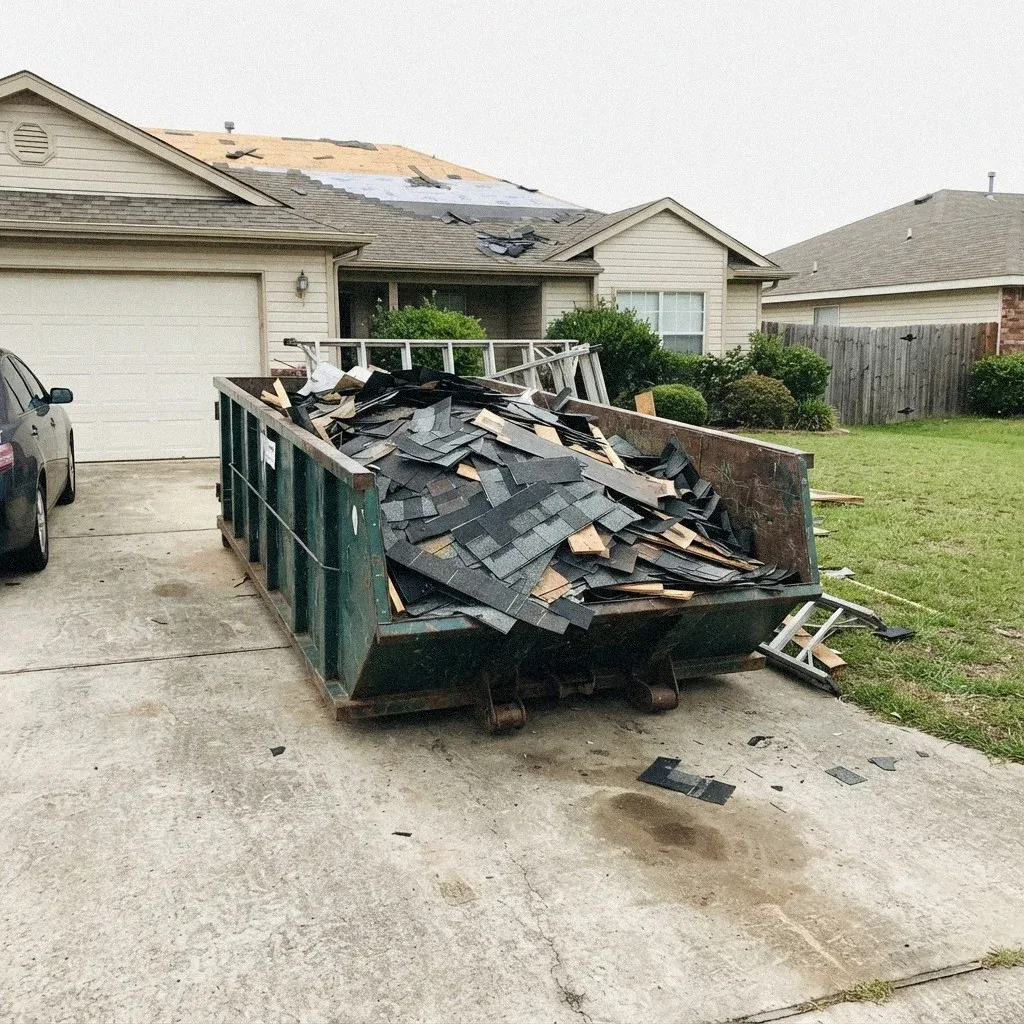
Tear-off moves in sections rather than stripping the whole roof at once, which keeps a home near Santa Susana or the Community Center area from sitting open if weather or wind picks up mid-day. Old shingles, tile, or roofing paper come off down to bare decking, and everything gets loaded straight into a dumpster rather than piled in the yard.
Deck re-nailing happens once bad sheathing is swapped out, tightening the nailing pattern across the whole deck to current standards rather than just the spots that failed. Decades of valley heat cycling through attic spaces can loosen original fasteners over time, so this step is less about the sheathing itself and more about making sure the surface holds every layer going on top of it.
- Scheduling begins once the signed contract sets a start window, usually aimed at a dry stretch since Simi Valley's rain arrives in a handful of winter storms rather than spread evenly, and a full tear-off needs bare decking exposed to the weather for as short a time as possible.
- Property protection goes up before removal starts: tarps over plants near the foundation, plywood across walkways, and drop cloths along siding. On tract lots near Mount McCoy or Tapo Canyon, pool covers and patio furniture get moved or shielded too.
- Dumpster placement depends on the driveway and street access, which matters more on the hillside lots around Wood Ranch or Big Sky than on the flatter streets near the Downtown/Los Angeles Avenue corridor, where a standard driveway drop works without much planning.
- Tear-off strips the old shingles or tile down to bare decking so the crew can see the sheathing underneath. This step also confirms whether the roof is the clay tile common on older Simi Valley tract homes or asphalt composition shingle.
- Deck inspection follows tear-off immediately, checking every panel for soft spots or delamination. Simi Valley's dry climate limits moisture-driven rot compared to wetter regions, but decades of valley heat and sun still leave some sheathing brittle by the time it's exposed.
- Loose panels get pulled tight and re-fastened before anything new goes down, because shingles and underlayment need a firm, snug surface underneath to lie flat and hold their seal through Simi Valley's hot, dry summers.
Waterproofing Before Anything Visible Goes On
Synthetic underlayment goes down over the bare deck as the roof's real barrier against water, with shingles or tile acting more as the outer shell than the primary defense. Drip edge gets set along the eaves first so runoff clears the fascia instead of running behind it, and the starter course along the bottom edge locks the whole system down before anything else goes on.
Valley metal gets installed anywhere two roof slopes meet and funnel water into one channel, a detail that matters on the multi-plane rooflines common in Rancho Simi and Tapo Canyon area homes. These low points carry far more runoff than a flat section ever will, especially during the short, hard winter storms the valley gets between November and spring.
- Synthetic underlayment goes down across the bare deck first, giving the house a water-resistant layer while the rest of the work continues. It matters most if a stray storm rolls through during the days the roof sits partly finished.
- Drip edge runs the eaves and rakes first, then the starter course locks in above it. Together they set the line every following row follows, keeping runoff moving off the roof edge instead of creeping back under the first course during a hard winter rain.
- Flashing and valley metal go in wherever the roof plane changes or meets a wall, chimney, or valley where two slopes meet. These spots carry the heaviest water volume during Simi Valley's short, intense storm days, so they're sealed before the field shingles ever reach them.
- Step flashing at walls and a pipe boot at every vent seal the smaller openings that otherwise turn into slow leaks years later. These get set before any field shingles go down, not patched in around them afterward.
How the Table Below Breaks Down
Flashing gets fitted wherever the roof meets something it isn't part of: a chimney, a dormer, or the wall where a room addition ties into the original structure. Step flashing is layered piece by piece up a sidewall so each course laps over the one below it, shedding water outward instead of letting it work sideways into the wall.
Vent stacks, furnace flues, and any other roof penetration each need a boot matched to that pipe's diameter, set under the surrounding shingle courses so water sheds over it rather than against it. On a tract home built in the 70s/80s, decades of valley heat crack the rubber collar first, long before the field shingles show wear. The pros we connect you with replace every boot during a full replacement, not just the ones that look bad from the ground.
| Stage | What Happens | Why It Matters |
|---|---|---|
| Tear-off and deck check | Re-nailing, then underlayment | Fixes the base before anything new goes on |
| Eaves and rakes | Drip edge, then starter course | Sets the line every row above follows |
| Open field | Field shingles, nailing pattern checked | Channels water off long slopes fast |
| Walls, pipes, valleys | Step flashing, pipe boots, valley metal | Sealed as field shingles reach each spot |
| Cleanup and magnetic sweep | Hip and ridge cap installation | Seals the roof's highest, most exposed line |
Setting the Field Shingles in Place
Once flashing and underlayment are set, the crew works upward in horizontal rows, keeping each row's seams staggered so water never finds a straight path down through stacked gaps. On a Simi Valley clay tile roof, this stage looks different, with individual tiles hung and interlocked rather than laid in overlapping rows, but the same principle of offsetting joints still applies.
The roofline gets finished with pieces bent to wrap the peak and hips, sealing the top edge where both sides of the roof come together. If the design includes one, a vent runs along part of the ridge to let attic heat escape, which matters in a valley where attics can trap serious heat through a long, dry summer.
Sweeping the Yard and Final Checks
Cleanup runs alongside the work rather than waiting for the last piece to go on, with old material and packaging going into the dumpster as tear-off happens. Once the roof itself is done, a magnet on a pole gets rolled across the lawn, driveway, and any garden bed nearby to pick up stray nails before anyone in Simi Valley walks the yard barefoot again.
The punch list covers whatever small items got flagged along the way, from a flashing seam worth a second look to gutter sections that need reattaching after tear-off. If something outside the original scope turned up, like extra deck damage near Sinaloa Lake-area homes with older sheathing, that gets written up as a change order and reviewed before it's added to the job.
What Happens and In What Order
- Field shingles go down once flashing and underlayment are in place, starting at the eaves and working upward in overlapping courses. The nailing pattern gets checked row by row, since a consistent pattern is what keeps shingles locked down through Santa Ana wind events.
- Hip and ridge cap shingles close out the peaks and hips where two roof planes meet, finishing the top edge of the system after the field shingles are in place.
- Where the plan calls for one, a ridge vent gets installed along the ridge line during this stage, giving hot attic air trapped under the deck a way out once the field shingles and caps are down.
- Cleanup follows the last hip and ridge cap, clearing torn-off material, wrappers, and cut shingle scraps from the yard and driveway. The pros we connect you with haul it off the property before calling the job finished.
- A magnetic sweep of the driveway and yard catches nails that cleanup by hand misses, something homeowners on tract lots near Rancho Simi Community Park or Tapo Canyon notice right away when they walk the property barefoot.
- A punch list closes the job out, with any leftover item like a crooked cap or a paint touch-up fixed before the final walkthrough. If the scope grows past what was signed, that gets tracked and priced on its own before work continues.
Frequently Asked Questions
How many days does a full tear-off usually take?
Dumpster placement in Simi Valley usually means the driveway, since most tract lots don't leave much street frontage and city streets can be narrow near older neighborhoods like Santa Susana Knolls. The crew sets it close enough to load debris directly off the roof without hauling it across the yard, and moves vehicles out of the driveway for the day.
What if the crew finds rotten decking underneath?
Dumpster placement in Simi Valley depends on driveway slope and street width. Flatter streets near the Presidential Tract or Berylwood Park area allow standard driveway placement, while some hillside lots in Wood Ranch or Bridle Path need the crew to plan around narrower access before tear-off starts.
Will my landscaping and driveway be protected?
The pros we connect you with lay tarps across landscaping and driveways before tear-off starts, and plywood over pavers or delicate walkways where debris might fall. On tract lots near Berylwood Park or Rancho Simi Community Park, they also cover pool equipment and AC units before the first bundle comes off the roof.
What does a magnetic sweep actually catch?
A magnetic sweep runs a magnetized tool across the driveway, walkway, and yard after tear-off to pick up roofing nails that fall during removal. It matters on tract lots throughout Simi Valley where kids, pets, or bare feet cross the same driveway the dumpster and ladders used all day.
What gets checked during the final walkthrough?
A punch list is the short list of leftover items found at final walkthrough, things like a crooked ridge cap or a paint touch-up near a vent. The pros we connect you with note each item, fix them before leaving, and handle any added scope as a separate change order.
Ready to line up your Simi Valley reroof?
Describe your Simi Valley roof and timeline, and we'll put you in touch with a licensed pro who can walk the sequence with you.
Call (805) 463-1431