How Wind Days Add Up Over Time
This climate makes ventilation matter more than rain does. The valley delivers long runs of heat with very little cloud, so an attic has a whole afternoon to build temperature and only the night to lose it again. Whether it manages that depends entirely on whether air can get in at the eave and out at the top.
The other half of it is the housing itself. A great deal of the valley's stock went up between the 1960s and the 1980s and has been insulated and repainted since, and both of those jobs have a habit of closing the soffit vents the roof depends on. The venting was often adequate when built and is not adequate now.
Tile roofs age differently than shingles, and small cracks often hide under the profile until a granule check or a closer look turns them up. Waiting through another dry season can turn a minor repair into a full section replacement. The licensed pros we connect you with catch this before it spreads.
Timing the Work Right
- Location
- The attic space itself, with the evidence at the soffit vents along the eave and at the ridge or gable vents above them.
- Appearance
- Soffit vents painted shut or buried under blown-in insulation, a ridge that vents nowhere, and attic air noticeably hotter than the air outside.
- Cause
- Not enough intake, not enough exhaust, or both of them blocked, very often by later insulation work or by paint over the vents in the eave.
- Progression
- Gradual and invisible. The covering ages faster every summer, and nothing on the surface explains why until curling turns up early.
- Damage
- Trapped attic heat bakes the underside of the decking near the ridge and hip, softening asphalt shingles and shortening their life across Simi Valley's long summer.
- Season
- Two seasons show the two halves of the problem. A hot afternoon in summer shows whether heat is leaving, and if the attic is far hotter than outside, it is not. A clear cold morning in winter shows whether moisture is leaving, because that is when condensation appears on the nail points. Checking in only one season tends to find only one of them.
- Typical repair
- an estimated $450–$2600
How Small Damage Turns Into Big Damage
Poor ventilation gets blamed on the shingles, because the shingles are what show it. A roof curling and blistering ten years early looks like a bad batch of material or a careless installation, and both of those get suspected long before anybody opens the attic hatch to check. Go into the attic on a hot afternoon rather than looking at the roof. If the air up there is far hotter than outside and barely moving, and the soffit vents along the eave are painted over or packed with insulation, then the ventilation is the problem and the shingles are the symptom. A well-vented attic on the same street feels noticeably different on the same day.
Questions Worth Asking Before Work Starts
Clearing what is already there comes first, because it is frequently enough on its own. Soffit vents get opened up, paint cleared out of the mesh, and baffles fitted at the eave so blown-in insulation stops sliding down and blocking the intake. That restores the intake side, which is the half more commonly missing.
Where the openings genuinely are too small, more get added, and they get added in balance. Extra exhaust at the ridge without extra intake at the eave pulls air from wherever it can find a gap and makes matters worse rather than better. Intake and exhaust are sized together, and mixing two kinds of exhaust on one roof is avoided for the same reason.
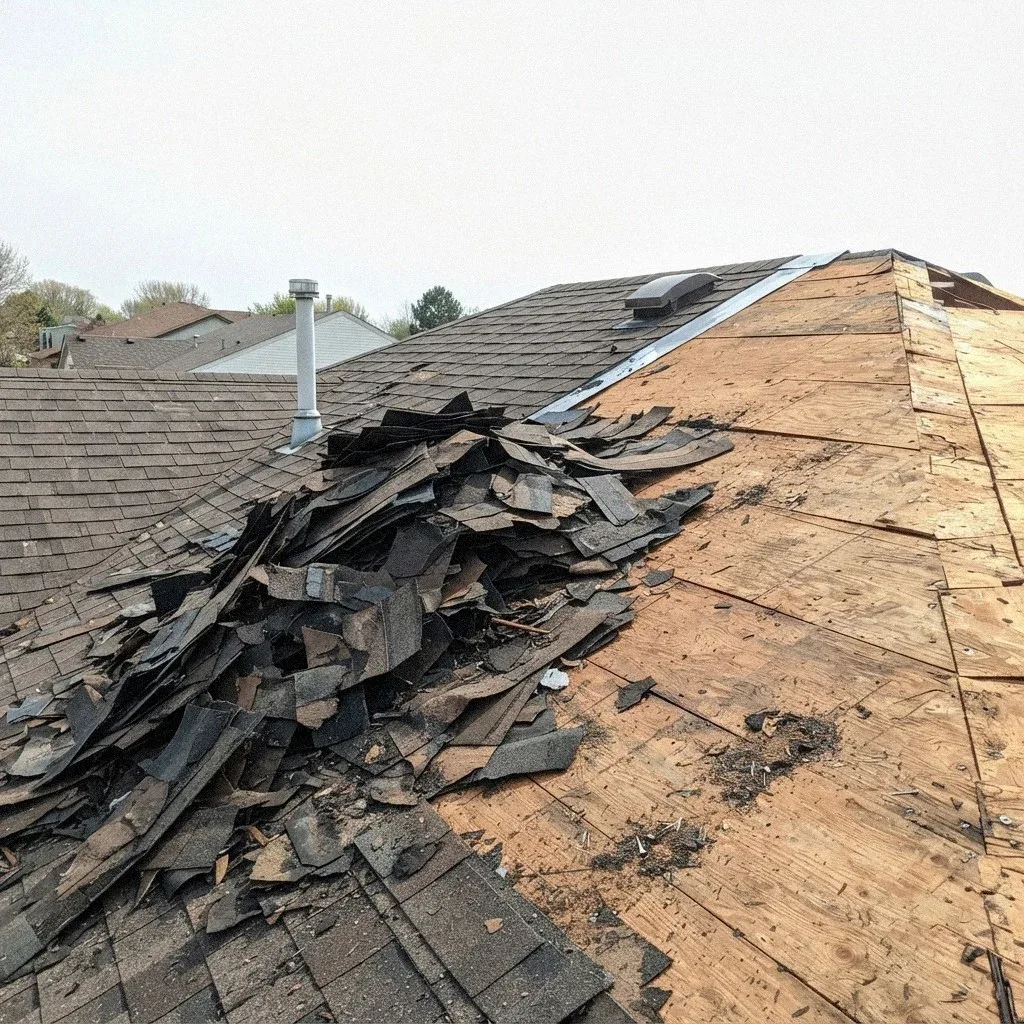
Wind does more damage than most homeowners expect, loosening tile and flashing that then fails the next time it rains. It is not always one dramatic event either; repeated gusts work a roof loose gradually. The licensed pros we connect you with check for lifted or shifted material after windy stretches, not just after storms.
Patch this one, or re-roof?
| The situation |
Usually the right call |
|---|
| One spot, and the rest of the roof sound | A single repair visit |
| A roof that needs something doing to it every year | Replacement, budgeted rather than rushed |
| Anything that has reached the decking or the attic | Tear-off, with the decking made good as it goes |
What Homeowners Can Handle Alone
Checking it is entirely reasonable. Go up on a hot afternoon, feel the air, and look along the eave from inside for daylight through the soffit vents; if there is none, the intake is blocked. Pulling insulation back off a soffit vent is within reach for most people. Cutting new openings in a roof or a soffit is not, since one involves the structure and the other involves the covering.
What the Valley Heat Costs Your Roof
The concern here is mold rather than heat. An attic holding damp air through a winter grows it on the underside of the deck and in the insulation, and that space usually shares air with the house through gaps around fixtures and the hatch. That is the real reason a musty attic is worth attending to rather than tolerating.
Talk To A Licensed Pro Today
Putting right poor attic ventilation usually runs an estimated $450 to $2600. That is a budgeting figure, not a price. Simi Valley's dry season leaves most tile and shingle roofs facing sun and Santa Ana wind wear, not insect damage, so a re-roof estimate here rarely carries a pest line item. If the licensed pros we connect you with find soft decking near Bridle Path or an older tract home, they'll flag moisture or age first, then check further before pricing any treatment. pricing guide.