Now taking calls — fast callback for urgent roof damage · (805) 463-1431
Low-Slope Patio Roof Leaks control in Simi Valley, CA
Roof Defects

Patio Roof Ponding and Leaks in Simi Valley

Winter is when a low-slope patio roof shows its weak points, since that's when Simi Valley gets its handful of intense storm days packed close together. A roof that drains too slowly has little time to dry out before the next system arrives.

Before you call

Low-slope patio roof leaks happen when a flat or barely-pitched patio roof lets rainwater pond instead of draining, and that standing water works through the membrane, seams, or flashing at the house wall.

Heat And Wind Load

The Order Problems Usually Show Up In

Underlayment is what actually keeps water out, and it is the part nobody ever sees. Under tile it spends decades in an attic that climbs well past a hundred degrees through August, going brittle long before the tile above it shows anything at all. That is how a sound-looking tile roof still leaks.

Standing water still on the roof next day

Water still sitting on the patio roof a day or more after rain stops means the slope is too flat to drain on its own, and the membrane or built-up roofing is holding water against the surface. That standing water is what eventually works its way through any weak seam.

Soft, spongy spot near the low point

A soft or spongy patch felt underfoot near the low point of the patio roof means the decking underneath has absorbed water long enough to lose strength. Left alone, that section can't support foot traffic or fastener holds, and the substrate needs replacement, not just a patch on top.

Cracked or lifting membrane from a ladder

Cracked, blistered, or lifting membrane visible from a ladder means the roofing material has aged past its useful life or the seams were never sealed properly at the lap. Once the surface splits, water gets under it at the next rain and the deck below starts absorbing moisture with nowhere to go.

Ceiling stain where roof meets the house wall

Staining on the patio ceiling near where the low-slope roof ties into the house wall or a support beam usually traces to flashing that's failed at that transition. Water is running behind the counterflashing at the wall tie-in rather than shedding off the patio roof edge the way it should.

Leaf litter piled at the roof's low point

Debris or leaf litter built up at the low point of the patio roof holds water against that spot even longer than the flat slope already does on its own. Around Simi Valley, patios shaded by trees near Rancho Simi Community Park or similar tree-lined yards collect more of this buildup after Santa Ana wind events.

What The Valley Floor Does To Roofs

A patio roof built onto a Simi Valley tract home in the 70s or 80s often has less pitch than the main roof, since it was meant to shade a patio rather than shed heavy rain. That flatter slope leaves less margin when a real storm rolls through the valley.

Simi Valley's winter storms tend to arrive as a few hard, heavy days rather than steady rain, and a low-slope patio roof near the Arroyo Simi floodplain has little time to shed water between drips before the next downpour hits. Ponding starts fast when drainage already lags.

Tile roofs age differently than shingles, and small cracks often hide under the profile until a granule check or a closer look turns them up. Waiting through another dry season can turn a minor repair into a full section replacement. The licensed pros we connect you with catch this before it spreads.

Timing the Work Right

Location
On patio and porch roof sections built at a shallow pitch, especially where they meet the house wall or a support beam.
Appearance
Standing water on the roof surface after rain, or ceiling staining beneath the patio roof near a wall tie-in.
Cause
A slope too flat to drain quickly, paired with aging membrane, failed seams, or flashing that's pulled loose at the wall.
Progression
Worsens each winter as ponding softens the decking further and the low spot holds water longer with every storm.
Damage
Ponding water rots the deck framing under the patio roof, stains the ceiling below, and can support mold growth where wood stays wet for days.
When
Winter is when a low-slope patio roof shows its weak points, since that's when Simi Valley gets its handful of intense storm days packed close together. A roof that drains too slowly has little time to dry out before the next system arrives.
Estimated cost
an estimated $400–$2200

How Small Damage Turns Into Big Damage

A pipe boot leak and a ponding patio roof both stain the ceiling below, so homeowners mix them up. A roofer separates them by tracing the moisture path from the attic side: a boot failure shows a tight, dry ring around one vent stack, while ponding soaks a broad section of decking near the house wall. Both a bad pipe boot and a ponding patio roof leave water stains on the ceiling below, so it looks like one problem. A roofer traces the actual wet path from inside: a penetration leak radiates from one fixture, while ponding damage follows the low edge of the deck across a wider area.

What the Repair Actually Covers

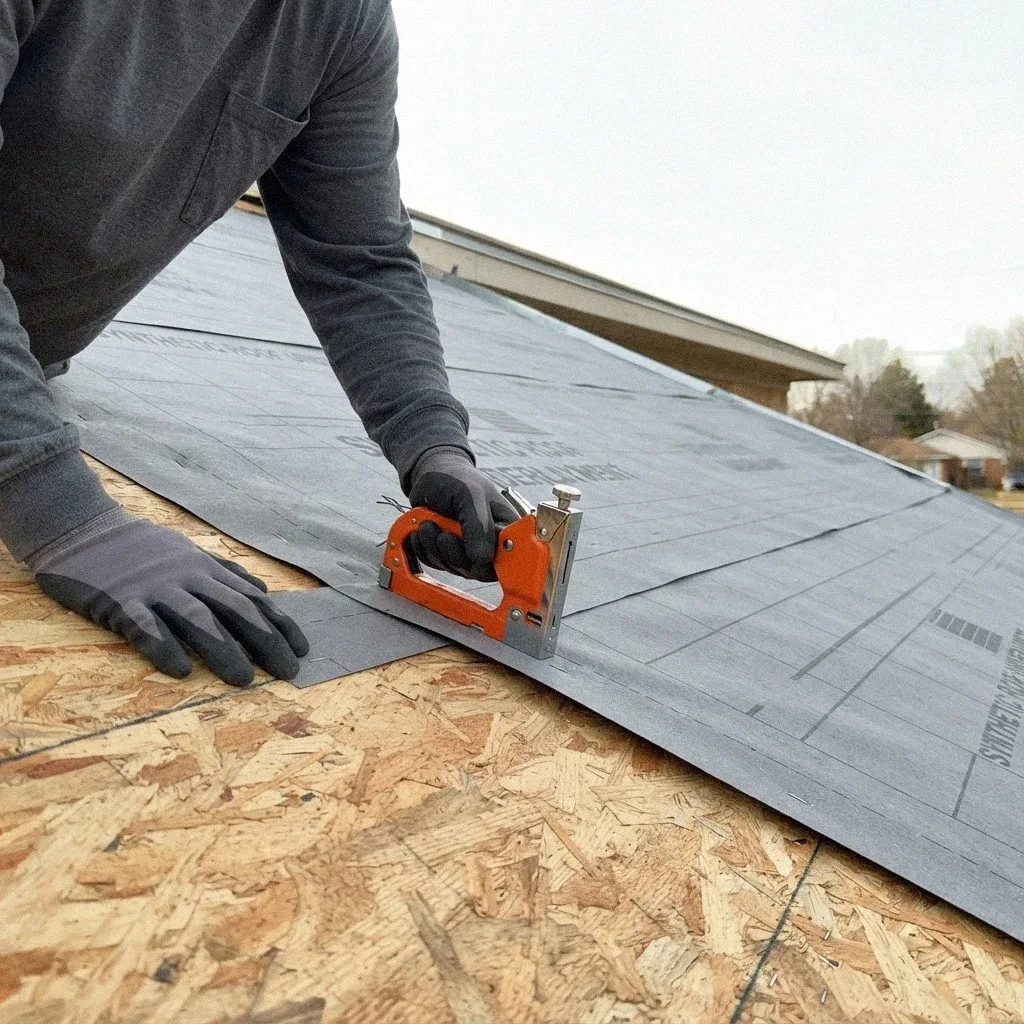
A real fix means stripping the old membrane or built-up roofing down to the decking, correcting the low spot where water was pooling, and installing new roofing material with proper laps and flashing at every wall tie-in and edge. Anything less leaves the same ponding pattern to return.

If the decking has gone soft from sitting under standing water, that substrate has to be cut out and replaced before new roofing goes down. Laying new membrane over a weak deck just hides the problem until the surface cracks again at the same spot.

A roof can look fine from the driveway and still have trouble waiting near a flashing edge, a cracked pipe seal, or a spot where granules have worn thin. Small gaps like these rarely show themselves until a hard rain finds them. A close, honest inspection catches what a glance from the street cannot.

Which of the two you actually need
The situation Usually the right call
One failure in one place, found earlyOne visit
A repair that has already been done once and failedReplacement rather than another repair
Water that has got past the underlaymentReplacement, because the structure is involved

What Homeowners Can Handle Alone

A homeowner can walk out after a storm and check whether water is still pooling on the patio roof a day later, and look underneath for staining near the house wall or a support beam. Getting on the low-slope roof itself to check the membrane and flashing is work for the licensed pros we connect you with.

What the Valley Heat Costs Your Roof

Water held under a ponding patio roof for days at a time can seep into the wood framing and any attached ceiling material, creating conditions for mold growth. That's a concern for anyone using the patio space regularly, especially if the staining keeps spreading after each rain.

See What Your Roof Actually Needs

Most low-slope patio roof leaks jobs in Simi Valley land between an estimated $400 and $2200, and the roof decides where inside that. Simi Valley's dry season leaves most tile and shingle roofs facing sun and Santa Ana wind wear, not insect damage, so a re-roof estimate here rarely carries a pest line item. If the licensed pros we connect you with find soft decking near Bridle Path or an older tract home, they'll flag moisture or age first, then check further before pricing any treatment. pricing guide.
PAGE INDEX

What a Closer Look Turns Up

Ember-Vulnerable Vents and Roof Edges

Wildfire Readiness. Ember-vulnerable vents and roof edges are unscreened or coarse-mesh openings at the ridge, gable, soffit, or eave that let wind-driven embers enter the attic during a wildfire, most common on hillside homes near open brush.

Broken Tile From Foot Traffic

Roof Defects. Broken tile from foot traffic is a cracked or displaced concrete or clay tile caused by someone stepping mid-span instead of over a rafter, usually in a line toward a vent, dish, or chimney.

Failed Step Flashing at Walls

Flashing Failure. Failed step flashing is the row of small metal pieces climbing the side of a wall or chimney, each one woven into the course beside it.

Questions & Answers

Frequently Asked Questions

Why does my patio roof still leak days later?

Cost hinges on whether the deck under the patio roof is still sound. If the substrate is dry, a low-slope repair means new membrane or built-up roofing over solid decking, a modest job. If ponding water has softened the deck, the pros we connect you with have to cut out and replace that section before anything new goes down, which raises the price.

Can I patch a ponding patio roof myself?

Yes. A low-slope patio roof depends on membrane and flashing doing the whole job, since there's little pitch to shed water on its own. Once ponding starts pooling at a low point or the membrane splits, every rain after that finds the same weak point again until a licensed roofer replaces the affected section.

Does a patio roof leak mean I need a new roof?

Patio roofs tied into the main house at Wood Ranch or Bridle Path homes often sit at a shallower pitch than the primary roof, so they're more prone to ponding. Where the patio roof meets the fascia or ties into a wall, that transition is also where flashing failure shows up first.

How do I know if the patio roof is ponding?

Look at the patio roof after the next real rain. Standing water that takes more than a day or two to drain, or a soft, spongy feel underfoot near the low point, points to ponding damage. From below, staining on the patio ceiling near a beam or the house wall confirms it.

Get Started Today

Dealing with low-slope patio roof leaks right now?

Materials, slope, and how the last roof was installed all change what a job costs and how long it takes. Two houses on the same street can need two different answers. Get the roof looked at before anyone quotes a number.

Call (805) 463-1431
Free inspections & same-day service available
Call (805) 463-1431 Schedule Online