The Complete Simi Valley Roof Inspection Guide
What gets checked, how it gets documented, and what the findings actually mean for your roof.
A roof inspection is a documented check of the roof surface, flashing, attic, and gutters, done by walking the slopes and looking from inside the attic, to catch soft spots and leaks before they spread.
Four Types of Roof Inspection
Simi Valley homeowners run into four kinds of roof inspection, and confusing them wastes money. A maintenance inspection checks a roof that isn't causing trouble yet, looking for early wear before the next Santa Ana wind event finds it. A pre-purchase inspection gives a buyer near Wood Ranch or Bridle Path a condition snapshot before closing. A post-storm inspection follows a specific event. A warranty inspection documents compliance so a manufacturer or roofer can't deny a claim later.
The visual inspection is the starting point every other type builds on. An inspector walks the field of the roof, checks flashing at penetrations, and looks at ridge and eave lines for movement. On a tile roof common in Simi Valley's 1970s and 1980s tracts, this also means checking for cracked or slipped tiles, since a broken tile can sit unnoticed for months before it lets water through underneath.
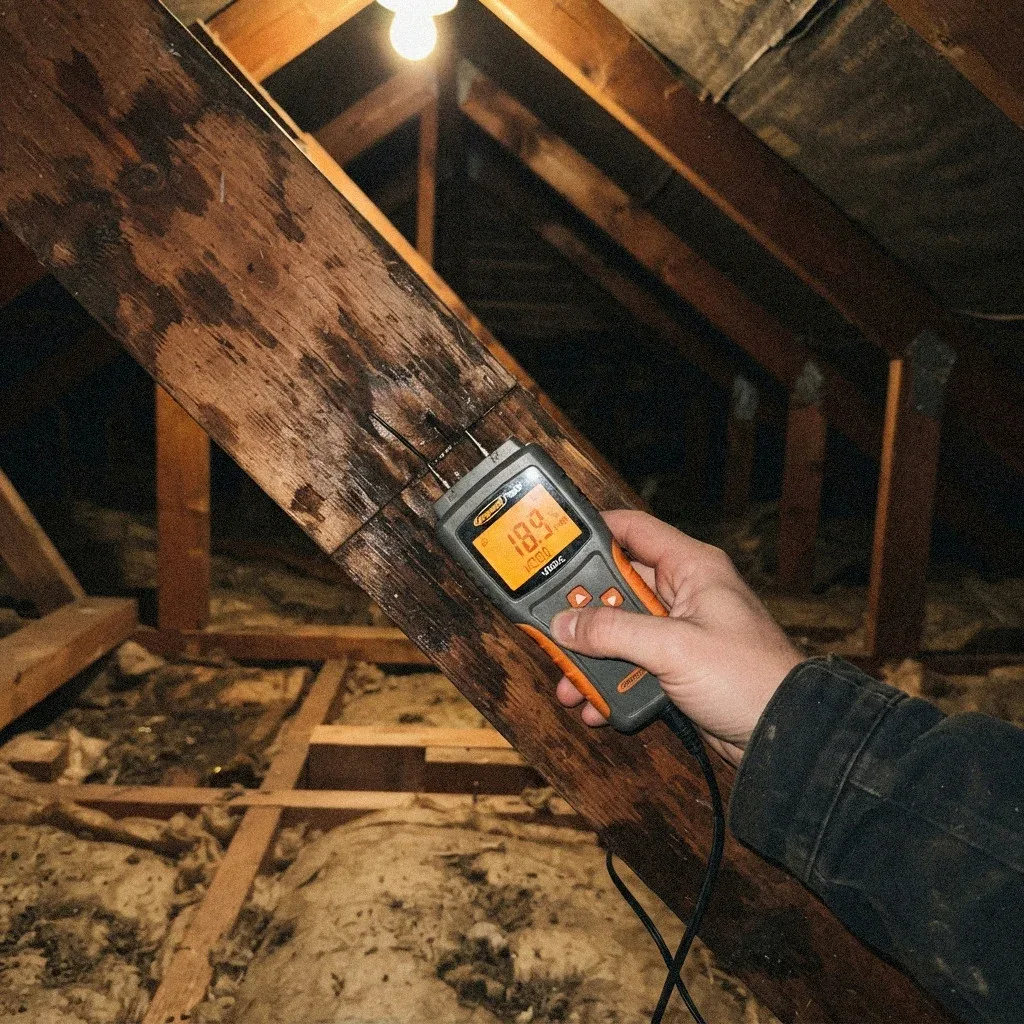
Tools get added when a visual check raises a question a photo can't answer. A moisture meter reads dampness inside decking without cutting into it, useful after a roof has sat through a hard winter storm off the Santa Susana Mountains. An infrared scan can flag temperature differences tied to trapped moisture. A core sample or test squares come out rarely, usually on an older tile or built-up roof where the visual evidence alone can't settle what's underneath.
Areas the Inspector Actually Checks
Exterior scope on a Simi Valley roof starts with the field material itself. On tile, that means cracked, slipped, or missing pieces and worn underlayment showing at broken spots. On composition shingle, it's granule loss, curling edges, and brittle spots baked in by years of direct valley sun. Either way, an inspector is looking for damage that lets water past the surface layer, not just wear that changes how the roof looks from the street.
Flashing gets checked everywhere the roof meets something else: chimneys, skylights, and the walls of additions common on older Simi Valley tract homes. A flashing check on a hillside lot near Santa Susana or Santa Susana Knolls also covers where the roof meets a retaining wall or elevated deck, since those transitions move with the house over time. Valleys get checked for debris that can back water up under tile or shingle during a hard winter storm.
- The tile or shingle field gets a visual inspection first, walking or viewing each slope for cracked or slipped tile, lifted shingle edges, and granule loss baked in by years of direct Santa Ana sun exposure on west-facing slopes.
- Flashing check covers valleys, chimneys, skylights, and vent penetrations, since these are the joints where a slow leak starts long before a stain shows up on a ceiling inside the house.
- Gutters and downspouts get checked for sun-brittled sealant, sag, and whether runoff clears the slab foundation, which matters most on the hillside lots around Big Sky and the Santa Susana Knolls.
- Attic inspection looks at the underside of the roof deck for staining, checks insulation for compression, and confirms soffit and ridge vents are open, since blocked ventilation bakes shingles and tile underlayment faster in valley heat.
- A moisture meter gets used on any decking that looks discolored, giving a reading without opening it up, which separates an old dried stain from active moisture still working its way through the roof.
- Photo reports place a dated image at each finding location on the roof plane, so a reader can match a cracked tile near a ridge or a gap at a plumbing boot to exactly where it sits, not just a written note.
How Findings Get Recorded
Interior scope means checking rooms below the roofline for signs the covering has already failed. Ceiling stains, bubbled paint near a chimney chase, and warped baseboards near an exterior wall all point upward. On a Simi Valley tract home, this interior pass matters most in rooms under valleys or skylights, where a slow leak shows up on drywall long before anyone climbs a ladder to look.
Attic inspection catches what never makes it to a ceiling. A soft spot in decking, rust streaking on nail heads, or a dark ring around a vent pipe all show water intrusion before drywall does. An inspector also checks insulation for compression or staining, since flattened or discolored insulation under a specific spot on the roof usually lines up with where a punch-through or slow leak has been active longest.
- A maintenance inspection is a routine check meant to catch a lifted tile or clogged gutter before the next winter storm turns a small gap into a leak inside the attic.
- A pre-purchase inspection happens before a Simi Valley sale closes, giving a buyer a condition rating and a written scope of repair to weigh against the asking price or negotiate credit for before signing.
- A post-storm inspection follows a wind event or falling limb, focused on cracked tile, dislodged flashing, and any gap that opened a path for water, checked against what the last maintenance visit recorded.
- A post-storm inspection follows a hard winter rain and focuses on fresh damage: lifted or cracked tiles, a punch-through near a vent, or debris pooling at a valley after wind off the surrounding hills moved branches onto the roof.
Inspection Report Versus Repair Bid
Attic inspection is where a soft spot or punch-through often shows up first, before it ever reaches drywall. The inspector checks rafters and decking near penetrations, looks for daylight or water staining, and may use a moisture meter on suspect wood rather than guessing from a stain's size. On a Santa Susana Knolls or Wood Ranch hillside lot, this step also flags where embers or ash could work into a vent during a red flag warning day.
Debris in Simi Valley gutters tends to follow whatever burned or blew in most recently. Ash and char after a wildfire year near canyon-adjacent hillside lots is a documented local pattern, and Santa Ana wind events push loose leaf litter and dust into gutters between storms. A gutter packed with ash or debris going into the winter rain season is a common finding, and it's one of the easier problems to catch before it causes real damage.
| Type | Purpose | Typical Findings |
|---|---|---|
| Maintenance inspection | Routine check, no damage assumed | Set by roof age and material |
| Post-storm inspection | Called after a specific storm | Right after the event |
| Documented by | Inspector, photo report attached | Contractor writing the bid |
| Attic access | Usually included | Only if repair requires it |
| Best used for | Damage worry after a specific event | Torn flashing, granule loss, punch-through spots |
Understanding the Condition Rating
A photo report gives a Simi Valley homeowner something to act on instead of a verbal impression. Every flashing check, soft spot, and worn tile gets a photo tied to a specific location on the roof, often a section over the garage or near a chimney penetration. For a post-storm inspection tied to Arroyo Simi-area drainage concerns, that documentation also matters if a claim ever needs to show what changed after the storm.
Reading a report means checking the condition rating next to each finding, not just glancing at the photos. Some inspectors separate field tile from ridge and hip work, or note test squares taken to check membrane condition under aging tile. A rating of fair on a 20-year-old roof near Tapo Canyon reads differently than the same rating on a newer roof in Big Sky, and the report should say why.
Making Sense of the Findings
A report and a bid answer different questions, and Simi Valley homeowners sometimes expect one document to do both jobs. The report describes condition: what an infrared scan or core sample found, where a penetration survey turned up a weak seal, and how urgent each item is. The scope of repair, and the price attached to it, comes after, once the licensed pros you connect with translate findings into an actual job.
This separation matters most when a claim or a sale is involved. A pre-purchase inspection tied to a home near Big Sky or Tapo Canyon gives a buyer independent condition information before they're locked into a purchase price. A warranty inspection report gives a homeowner documentation to bring back to a manufacturer if a covered material fails early. Neither of those documents is meant to double as a contractor's estimate.
Quick Facts On Local Inspections
- Concrete and clay tile roofs are common on the tract homes built across Simi Valley from the 1960s through the 1980s, with composition shingle also present on many of the same era's homes.
- Rot in a Simi Valley attic usually traces back to blocked ridge or soffit venting rather than sustained moisture, since the valley's dry stretches between winter storms give trapped heat more time to do damage than trapped water.
- Cracked or slipped tile after a windstorm is a common post-storm finding on hillside lots near Rocky Peak and Mount McCoy, where exposed slopes take the brunt of Santa Ana gusts.
- Simi Valley requires a building permit once a re-roof replaces more than 10% of total roof square footage or exceeds 100 square feet, per the city's Building & Safety Division, regardless of whether the job is tile or shingle.
- Roofing in California is its own license class, C-39, issued by the Contractors State License Board, and the number can be checked online before anyone climbs a ladder. An inspection worth paying for ends in something written: a scope, photographs of what was actually found, and a clear line between what needs doing now and what can safely wait a season.
- Timing matters more here than it does in wetter places. The useful window is late in the dry season, before the first real rain, because a problem found in October is a scheduled repair and the same problem found in January is an emergency. A second look after a hard red flag wind event is worth it on exposed slopes, since gusts lift tile and shingle edges without leaving anything obvious from the ground.
Frequently Asked Questions
What does a roof inspection actually check?
It depends on the inspection type. A maintenance inspection on a tile or shingle roof in Simi Valley is reasonable every few years given the valley heat and Santa Ana wind exposure. A post-storm inspection follows any specific event with hard rain or high wind. A pre-purchase inspection happens once, before closing. A warranty inspection follows whatever schedule the manufacturer or installer specifies in writing.
How long does a typical inspection take?
A standard visual inspection covers roof slopes, flashing points, and gutters, with a look inside the attic from below for staining. On a typical Simi Valley tract home this runs thirty to forty-five minutes, longer on steep hillside lots near Wood Ranch or Bridle Path where roof access takes more time.
What's the difference between a moisture meter and infrared scan?
A moisture meter checks dampness in sheathing without cutting into it, useful after a stain shows up under a tile roof. An infrared scan reads surface temperature differences to flag trapped moisture across a wider area. Neither replaces a core sample, which is only pulled when a punch-through is suspected.
What's the difference between a report and a bid?
A report lists condition, findings, and dated photos with no pricing attached. A bid follows the report and prices a defined scope of repair, whether that is a few field tiles near Sinaloa Lake or a full flashing replacement. Keeping the two separate lets a homeowner get a second bid on the same findings.
What should I have ready before an inspection?
Bring the last inspection report, receipts for any prior tile or flashing repair, and photos of recurring trouble spots such as attic staining after a hard winter storm. If the home sits near Tapo Canyon or Las Llajas Canyon, note any recent brush clearing or ember exposure from a red flag warning day.
Want a documented inspection on file?
Request a written inspection report, with dated photos, from a licensed pro matched to your Simi Valley address through this site.
Call (805) 463-1431