Keeping Simi Valley Attics Dry Through Airflow
Simi Valley attics need matched soffit intake and roof exhaust to keep sheathing dry overnight.
Attic condensation forms when humid indoor air reaches sheathing cold enough to condense on it faster than the vents can clear that air out, which balanced soffit and ridge airflow, air sealing, and sound bath fan ducting all prevent.
Why Soffit Intake and Roof Exhaust Pair Up
An attic in Simi Valley works as one connected system, and getting it wrong shows up fast once summer heat sets in. Intake ventilation has to draw outside air in low, near the eave, and exhaust ventilation has to let hot, moist air escape up high. When either half is undersized or blocked, the whole loop stalls, and a tile roof over a tract home in Wood Ranch or Bridle Path traps heat instead of shedding it.
Net free area is what actually matters, not the vent's stamped size. A soffit vent rated for a certain number of square inches loses much of that to its screen and louver pattern, so the real opening is smaller than the label suggests. Homes built through the tract boom years often used vents sized for older code minimums, and decades of paint or debris can choke that opening further without anyone noticing from the ground.
Intake and exhaust need to stay roughly matched, not just present. Too much exhaust with too little soffit intake near Sycamore Drive or Erringer Road tract homes pulls air backward through the ridge, drawing it from bath fans or gaps instead of the soffit line, which defeats the whole path.
Net Free Area Explained in Plain Terms
Soffit vents sit under the roof overhang and only work if the path behind them stays clear. In older Simi Valley tract homes, blown-in insulation added over the years tends to slump and pile against the eave, burying the vent opening from the inside even though it looks fine from the driveway. A soffit vent buried behind insulation might as well not exist, no matter how well it was installed originally.
An insulation baffle keeps that path open by holding a rigid gap between the insulation and the roof deck, so incoming air actually reaches the attic instead of stopping at the eave line. Without one, insulation creeps outward under its own weight or gets pushed there during an attic repair, and the intake side quietly fails while the exhaust vents keep pulling on a system that has nothing left to feed them.
- Net free area is the open portion of a vent that air actually passes through, not the vent's overall dimensions. A soffit vent stamped with a net free area number tells you its real intake capacity once you subtract the frame and screen from the visible opening.
- Attic size drives how much net free area a roof needs, figured as a ratio between the vented floor space below and the open vent area above it, with the exact split left to the roofer sizing the job.
- Intake ventilation and exhaust ventilation need to land close to an even split. A Rancho Simi Community Park-area home with a big ridge vent but soffits sealed under decades of paint has plenty of exhaust and almost no intake, which pulls its air from wherever it can find a gap instead.
- Soffit vents run along the eave underside and supply most of the intake ventilation in Simi Valley construction. An insulation baffle is the rigid channel installed at that same eave to keep blown-in attic insulation from sliding down and blocking the soffit opening it depends on.
- A ridge vent runs the length of the roof peak and provides continuous exhaust ventilation along the highest point of the attic, which suits the long, low rooflines common on Presidential Tract homes. Gable vents sit lower, in the end walls, and exhaust from a single fixed point instead.
- Mixing exhaust types undoes the balance rather than adding to it. A ridge vent working alongside open gable vents tends to draw its air from the nearest gable instead of up from the soffits, so the far end of the attic stops moving air at all. The usual answer is one exhaust path rather than two, with intake left to the soffits along the eave.
How Moisture Turns Into Frost on Sheathing
California's building code sets ventilation minimums using a ratio tied to attic floor area, split between intake and exhaust, and it assumes a fairly even balance rather than one side dominating. A roof re-done in Big Sky or Santa Susana Knolls decades ago may have met the standard at the time but drifted out of balance as gable vents got sealed over during remodels or ridge caps got replaced with a different vent style.
Problems show up when a roof has more than one exhaust path fighting for the same air, such as a ridge vent alongside gable vents, or a ridge vent alongside a powered attic fan. The stronger exhaust point pulls air from the weaker one instead of from the soffits below, a pattern called short-circuiting. The attic looks ventilated on paper, but the air is looping near the top and never reaching the space that needs it most.
- Moist household air pushes toward the attic because it's warmer and holds more vapor than the space above the insulation, and that pressure exists whether or not there's a visible draft anywhere in the ceiling.
- Dew point is the temperature where airborne moisture turns to liquid water on contact. Roof sheathing that cools below the dew point of the attic air overnight, common after a clear night following a Santa Ana wind, collects condensation before sunrise warms the roof deck back up.
- Sheathing frost shows up as a thin white coating on the underside of the roof deck on cold mornings, usually near the ridge and on north-facing slopes shaded from early sun. It burns off once the attic warms, but it returns night after night if the moisture source stays unaddressed.
- Gaps around recessed lighting, wiring holes, and the attic hatch above a hallway let warm house air rise straight into the attic, skipping the insulation layer, and no amount of ridge or soffit venting corrects for a ceiling that leaks air like a sieve.
Weighing Your Attic Venting Choices
A powered attic fan adds real pull, and in a house near Rocky Peak or Tapo Canyon that pull can outrun what the soffit vents were ever designed to supply. When intake can't keep pace, the fan starts pulling replacement air from inside the house instead, through the attic hatch, wiring penetrations, and gaps around light fixtures, dragging conditioned indoor air upward along with it.
That indoor air carries household moisture from cooking, showers, and daily living, and vapor drive pushes it toward the attic through any gap it can find, especially once the house is sealed up tight against the valley heat. Whether that moisture turns into a problem depends on how cold the roof deck runs on a given night, and how much moisture the air is holding when it gets there, not on the outdoor forecast alone.
| Vent Type | What It Does | Watch For |
|---|---|---|
| Soffit vents | Intake, needs open baffles | Steady, rarely fails alone |
| Ridge vent | Exhaust, pairs with soffit | Even draw along the roofline |
| Gable vents | Exhaust, risks short-circuiting | Works alone, fights with a ridge vent |
| Powered attic fan | Motorized exhaust, still needs matched soffit intake | Can short-circuit and pull cooled indoor air |
| Conditioned attic assembly | Insulation sprayed at the roof deck, no vents | A rebuild choice, not a quick fix |
When a sealed roofline makes sense
A bath fan pushing shower steam into the attic instead of outside is a mistake that shows up fast in a Simi Valley tract home, since that moisture has nowhere dry to go once it settles above the insulation. Homeowners near Tapo Canyon or Wood Ranch often assume the fan is working just because it's loud, without checking where the duct actually lets out.
Air sealing at the ceiling plane cuts off the supply of moist indoor air before it ever reaches the attic, working alongside ventilation rather than instead of it. Closing gaps at the attic hatch, plumbing stacks, and recessed light housings reduces how much vapor drive has to fight, so the ventilation system is only handling the moisture that naturally passes through building materials rather than a steady leak from below.
Closing Off a Roof Deck for a Sealed Attic
A conditioned attic assembly skips venting the attic to the outside altogether. Insulation and an air barrier go directly against the roof deck instead of the attic floor, bringing the whole space inside the home's thermal envelope. It's a different construction approach from a standard vented attic, usually decided at the time a roof or insulation system is installed rather than added on later without opening up the roof structure.
Most homes across Simi Valley, from Presidential Tract to Santa Susana, use the standard vented setup rather than a conditioned attic, so the basics of intake, exhaust, and a clear path between them are what govern how well most attics here actually perform. Getting that vented system working as designed solves the majority of moisture and heat problems homeowners run into long before a conditioned attic ever becomes worth discussing.
Intake Area Needed by Attic Square Footage
- Bath fans and dryer vents need to terminate outside the building envelope, not inside the attic. A duct left open above the insulation in a Wood Ranch or Big Sky home adds a steady moisture load that no amount of ridge or soffit venting can fully offset.
- A powered attic fan running without matching intake ventilation can depressurize the attic enough to draw conditioned air up from the rooms below, which raises moisture in the attic rather than lowering it, especially in homes near Sinaloa Lake with older, undersized soffit openings.
- An unvented, conditioned attic brings the roofline itself inside the insulated envelope, so there's no soffit-to-ridge path to size at all; ducts and equipment often sit in that space in newer Simi Valley construction.
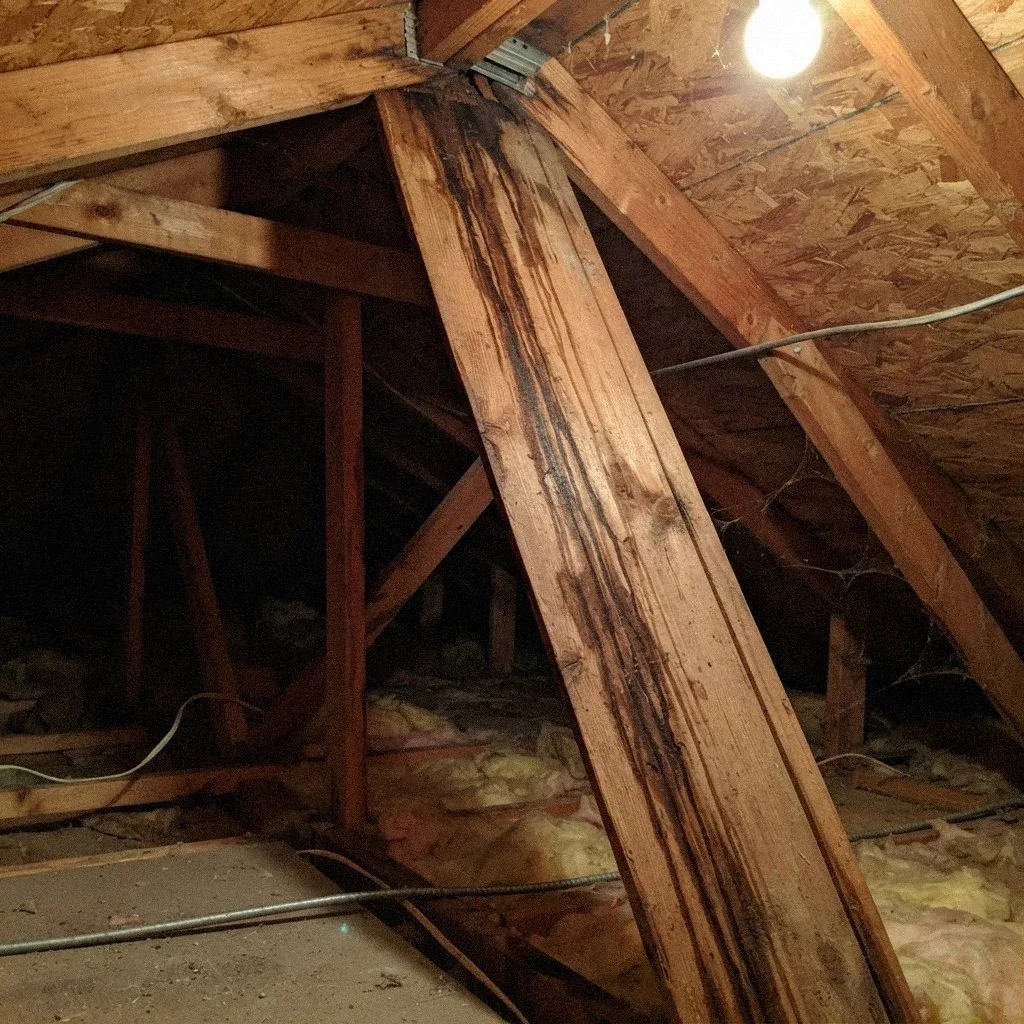
- Blocked soffit vents paired with an undersized exhaust path are a recurring cause of damp, discolored sheathing in tract homes built through the 1970s and 80s across Simi Valley, where the original vent openings are often smaller than current attics need.
- Older Simi Valley tract homes sometimes carry gable louvers from before a ridge vent was added later, and that leftover opening usually fights the newer exhaust point rather than helping it move more air.
- Air sealing the ceiling plane before touching any vent addresses where the moisture is coming from. Vent changes alone only move warm, humid air that has already escaped into the attic through gaps below it.
Frequently Asked Questions
How do I know if my attic has enough airflow?
Simi Valley doesn't set one fixed vent count; the goal is enough net free area, split between low soffit intake and a high exhaust point like a ridge, so attic air actually cycles instead of stalling under a tile roof in the valley heat.
Can a powered attic fan backfire on me?
Yes, but only if the intake side keeps pace with the exhaust side. Simi Valley attics with a strong ridge vent and painted-over or blocked soffit vents end up starved for intake ventilation, so a powered attic fan just pulls conditioned air from the house below instead of moving attic air out.
Can my bathroom fan cause attic mold?
Yes. A bath fan duct that ends in the attic instead of outside the roof or wall is a steady moisture source, and in Wood Ranch and Bridle Path homes it shows up as damp insulation near the termination point. Proper bath fan termination routes the duct through a roof or wall cap, never into open attic space.
Why does my roof deck get frosty inside?
It means humid attic air is landing on sheathing cold enough to hit the dew point, and the moisture is freezing into a thin white layer overnight. It clears by midday most of the year here, but repeated frost cycles near Santa Susana Knolls and other hillside lots point to weak intake ventilation or attic bypasses feeding warm, moist air upward.
Do I need both gable and ridge vents?
Gable vents exhaust attic air from the end walls and can pair with soffit intake if nothing else is exhausting the space. Add a ridge vent to the same attic and the ridge often pulls air from the gable openings before it ever reaches the soffits, a short-circuiting pattern that leaves the far corners of a Tapo Canyon or Big Sky attic stagnant.
Ready for a Simi Valley Attic Airflow Review?
Have a licensed pro check your soffit intake, ridge exhaust, and bath fan termination before the next cold snap sets in.
Call (805) 463-1431