A stain on a Simi Valley ceiling is not random. It is a record of where water crossed a boundary and how long it sat there before drying or spreading further. Between the clay tile roofs common on tract homes from the 70s and 80s and the handful of hard storm days each winter, the shape and color of a stain say a lot before anyone climbs into the attic. Reading it correctly saves a homeowner from guessing at causes that were never there.
What the stain color tells you
A stain that formed recently tends toward pale straw or light tan, faint enough that you might question whether it is even there. Once the edge deepens into brown and forms a ring resembling rungs on a ladder, each one slightly outside the last, that pattern shows repeated wetting rather than a single event. In Simi Valley, where storms arrive in short, hard bursts after long dry stretches, that ringed pattern often means the source has been active across more than one of those bursts, not just one.
What the ring pattern shows
The ringed edge on a stain, sometimes called a tide line, marks where water sat and evaporated before it could travel further into the drywall. One ring generally points to a single wetting event that ran its course and stopped. Several rings nested inside each other tell a different story: water has reached that same spot more than once, likely during separate storms, which points toward a leak path that keeps opening rather than a one-time event.
Press to check for moisture
Press gently on the drywall near the stain, not directly on it, and note how it feels. Firm and solid means the material has dried out since it last got wet. Soft, spongy, or slightly yielding means moisture is still present. A moisture meter gives a more exact reading, but a bare hand catches most of what matters when deciding whether a stain needs attention now or can wait.
Dormant versus active leaks
A dormant stain looks the same on every visit and feels firm against your palm. Nothing about it is changing. An active leak stain does the opposite: it widens, the edges darken further, or the drywall around it stays slightly cool or damp longer than the rest of the ceiling. Watching a stain across two or three rain events, rather than judging it after one look, is the clearest way to tell which kind you have.
Where the stain sits on the ceiling
Location on the ceiling narrows things down before you ever touch a ladder. A mark close to an exterior wall in a Simi Valley tract home usually points to something happening along that wall, roofline, or the flashing where the roof meets it. A stain sitting well away from any wall, out toward the open field of the ceiling, more often traces to a penetration overhead, a vent pipe, a skylight curb, or a run where the roofing fastens through the deck along a rafter run.
Why the leak sits uphill
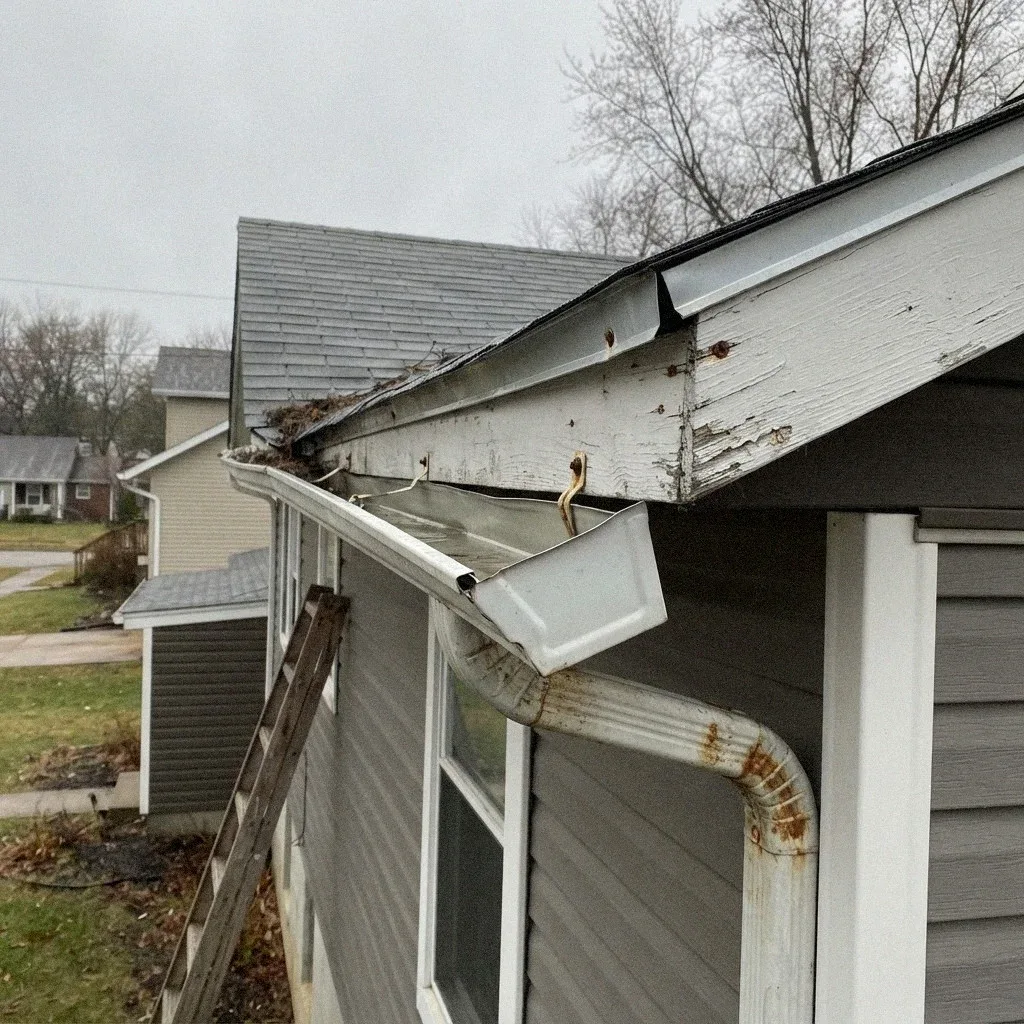
Water does not drop straight down once it gets under a tile roof. It travels along the underlayment, following the slope of the rafter run through capillary travel, until it reaches a low point, a nail, or a gap where it can drip through. That means the entry point is almost always uphill from the stain on the ceiling below, sometimes by several feet, which is why chasing the exact spot on the roof above a stain rarely finds anything.
Roof penetrations as suspects
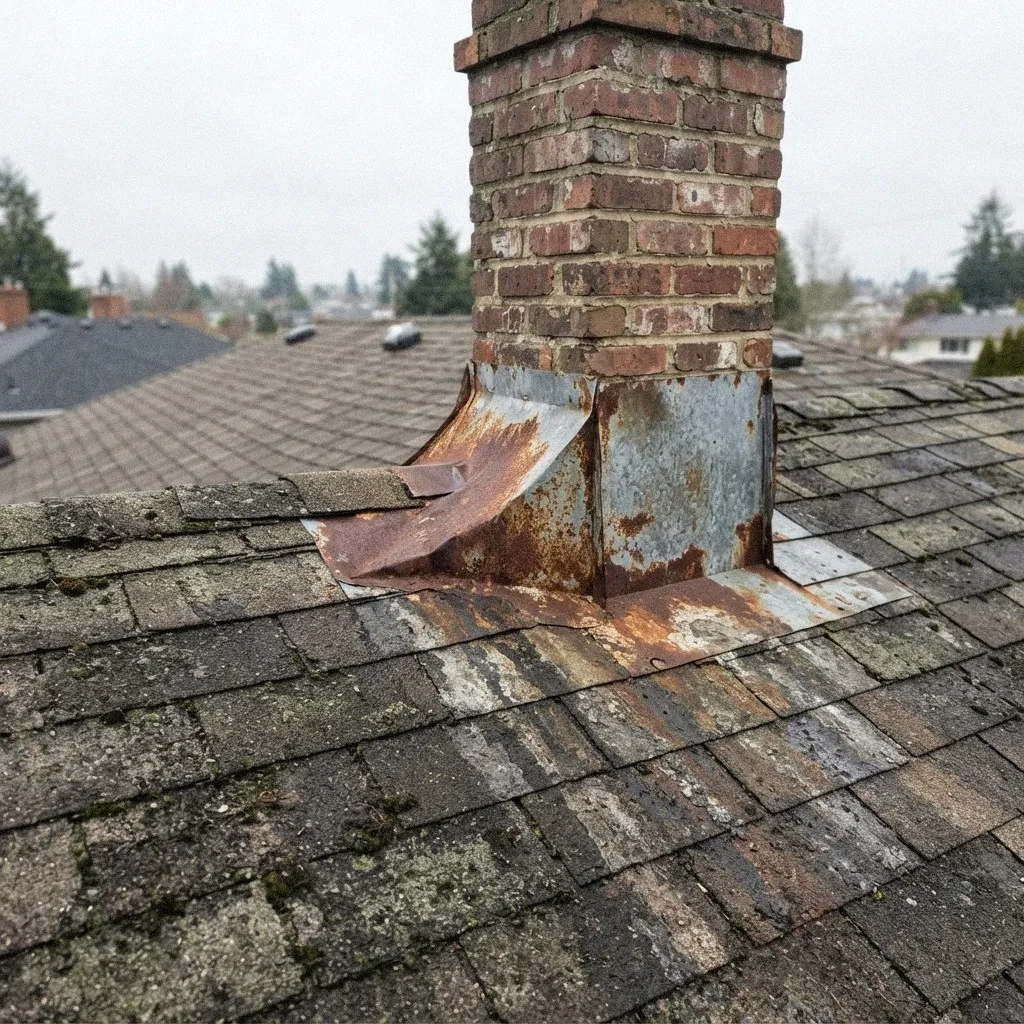
Any place a roof is interrupted for a plumbing vent, chimney, or skylight relies on flashing to keep water out, and each one is a spot capillary travel can sneak past a small gap. A stain that lines up under one of these penetrations, or a short distance downhill from it, points there before anything else on a tile roof common to Simi Valley's 1970s and 1980s tracts. Bubbling paint right at that spot usually means water is sitting against the drywall, not just passing through once.
What bubbling paint means
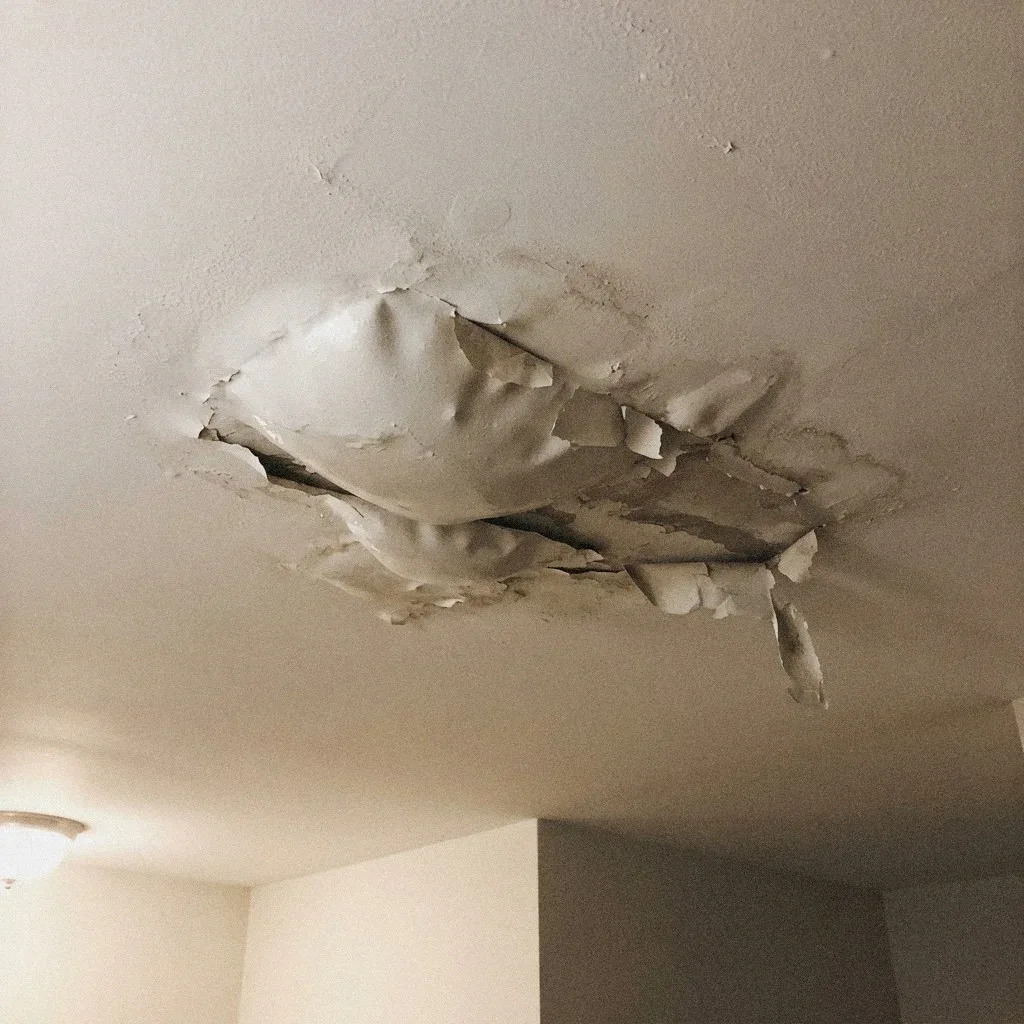
Discoloration alone means water reached the drywall and dried. Bubbling or peeling paint means something more: water built up behind the paint faster than the drywall could absorb and release it. That points to a heavier or more sustained leak rather than a light one-time wetting, and it usually shows up after one of the valley's harder winter storm days rather than gradually over a dry summer.
When a sagging ceiling changes things
A stain paired with a slight dip in the ceiling, visible by sighting along the surface at an angle, means the insulation matting or drywall above has taken on more weight than it can hold dry. This is not a wait-and-see situation. A sagging section can let go without much warning, and it usually means the wetting has been going on longer than the stain's color alone would suggest.
Confirming it from the attic
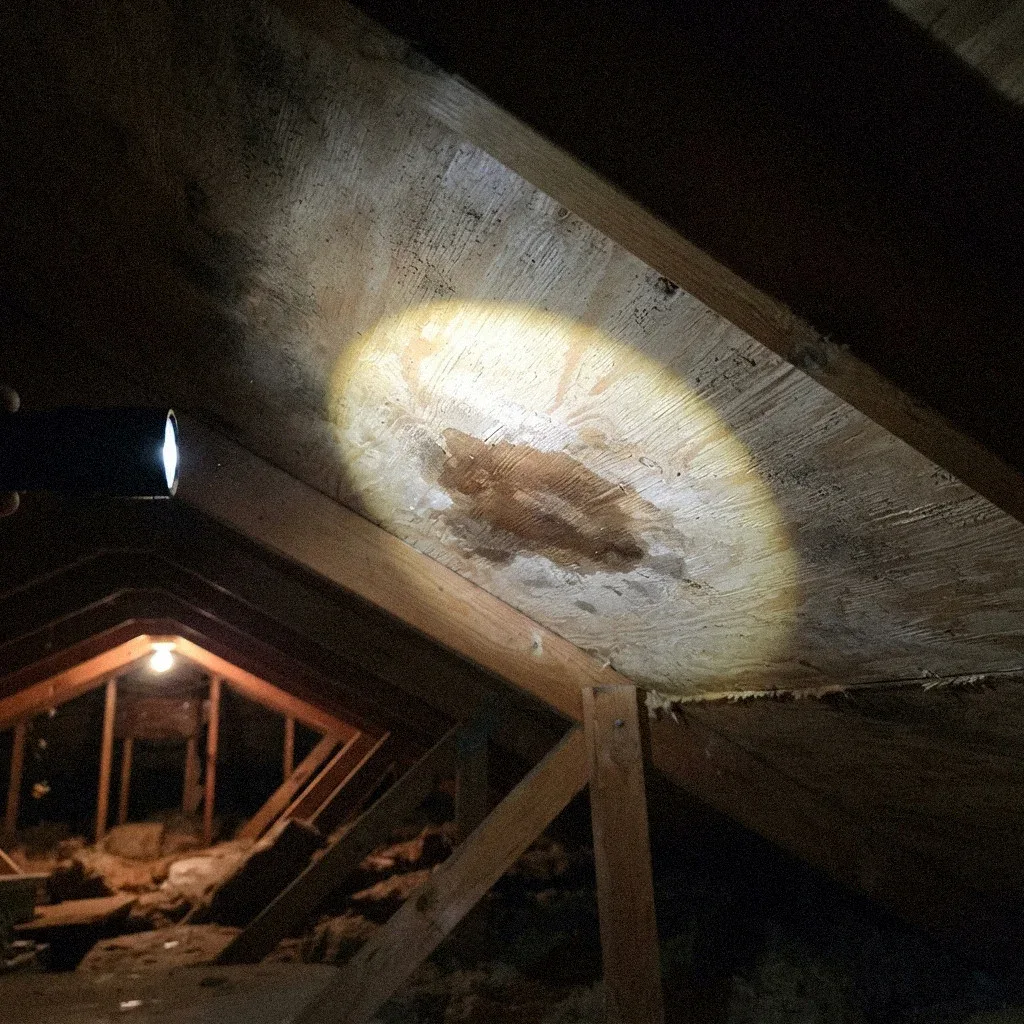
For Simi Valley homes with attic access near the mark, climbing up with a flashlight tells you more than staring at the ceiling ever will. Look for dark staining or matted, compressed insulation directly above the ceiling spot, then trace outward toward the roof deck and any nearby penetration. Wood that looks stained but feels dry to the touch has likely dried between storms; wood that still feels cool or damp, especially days after the last rain, points to water still finding its way in.
What a stain can't tell you
A stain marks that water got somewhere it should not have and gives rough clues about when and where. It does not identify the exact failure on the roof, whether that is a cracked tile, a flashing gap, or worn underlayment. For a Simi Valley homeowner watching a stain change between one Santa Ana wind event and the next storm, that gap between clue and cause is exactly why a closer look matters before drywall gets patched over.
Dealing with this in your home?
Simi Valley roofs face a different clock than shaded lots elsewhere. Tract homes off Erringer Road and near Rancho Simi Community Park sit exposed under direct sun for decades, with Santa Ana winds testing every loose tile between First Street and the Santa Susana foothills. Red flag warning days push that timeline faster than most homeowners expect.