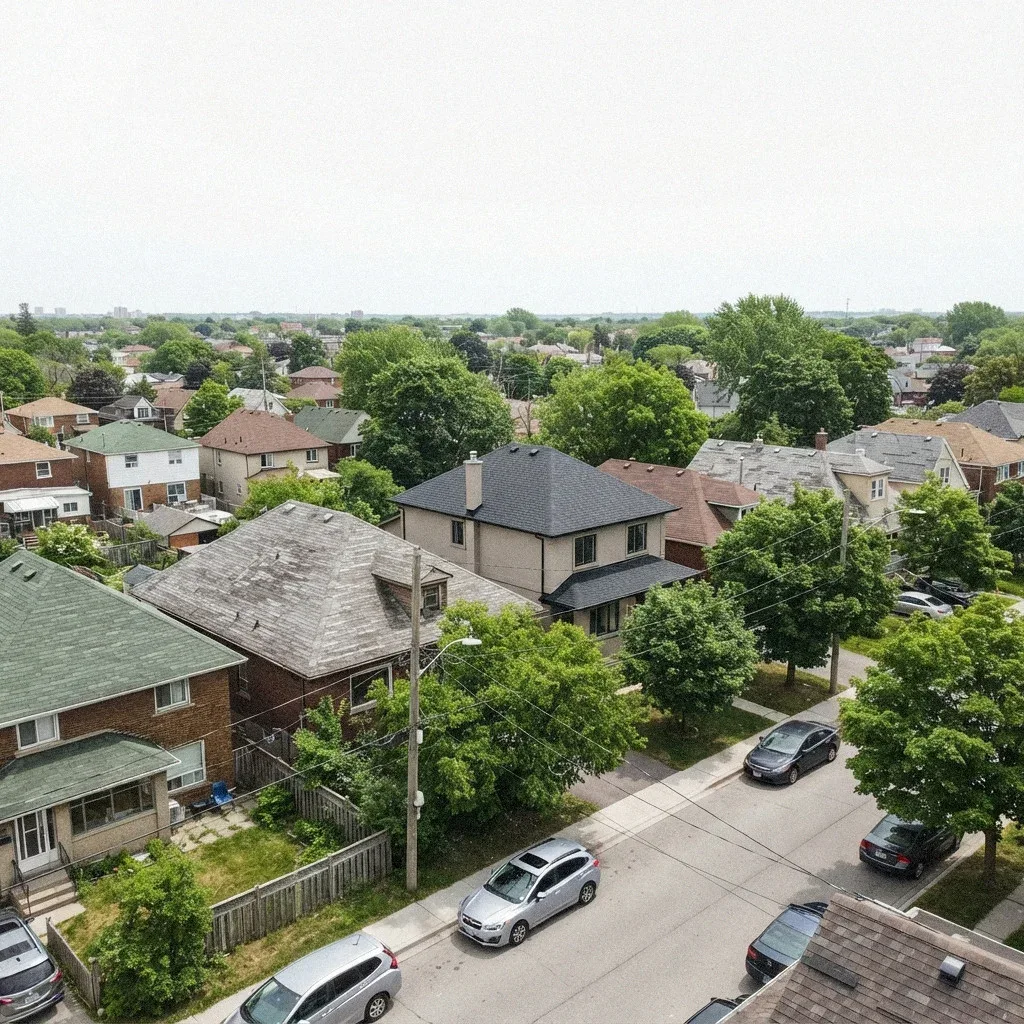
Most homeowners near Wood Ranch or Bridle Path never set foot on their own roof, and for a first look, they don't need to. Park across the street or stand back on the driveway and follow each roof plane with your eyes. Twenty years of Santa Ana winds and valley heat leave marks that show up fine from the ground, long before anyone breaks out a ladder.
Check the Ridge Line First
Stand across the street from your Simi Valley house and look at the ridge line first. It should run straight against the sky from end to end. A dip near the middle, or a wave you can pick up with a quick binoculars check, points to a weakened plane underneath rather than something cosmetic. Compare it to the neighbor's roofline if the houses share a similar age, common in tract streets near Wood Ranch or Patricia, since a matching sag across several roofs usually means the whole batch is reaching the same point.
Reading the Shingle Courses
Each shingle course should track in a level band across the plane, parallel to the fascia below it. From the street in front of a Presidential Tract home, look for a course that dips, rises, or breaks its line for no reason. That kind of interruption usually means something shifted underneath, not just a cosmetic flaw in the shingle itself.
Cupping and Clawing at an Angle
Stand at a low angle to the roof plane, almost sighting down it like a rail, to catch cupping and clawing. Cupping shows as shingle edges curling upward like a shallow bowl; clawing is the opposite, with the shingle body lifting while corners stay flat. Both point to age and sun exposure, and both are easier to see in late afternoon light when shadows lengthen across Tapo Canyon-facing slopes.
Bald Spots on the Shingle
A bald spot is where the granule coating has worn thin or washed off, leaving a smoother, darker patch of asphalt exposed underneath. From the ground it can look like a faint discoloration rather than a hole, easy to miss unless the sun hits it right. Granules collecting in the gutter or at the base of a downspout near the fascia often confirm what the eye already suspected.
Streaking Down a North Slope
Dark streaking on a north-facing plane is typically algae, tracing the path water takes down the shingle courses after a rare heavy rain. It looks different from soot or wildfire ash, which tends to settle in a flatter, more even film across the whole roof after a bad fire season. Moss is rarer here given the dry stretches between storms, but it can still show up in shaded corners near mature trees.
Downspout Outlets and Flow
Walk the fascia line during or right after a storm and check where each downspout outlet actually discharges. A dry outlet while the rest of the gutter is clearly wet means water is backing up somewhere upstream, not draining the way it should. Given how the city has flagged every property here as sitting in some flood zone, a gutter system that isn't moving water is worth noting early.
Staining Under the Soffit
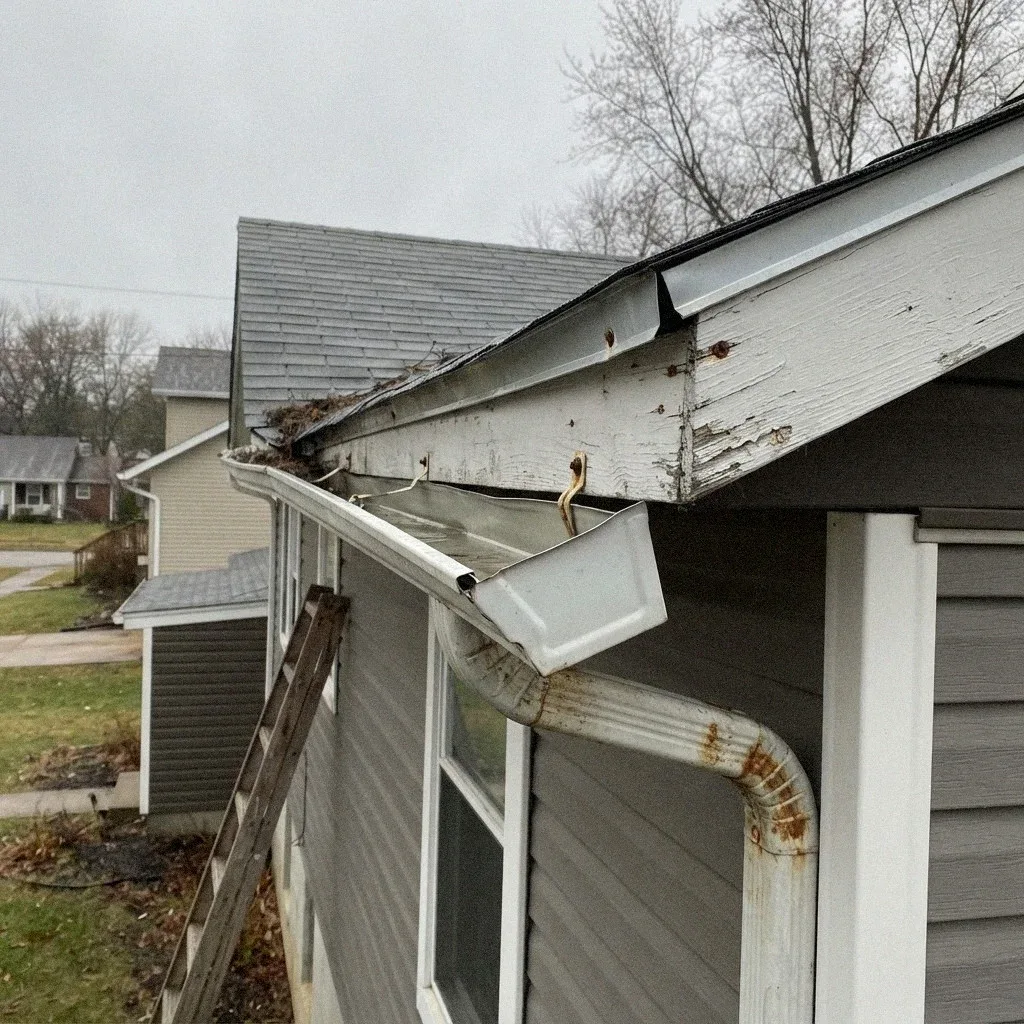
Follow the roof plane down to where it meets the soffit and fascia, then look for a streaking pattern below the gutter apron. A dark or rust-toned line running down the siding toward the downspout outlet usually means water is finding a path it shouldn't, spilling past the drip edge instead of into the gutter. On older sections of Santa Susana or homes near Tapo Canyon, check the top shingle course too, since that's often where the streaking starts before it reaches the wall below.
Buildup at the Drip Edge
The drip edge itself is hard to judge from the ground, but what piles up against it is not. Look for grit, granules, or curled shingle pieces sitting at that lower edge instead of falling clear. On a tile roof this shows up differently, as broken pieces resting against the metal rather than washing off. A steady buildup in one spot along the plane, more than a general dusting, tells you water is pooling there before it moves toward the gutter apron.
Bringing In Binoculars
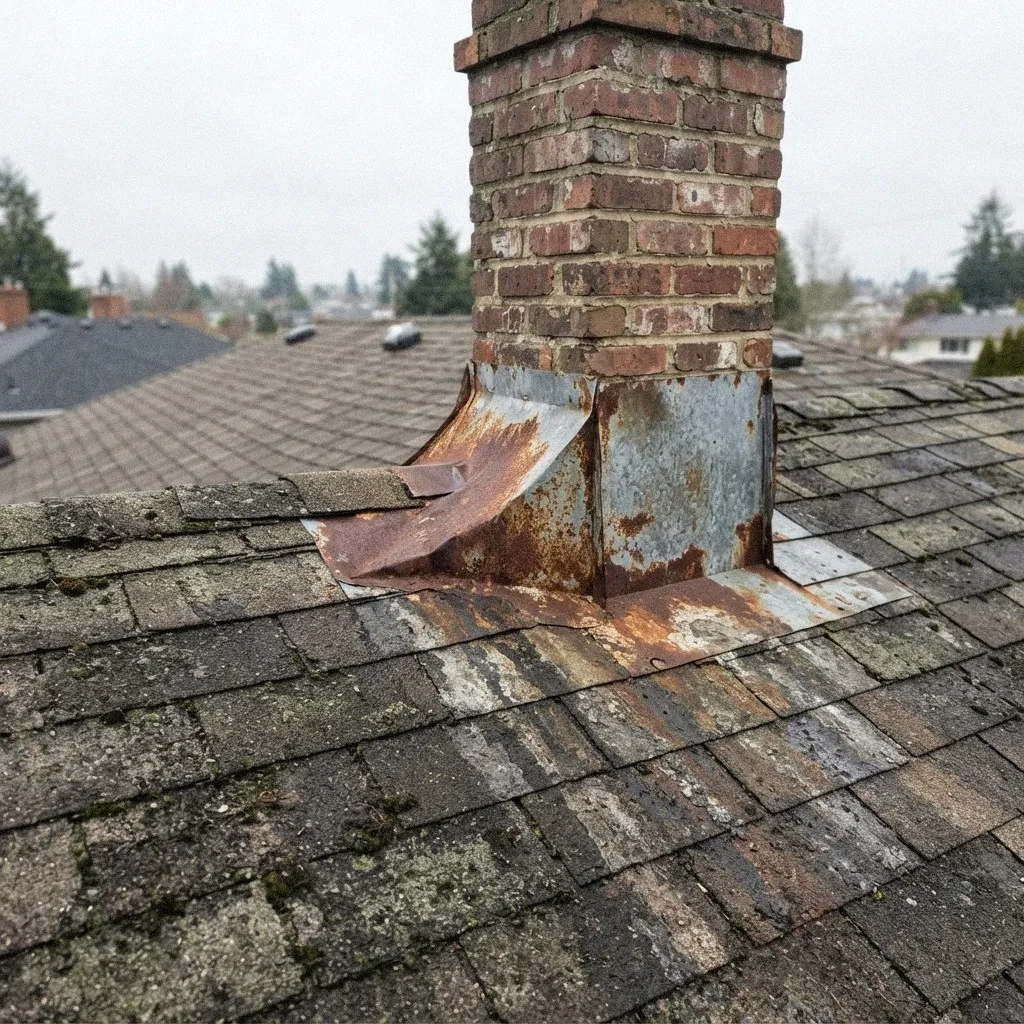
A basic binoculars check from the driveway resolves a lot of what the naked eye guesses at. It sharpens the shingle course lines, brings flashing around a chimney or vent into focus, and can separate a genuine bald spot from a shadow cast by a passing cloud. It's a five-minute step before deciding whether something is worth a closer look.
What the Ground View Misses
A ground survey has real blind spots. Low-slope sections behind a ridge line, or the far side of a hip facing away from the street, stay hidden no matter where you stand on the sidewalk. Binoculars help close some of that gap, but they still can't tell you what's under a shingle course or whether a bald spot goes through to the deck. In Simi Valley, hillside lots near Bridle Path or Santa Susana add extra angles that hide whole planes from view. Treat what you see as a reason to call, not a diagnosis, and let the licensed pros we connect you with confirm it up close.
Turning a Guess Into an Answer
If something spotted from the street near Santa Susana or out toward Sinaloa Lake doesn't sit right, that's the point to stop guessing. The licensed pros we connect you with can walk the roof plane directly, check the deck under a suspect spot, and say plainly whether it's a minor fix or something bigger. A ground check tells you where to look; it was never meant to tell you what to do about it.
Dealing with this in your home?
Simi Valley roofs face a different clock than shaded lots elsewhere. Tract homes off Erringer Road and near Rancho Simi Community Park sit exposed under direct sun for decades, with Santa Ana winds testing every loose tile between First Street and the Santa Susana foothills. Red flag warning days push that timeline faster than most homeowners expect.