Metal roof covers two quite different things, and the difference is not the metal. It is where the fasteners sit. On one system every screw is hidden under a raised seam and the panel is left free to move. On the other, the screws go straight through the face of the panel and are sealed with a rubber washer. Almost everything else about how the two behave follows from that one choice. Once you know which family a roof belongs to, you can predict what will wear out on it and roughly when.
What Standing Seam Means
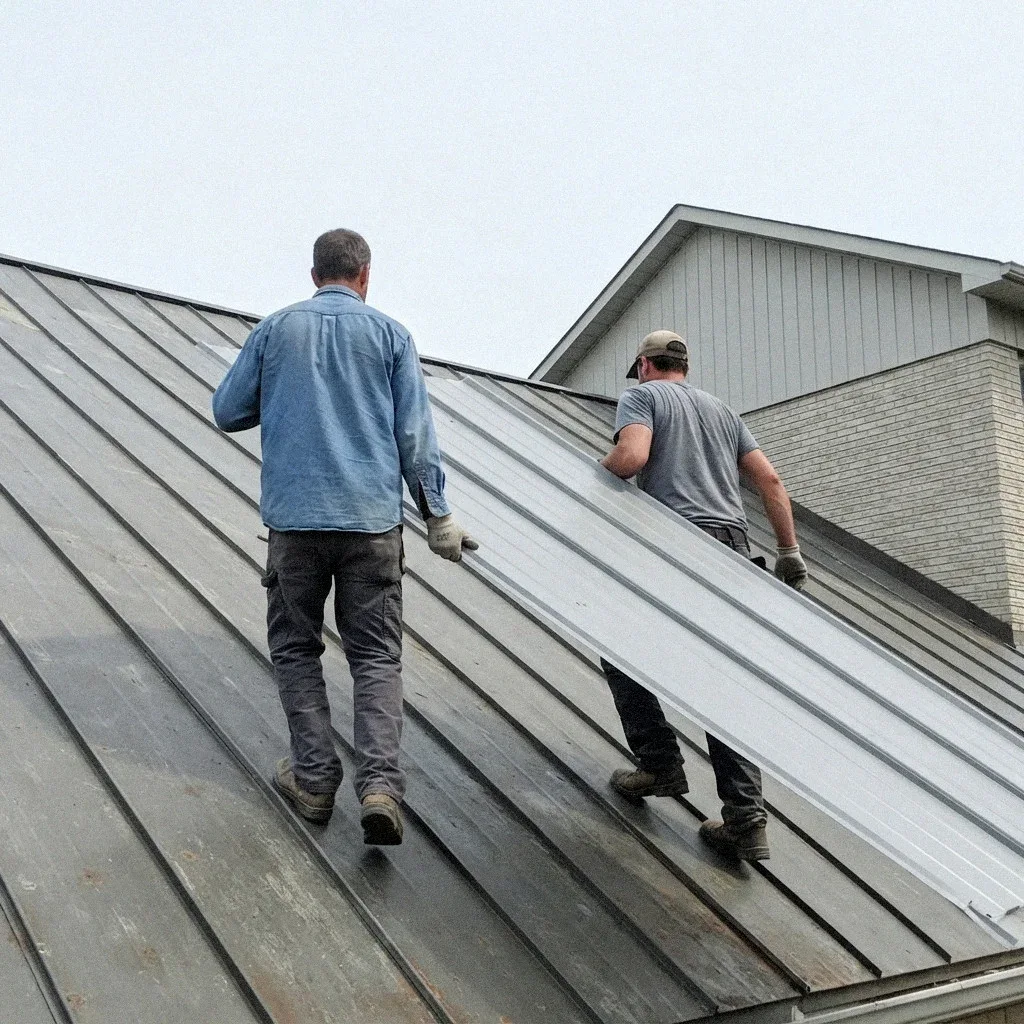
Standing seam refers to a metal roof built from long panels connected by raised vertical seams that run from ridge to eave. That raised seam is the entire identity of the system: a formed edge on each panel locks or clips to its neighbor, so the flat field of the panel stays free of any punched holes. On a Simi Valley roof baking under afternoon sun, that unbroken surface is what gives standing seam its clean, uninterrupted line from the ridge down toward the gutter.
The Hidden Clip System
Underneath that seam sits a concealed clip, a small metal bracket screwed to the deck that holds the panel edge without piercing the panel itself. The clip lets the panel slide slightly as it heats and cools through a Simi Valley day, rather than binding it tight to the deck. Panel gauge affects how noticeable that movement becomes over years of exposure. Thinner-gauge panels shift more visibly than heavier ones, even with identical clips underneath.
Snap-Lock or Mechanically Seamed
There are two ways to close a standing seam and they are not interchangeable. A snap-lock panel is shaped so one edge clips over the next by hand, which makes for a quicker install and a seam that can be opened again for a repair. A mechanically seamed panel is folded closed on site with a seaming machine, once or twice, and that fold is what makes it suitable for very low pitches. The trade-off is simple enough: the folded seam is the stronger detail and the harder one to take apart later.
Reading an Exposed-Fastener Panel
An exposed-fastener panel is easier to recognize than to name. The panels tend to be wider and flatter, with ribs at regular intervals across the face rather than only at the edges, and the screws are visible in rows running across the pan. Each screw is doing two jobs at once, holding the panel down and sealing the hole it made getting there. That is the whole of the difference: on this system the fastener is part of the weatherproofing, which is why the fasteners are what eventually need attention.
Why the Washer Matters
On an exposed-fastener roof, each visible screw depends on a neoprene washer screw to seal the hole it creates. That rubber washer compresses against the metal panel and blocks water from working down through the puncture. Washers age with sun exposure, and a Simi Valley roof gets a lot of that. Once a washer cracks or shrinks, that single screw becomes a path for water, which is why exposed-fastener roofs need their screws checked over time.
How Heat Moves Each Panel
Metal expands and contracts a good deal more than tile or shingle does, and a long panel on a Simi Valley roof can move a long way between a cold morning and a Santa Ana afternoon. Standing seam is built for exactly that: the concealed clip lets the panel slide instead of fighting the fastener. An exposed-fastener panel cannot slide, because the screw passes through it, so the movement works on the hole instead. Across years that is what loosens screws and tires washers, and it happens fastest on the longest runs.
Spotting Oil Canning
Oil canning is the faint waviness visible along a flat metal pan in raking light, and it is worth knowing up front that it is cosmetic rather than a fault. It comes from stresses left in the coil when the metal was formed, and it shows most on wide flat pans in bright sun, which describes a great many afternoons here. Narrower pans, striations rolled into the surface, and a heavier gauge all reduce how much of it shows. None of it affects whether the roof keeps water out.
Comparing Rib and Seam Height
Looking at the raised profile itself usually sorts the two families without any other clues needed. Standing seam ribs sit tall, positioned only at the panel edges, leaving a wide flat or lightly ribbed field between them. Exposed-fastener panels like R-panel or corrugated panel space shorter ribs evenly across the entire width, with no wide flat section anywhere. Seam height on standing seam typically runs higher than any single rib on an exposed-fastener panel.
Closure Strips Seal the Edges
The ends of a metal roof are where either system gets tested, because a rib leaves a gap wherever it meets a ridge or an eave. Closure strips are the shaped foam or metal pieces filling those gaps, and they matter more here than the rainfall totals suggest: wind-driven rain in a Santa Ana event travels uphill, and a missing closure at the eave is an open invitation. They are also the part most often left out on a cheap install, and the part nobody can see from the ground.
Where Each System Fits Best
Standing seam shows up more often on custom hillside homes, low-slope roof sections, and houses near Wood Ranch or Bell Canyon where the owner wants a smooth, seamless surface. Exposed-fastener panel work tends to cover detached garages, patio covers, and outbuildings around older tract streets, where the budget favors a simpler system. Neither choice is wrong; the fit depends on the roof's slope, its visibility from the street, and what the structure underneath is asking for.
Telling Them Apart From the Ground
From the street, the quickest tell is the seam itself. A tall raised rib running the full length of the roof with nothing else breaking up the flat pan points to standing seam. Rows of small screw heads marching down the panel at even spacing, whether on a garage roof off Sycamore Road or a shed near Tapo Canyon Regional Park, mark an exposed-fastener panel every time. Once you know to look for the seam versus the screws, the two stop looking alike.
Dealing with this in your home?
Simi Valley roofs face a different clock than shaded lots elsewhere. Tract homes off Erringer Road and near Rancho Simi Community Park sit exposed under direct sun for decades, with Santa Ana winds testing every loose tile between First Street and the Santa Susana foothills. Red flag warning days push that timeline faster than most homeowners expect.