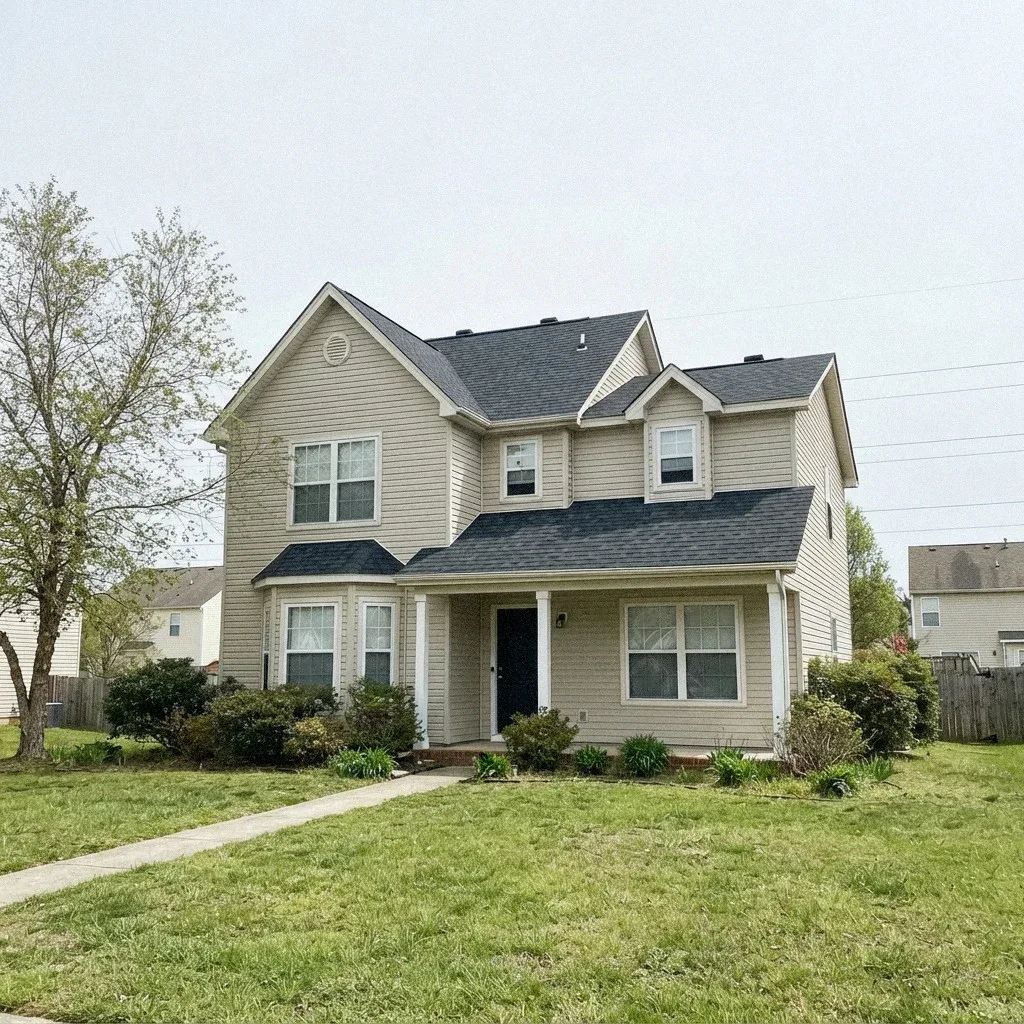
Simi Valley does not plan its roofs around cold weather. Winter lows here usually sit in the mid-to-upper 40s, and most years pass without a true hard freeze. But when a cold snap does settle over the valley floor near Arroyo Simi, a roof that has spent twenty summers baking under Santa Ana wind exposure meets a stress it was never built to expect.
Defining a Hard Freeze Here
A hard freeze means a stretch of hours cold enough to freeze water sitting in a gutter, a low spot on a tile roof, or a crack that never fully dried out from the last rain. Simi Valley's short, intense winter storms leave plenty of that moisture behind, and a sudden overnight drop can lock it in place before a homeowner near Tapo Canyon or Wood Ranch even notices the forecast.
How Freeze-Thaw Works
Roofs across Simi Valley, whether composition shingle in a Wood Ranch tract or clay tile near Santa Susana Knolls, pick up moisture at seams and fastener points during the rare hard rain. That water sits until a freeze arrives, expands as it turns to ice, and pushes outward against whatever material is holding it. The freeze-thaw cycle does its damage in that single push, not the cold air itself.
Hairline Cracks Widen Fast
A hairline crack in a tile or a shingle tab rarely comes from one freeze. It starts as years of valley heat drying out the material, followed by a rare cold night that finds the weak spot and widens it. Homeowners in older tracts near Simi Valley Community Park often discover these cracks only after a freeze has already turned a small flaw into a real gap.
Shingles Turn Brittle in Cold
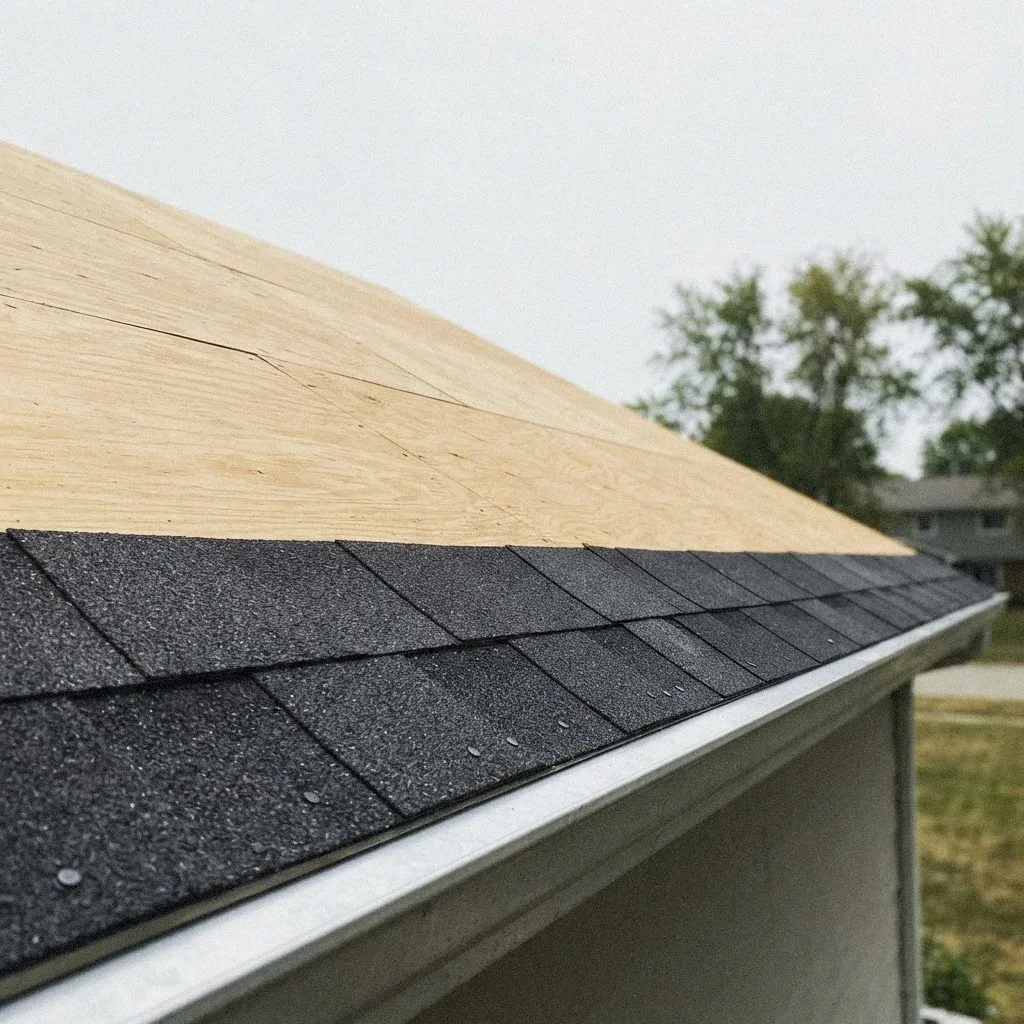
Composition shingles that flex easily on a warm Simi Valley afternoon stiffen fast once temperatures drop near freezing. Thermal shock, the sudden swing from a cold night to direct morning sun, makes brittle shingles more likely to crack right where they bend over a ridge or hip. This matters most on older roofs where sun exposure has already thinned the material before the cold ever arrives.
When Sealant Gives Out
Sealant around vent pipes, flashing, and skylight curbs is rated for a working temperature range, and Simi Valley's usual heat load pushes most products toward the warm end of that range for most of the year. A hard freeze drops sealant below where it stays flexible, and sealant failure can follow within that single cold stretch, especially on beads already cracked from years of sun.
Pipe Boots Split First
The rubber collar around a plumbing vent is the first thing on the roof to fail in the cold, and the reason is worth understanding: it has already been damaged by heat. A full summer of ultraviolet exposure leaves it hard and inflexible, and a cold night takes whatever flexibility was left. A collar that was cracked and still holding becomes a collar that is open. That is why a rare freeze produces leaks in a spot nobody associates with cold weather, and why checking boots before winter is worth more here than in a genuinely cold climate.
Gutters Ice Over
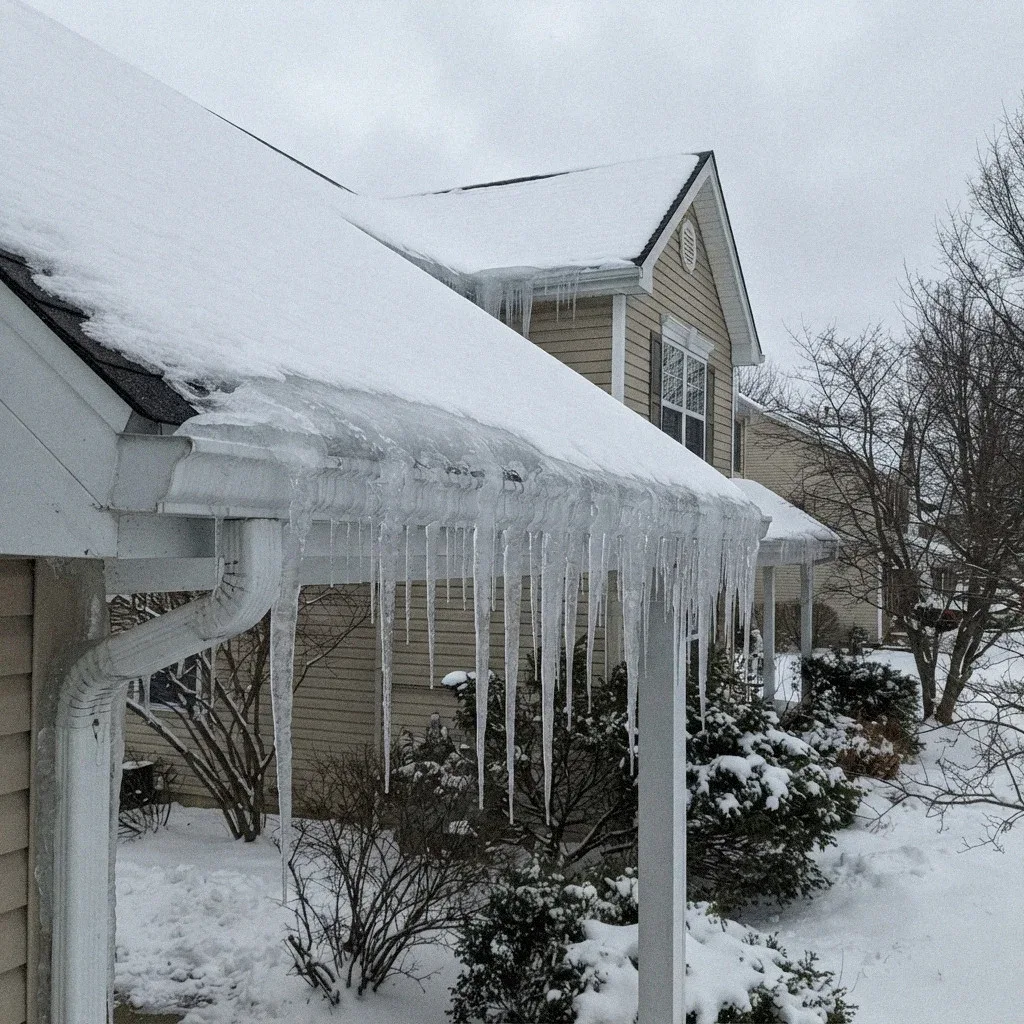
Gutters and downspouts on homes along Los Angeles Avenue or through the Tierra Rejada corridor carry runoff during Simi Valley's short rainy season, and a hard freeze can turn that standing water into gutter ice. A frozen downspout blocks drainage completely, so any meltwater that follows has nowhere to go except back toward the roof edge or the fascia board.
Ice Building at the Eave
Ice at the eave is worth putting in proportion. What happens in cold regions, where a warm attic melts snow that refreezes at the cold overhang and dams water back up the slope, needs sustained snow cover and does not happen here. What can happen in Simi Valley is simpler and shorter-lived: water sitting in a gutter or in a low spot at the eave freezes overnight, blocks the outlet, and then the next rain has nowhere to go. It is a drainage problem for a morning rather than a structural one for a season.
Why Roof Traffic Turns Risky
A frozen roof should not be walked on, and that holds more strongly here than in places used to it. Frost on tile is effectively ice on a smooth curved surface set at a pitch, and the tile itself is at its most brittle when cold, so a step that would be survivable in August cracks a piece in January. Composition is no better, since a cold shingle is stiff and weight on a stiff shingle breaks the mat rather than flexing it. Whatever needs checking can wait for the sun to come round, which here means hours rather than months.
Damage Hides Until Thaw
Freeze damage on a Simi Valley roof often stays invisible until meltwater starts moving again. A stain on a ceiling near Wood Ranch or a damp patch in an attic above a garage can show up days after the cold snap has passed, once water finds its way through a crack, a split boot, or a sealant joint that gave way during the freeze itself.
Checking the Roof After Cold
The useful check happens after the thaw rather than during the freeze, and it starts inside. The attic shows staining and damp on the underside of the deck, which is where freeze damage reports itself first. Outside, the things worth looking at are the vent boots, the sealant along any flashing, and the gutter outlets that were holding water when it froze. None of that needs a roof walk. What it does need is doing within a week or so, while the evidence is fresh and before the next rain writes over it.
Dealing with this in your home?
Simi Valley roofs face a different clock than shaded lots elsewhere. Tract homes off Erringer Road and near Rancho Simi Community Park sit exposed under direct sun for decades, with Santa Ana winds testing every loose tile between First Street and the Santa Susana foothills. Red flag warning days push that timeline faster than most homeowners expect.