Restaurants & Food Service
Kitchen Roofing
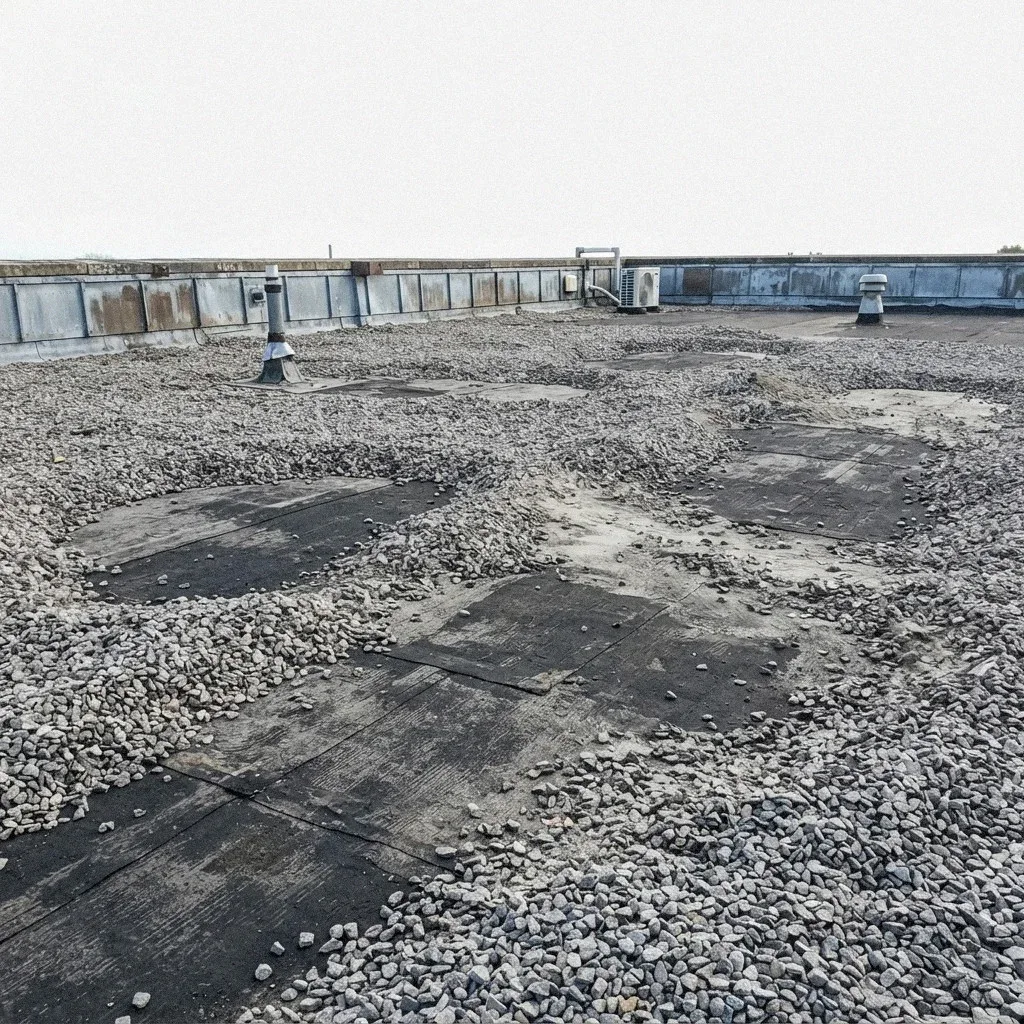
Leak sources, lease responsibility, and after-hours repair timing for Simi Valley offices and storefronts.
A leaking roof over a Simi Valley office or storefront usually starts at a rooftop HVAC curb or a roof hatch gasket, not the membrane field. Lease terms decide who calls for repair, and work can often happen after hours.
A retail storefront near Simi Valley's Los Angeles Avenue corridor or an office suite off Cochran Street can't shut down because water is dripping through a ceiling tile. Customers still need to walk in, registers still need to run, and a wet sales floor turns into a liability problem fast. Roof work on an occupied commercial building in Simi Valley almost always has to happen around business hours, not through them, which changes how the job gets scheduled from the first phone call.
Most office and retail buildings around Simi Valley sit under a flat or low-slope roof, and the rooftop HVAC units bolted to that roof are the usual source of trouble. Every unit sits on an equipment curb, and the seal where the curb meets the roof membrane is where water finds a way in. A building near Erringer Road or along Tapo Street can have a dozen curb penetrations up there, each one a spot that needs checking, not just the one that's currently dripping.
Because closing isn't really an option, most repair work on Simi Valley commercial roofs happens in an after-hours work window, starting once the last customer or employee clears out. A property near the Downtown/Los Angeles Avenue corridor might see crews arrive at dusk and finish before the morning rush. It costs more to schedule that way, but it avoids blocking the parking lot or the storefront during the hours the business actually needs to be open.
Business-hours disruption usually costs a Simi Valley retailer or office tenant more than the roof repair itself. A storefront near Madera Road losing even a few hours of foot traffic to a repair crew, a ladder, and blocked entry can matter more than the invoice for the work. That's the math behind scheduling around open hours instead of through them, and it's why a same-day fix during business hours is rarely the plan for anything beyond a quick patch.
Weekend work is the other route, and it fits a strip retail center or a small office building differently than a weekday after-hours job does. A property near Stearns Street or along Yosemite Avenue with Saturday foot traffic still needs the lot clear and the storefront canopy untouched by midday. A Sunday start, when traffic is lighter, can give a crew a longer stretch to finish curb flashing or drain work without pressure to wrap by sunrise.
| Source | Cause | Fix |
|---|---|---|
| HVAC curb flashing | Sealant cracked from valley heat | Reflash and reseal curb joint |
| Old sign penetration | Abandoned bolt holes never sealed | Patch and cover penetration |
| Roof hatch | Gasket dried out by wind and sun | Reseal or replace gasket |
| Parapet wall | Cap flashing pulled loose | Resecure and reflash cap |
| Roof hatch gasket | Gasket dried out from sun exposure | Replace hatch gasket seal |
| Sign penetration | Bolt holes cut for storefront signage | Reseal or relocate mounting |
| Parapet cap | Coping joints opened by heat cycling | Reseal or replace coping |
| Storefront canopy edge | Fasteners backed out over time | Refasten and reseal edge |
Merchandise on shelves in a Simi Valley retail space doesn't hold up under a leak the way a house's carpet might survive a slow drip. Stock near an exterior wall or under a rooftop unit takes the worst of it, and water damage to inventory is often the costlier loss compared to the roof repair itself. A stockroom tucked below a flat roof section near a leaking drain or curb is often where the damage shows up first and spreads fastest before anyone upstairs notices.
A server room changes the stakes again. A small server room or data closet is often placed in a back corner of an office building, sometimes directly under a section of flat roof where a rooftop unit or roof hatch sits nearby. Equipment damage from even a small leak can outstrip the cost of the roof work by a wide margin, which is part of why office tenants near Simi Valley's business corridors tend to flag ceiling stains fast rather than wait and see.
Office and retail leases around Simi Valley generally split roof duties along a familiar line: the landlord holds the roof structure and membrane, and common-area maintenance charges typically pass some of that upkeep cost through to tenants. A tenant leasing space near Cochran Street or Alamo Street usually isn't the one calling a roofer directly, but knowing where that line sits helps when a leak shows up and someone needs to move on it.
Lease-split responsibility is where office and retail roof problems in Simi Valley often stall before anyone picks up the phone. A tenant assumes the landlord is handling it, the landlord hasn't been told yet, and the leak keeps spreading in the meantime. California's habitability standards under Civil Code Section 1941 give a tenant real footing to push for repair once the landlord has been notified and given reasonable time to act, though the details vary by lease and property type.
A tenant running a storefront near Los Angeles Avenue often assumes the landlord handles every roof problem, but California's habitability rules cover livable dwellings, not commercial fit-out disputes the same way. Lease language usually decides who calls the roofer, and Simi Valley business owners are better off reading that clause before a leak forces the question during business hours with customers standing in the aisle.
Interior roof drains are standard on flat commercial roofs around Simi Valley, and they're an easy thing to overlook until one clogs. Debris backing up in a drain sends water sheeting across the membrane instead of down through the pipe, which is often how a leak starts in a corner nobody was watching. After a Santa Ana wind event or a dry spell that piles leaves and grit near a roof hatch or curb, drains need a look before the next storm rolls through.
A roof hatch used for HVAC servicing gets stepped past during a routine building walk and left slightly open or poorly reset. Once that happens, the next rain that rolls through Simi Valley finds the gap fast, and water tracks down into whatever ceiling space sits below the hatch, often far from where anyone thought to check first.
An office or storefront near the Los Angeles Avenue corridor stays open because customers and tenants expect it to. Treating the roof as part of running that building, not a repair to defer until it's leaking onto the sales floor, is what keeps a Simi Valley business from losing a Saturday to a bucket and a warning sign.
The licensed pros we connect you with can check rooftop HVAC units, curb flashing, roof drains, and parapet condition in one visit rather than several separate trips. They can typically work around your posted hours, whether that means an early morning slot before doors open or a weekend window when the sales floor is empty.
A commercial lease usually splits roof responsibility between structure and tenant fit-out, but that line is rarely as clean as either side expects going in. When a leak lands on merchandise or a server room near Erringer Road or Tapo Street, the faster move is documenting the damage and calling a roofer while the lease question gets sorted separately.
Cool roof requirements under Title 24 change what a straightforward tile or shingle replacement involves, since compliant materials and reflective coatings aren't always a like-for-like swap for what's already up there. A homeowner planning a reroof should ask early whether the current roof type still meets current code before assuming a simple swap.Santa Susana Knolls, Old Town Simi Valley and Downtown Simi Valley. Most roof damage here isn't from one dramatic event. It's small: a lifted tile after a windy week, a cracked vent boot nobody noticed, a gutter seam that finally gave out. Left alone through another dry summer, small problems turn into decking repairs.
Small warning signs get dismissed because they don't look urgent. A cracked tile, a loose flashing strip, a sagging gutter corner. None of these stop a household in its tracks, so they wait months, and the gap between minor and major keeps closing quietly overhead.A fair number depends on what your roof actually needs, and that shows up only on the shingles or tile themselves. A property near Erringer Road or a hillside lot close to the Santa Susana Mountains may need different flashing work than a flat tract roof elsewhere in Simi Valley, so the licensed pros we connect you with price after a real look, not a guess. pricing guide, and the commercial overview covers how a scheduled program works.
Kitchen Roofing
Healthcare Roofing
Schools & Campuses
Usually the landlord, under common-area maintenance terms in the lease, since the roof deck and membrane are structural. But plenty of Simi Valley office and retail leases push responsibility for anything a tenant installed, like an HVAC unit, sign, or canopy, back onto that tenant. Read the lease's maintenance section before assuming either way; the split rarely matches what tenants expect.
Rooftop HVAC units are the usual source. The equipment curb underneath and the curb flashing around it take wear from vibration, foot traffic during servicing, and Santa Ana wind gusts, and once that flashing cracks, water follows the ductwork down into the ceiling below.
Yes. Most roof work can be scheduled outside normal business hours so it doesn't interrupt a sales floor or office lobby. The licensed pros we connect you with can typically set an after-hours or weekend window, which matters most for storefronts along a corridor like Los Angeles Avenue.
Move merchandise, files, or server room equipment out from under the leak first. Set a container to catch water and note where it's coming through a suspended ceiling tile or fixture, since that location often points straight back to the rooftop unit or curb flashing causing it.
Tell us the property type and whether the landlord or a tenant is calling, and we'll line up a pro who works around your business hours.
Call (805) 463-1431