Offices & Storefronts
Commercial Roofing
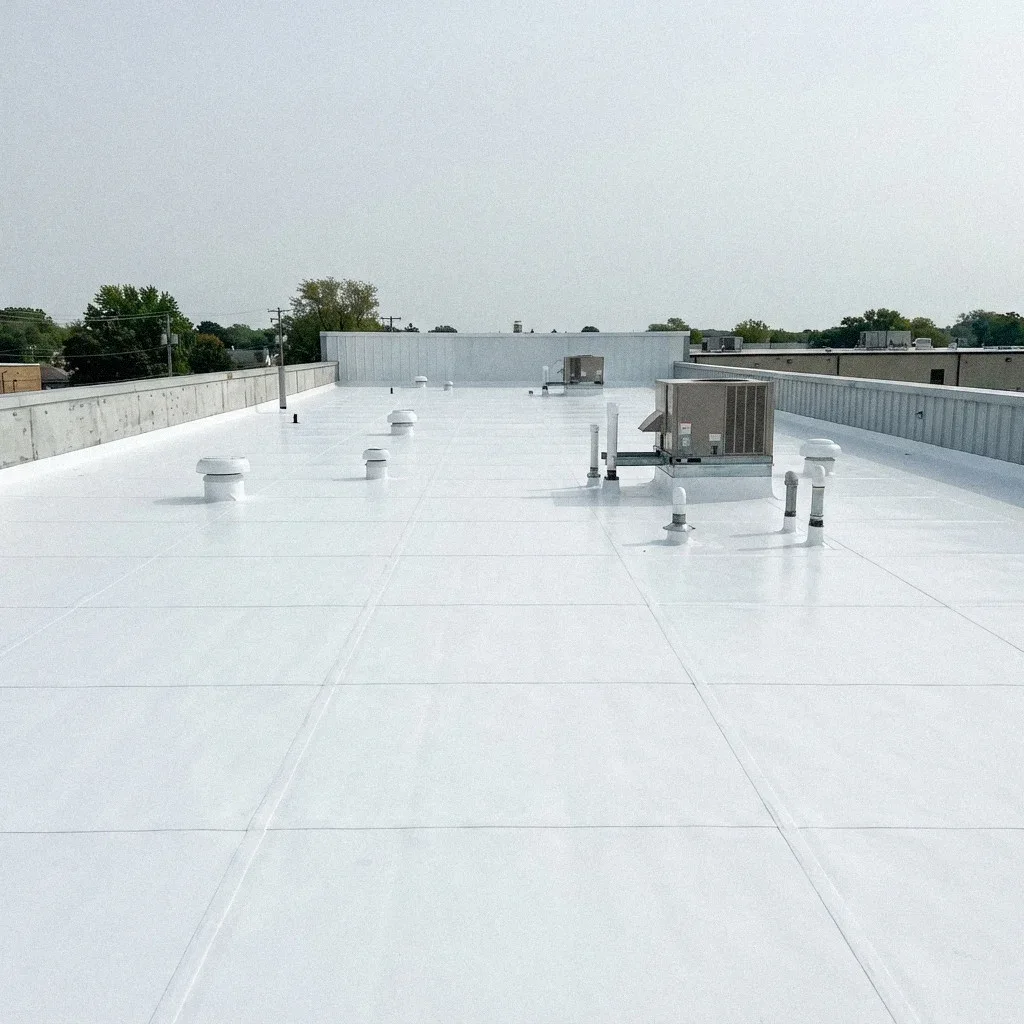
Phased, building-by-building roof work that keeps residents in place across the site.
A property manager schedules Simi Valley apartment roof work building by building, so most units stay occupied throughout. The licensed pros we connect you with plan staging and resident notice around each phase.
An apartment complex in Simi Valley puts residents underneath work a single-family homeowner never has to plan around. Occupied units mean a property manager cannot clear a building the way a vacant office gets cleared. Along corridors near Cochran Street or Tapo Street, older complexes built during the 1970s-1990s tract boom carry roof age that varies building to building, so one job rarely fits the whole site.
A leak rarely shows up as a roof problem first. It shows up as a maintenance request from a tenant on the top floor, weeks after the roof itself started failing under Santa Ana wind and sun. By the time water reaches a ceiling, tile or built-up roofing above it may have been letting moisture in for a while, which is why an interior leak report needs tracing back to its source building fast.
Scale is the difference between a house and a multifamily property. A Simi Valley complex might spread roof area across a dozen buildings of different ages, some reroofed years ago and some original to construction. A property manager has to track condition per building rather than treat the site as one roof, because a plan written for the whole property misses which building actually needs attention now.
Getting crews onto an occupied property works best when each building runs on its own schedule instead of one long project touching everything at once. Phased building-by-building sequencing lets the licensed pros we connect you with finish one roof, clear out, and move to the next while residents in other buildings go about their week without a work zone overhead the entire time.
Resident notice matters more on a multifamily site than almost anything else in the plan. People need to know which days their building is affected, when a walkway pad might be roped off, and where resident parking shifts while a crew is staged nearby. A property manager who gives that notice early gets far fewer complaint calls once the work actually starts.
| Factor | What Changes | Apartment Site Impact |
|---|---|---|
| Who requests the work | One landlord, one tenant | Property manager, many residents |
| Sequencing plan | Single roof, one visit | Building by building, phased |
| Leak reports | Direct call to landlord | Maintenance request system |
| Staging and parking | One driveway, one household affected | Shared lot serving several buildings at once |
| Notice required | One household gets a heads-up | Every affected building gets resident notice |
| Capital planning | A single repair line item | A separate plan per building on the site |
| Shared areas at risk | None to worry about | Breezeways and common corridors below the work |
| Sign-off before moving on | Owner checks the finished roof | Property manager clears each building before the next |
A multifamily site was never laid out with a roofing job in mind, so the crew has to fit around whatever the property already runs on daily. A staging area for material and a dumpster placement spot both need locations that do not block a fire lane, a mail cluster, or the spots residents actually park in every night.
Breezeways and common corridors slow material movement in a way a detached driveway never would. Getting shingles, tile, or underlayment from the staging area up to a given roof means carrying it through walkways people use to get to their own front doors, which changes how a crew times deliveries and where a ladder can safely sit.
How early a crew can start and how late they can run gets tighter on a property full of people trying to sleep, work from home, or get kids out the door. That work-hour window narrows further on a low-slope section near a breezeway, where noise carries into more units than it would over a single steep-pitched building.
A tenant does not usually call about the roof. They file a maintenance request about a water stain on a ceiling or a drip near a light fixture, and someone on the property side has to connect that complaint to what is happening two stories up. That gap between the interior leak report and the actual roof damage is where a small problem gets worse before anyone climbs up to look.
Once maintenance staff trace a stain to the roof, the property manager needs findings specific to that one building's roof area, not a summary of the whole complex. A flashing failure on one building says nothing about the tile roof two buildings over, so an inspection has to stay narrow enough to be useful for a repair decision.
Because roof age varies building by building across most Simi Valley complexes, a useful capital plan lists each roof separately with its own condition and rough timeline instead of one number for the entire property. A building added or reroofed later than the rest does not belong on the same repair schedule as one still carrying its original covering.
Choosing between a repair and a full reroof on any one building depends on how much roof area is actually failing and what the decking underneath looks like once someone opens it up. A property manager comparing bids across several buildings needs that per-building detail, not a lump estimate that hides which roofs are closer to the end.
This kind of phased, per-building approach applies to any multifamily property, but Simi Valley adds its own pressure: red flag warning days during Santa Ana wind events push crews to finish exposed sections faster, and hillside-adjacent complexes near Wood Ranch or Santa Susana carry ember exposure a flatter site in Moorpark or Thousand Oaks does not face the same way.
A property manager should ask which building's roof is closest to failing, how resident notice will go out before crews arrive, where parking gets reshuffled during that building's work, and what the capital plan looks like once every roof on the site is checked rather than just the one that got a complaint first.
Capital planning across a Simi Valley apartment site works building by building, not as one lump sum. A property manager near the Arroyo Simi channel or off Erbes Road can schedule one roof area this fiscal year and another next, matching each building's actual wear instead of forcing every roof onto the same clock. That keeps the budget tied to condition, not calendar convenience.
Red flag warning days do more than raise fire risk — sustained wind loosens ridge caps and lifts tile edges that then crack under foot traffic during the next repair. A property owner who waits for a visible leak after a windy stretch is usually looking at damage that started weeks earlier and went unnoticed.East Simi Valley, West Simi Valley and Wood Ranch. Red flag warning days matter for more than evacuation planning. Wind-driven embers find any gap in aging roof material, which is why ember-resistant details at vents and edges matter as much as the roofing itself on older homes.
Ask what a quote actually covers before agreeing to anything. Underlayment, flashing, and attic ventilation affect how long a roof lasts as much as the surface material does. The licensed pros we connect you with can walk through each part of the job so you know what you're paying for and why.A fair number depends on what your roof actually needs, and that shows up only on the shingles or tile themselves. A property near Erringer Road or a hillside lot close to the Santa Susana Mountains may need different flashing work than a flat tract roof elsewhere in Simi Valley, so the licensed pros we connect you with price after a real look, not a guess. pricing guide, and the commercial overview covers how a scheduled program works.
Commercial Roofing
Industrial Roofing
Kitchen Roofing
Notice for apartment roof work in Simi Valley usually comes from the property manager, not the roofing crew, through a letter or posted notice naming the building and the dates. Because tear-off works best outside the short winter rain stretch, most notices land in the drier months, giving residents time to plan around parking changes before work starts on their building.
Sequencing usually starts with the roof area showing the worst wear, often a low-slope section over a breezeway or covered parking. The licensed pros we connect you with move building to building, closing out staging and dumpster placement at one address before shifting to the next, so only one building's residents deal with noise and closed walkway pads at a time.
A tenant's leak report goes to the property manager through the normal maintenance request channel first, not straight to a roofing crew. The manager logs which building and unit reported it, checks whether it lines up with a known roof area problem, and decides whether it is an isolated interior issue or a roof-wide concern worth scheduling sooner.
Days rather than hours, and it comes from the property manager rather than from anyone on the roof. In practice that means a posted notice and often a letter as well, naming the building, the dates, the working hours, which walkway or breezeway closes and where parking moves. One thing worth knowing: roofing dates are weather-dependent, so notices are normally written as on or about a date. If a storm or a delay on the previous building pushes the schedule, the notice goes out again rather than the crew simply arriving later.
Managing several buildings? Call, and the licensed pros we connect you with will walk every roof area first, then put the sequence in writing.
Call (805) 463-1431