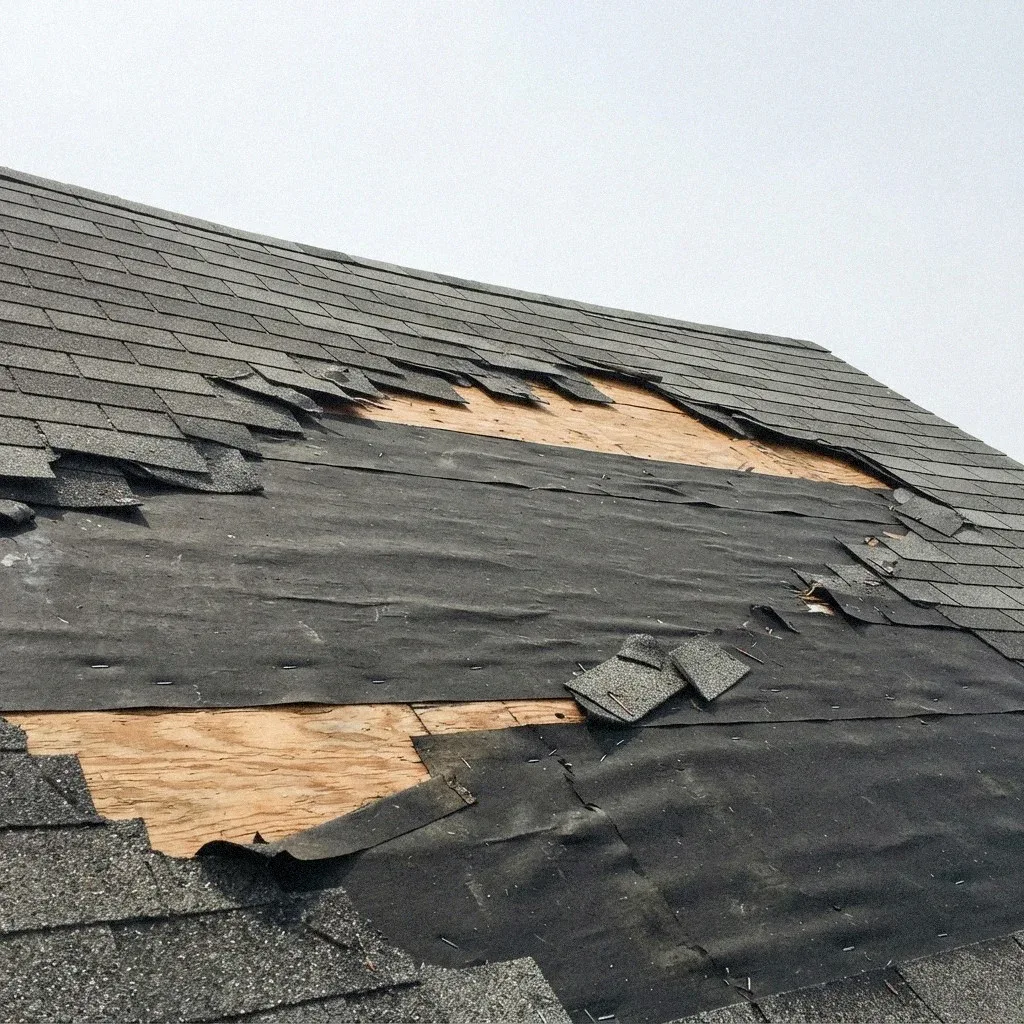
How Wind Days Add Up Over Time
Low-slope sections show up all over the valley's 1960s to 1980s housing, usually where an addition, a garage or a patio cover was built onto a pitched roof. A steep roof sheds water in seconds. A low-slope one moves it slowly toward one drain or scupper, so anything that slows that path down keeps water sitting on the surface long after the storm has passed.
Single-ply membrane and modified bitumen replaced older rolled roofing on most of these sections as homeowners updated additions built onto Wood Ranch and Big Sky tract homes. The newer materials hold up longer under direct valley sun than asphalt-based rolled roofing did.
Most roofing calls start with a question, not a decision: is this worth fixing or replacing. The licensed pros we connect you with can walk a roof, check the decking underneath, and give a straight answer before any contract gets signed.
What Actually Wears a Roof Out
- Service life
- A well-maintained membrane or modified bitumen roof commonly runs one to two decades in Simi Valley before a full replacement is needed.
- Roof weight
- These coverings sit lighter than clay or concrete tile, so converting a flat addition to a heavier material can require a structural check first.
- Minimum slope
- Low-slope systems are built for pitches too shallow for shingle or tile, often near flat, relying on membrane seams instead of overlap to shed water.
- Walkability
- These roofs are walkable by design for inspection and repair, unlike a steep tile roof where foot traffic risks cracked pieces.
- Damage repair
- A licensed roofer cuts out the failed section and heat-welds or adheres a matching patch that extends past the damaged area.
- Active period
- The long dry stretch is the working window. A membrane or cap sheet needs a dry deck under it, and once winter rain starts there is no reliable way to guarantee that. Midsummer brings its own problem, since heat softens the material and makes it easy to mark, so work tends to start early in the day. The sensible target is having it done before the first real rain, not after it has found the gap.
- Usual range
- an estimated $9000–$26000
When a Small Job Needs a Permit
Flat and low-slope roofing gets confused with rolled roofing, a cheaper asphalt-based covering sometimes used on the same low-pitch additions or sheds. Rolled roofing is thinner, seamed with overlaps rather than welds, and rated for a shorter service life than membrane or modified bitumen. Both look like a flat, unbroken surface from the ground on a Simi Valley garage or room addition, so homeowners assume one product. The difference shows at repair: membrane seams get welded or taped, rolled roofing seams are lapped and nailed, and they age differently.
Questions Worth Asking Before Work Starts
A low-slope reroof starts with tearing off the old membrane or rolled roofing down to the deck, checking for soft spots from past ponding, and confirming the deck still holds a slight slope toward the drains before anything new goes down.
New underlayment or a base sheet goes down first, then the membrane or modified bitumen is fully adhered, mechanically fastened, or heat-welded depending on the product, with extra layers built up at drains, walls, and any transition to a pitched roof section nearby.
A roof holds up fine through the dry months, then gets tested by a handful of hard rain days squeezed into a short winter. The failures show up where water has nowhere to go: clogged gutters, a low spot, flashing that shifted during a windy stretch. The licensed pros we connect you with check those spots first.
Patch this one, or re-roof?
| The situation |
Usually the right call |
|---|
| One spot, and the rest of the roof sound | A single repair visit |
| A roof that needs something doing to it every year | Replacement, budgeted rather than rushed |
| Anything that has reached the decking or the attic | Tear-off, with the decking made good as it goes |
License And LimitsA Simi Valley re-roof permit through the Building & Safety Division applies once work covers more than 10% of the roof area or 100 square feet, the same threshold that applies whether the section being redone is flat membrane or pitched architectural shingle elsewhere on the house.
Signs the Damage Has Already Spread
Flat and low-slope coverings degrade mainly through ponding water that never fully drains, seams that crack or lift under repeated valley heat cycles, and surface granule or membrane thinning from sun exposure and foot traffic, all of which shorten the covering's service life.
Reading Your Roof Before You Climb
Look, do not walk. Low-slope membranes scuff and puncture under a boot, and on a hot afternoon the surface is soft enough that footprints stay in it. From the top of a ladder a homeowner can safely check whether the drain or scupper is clear, whether debris has collected against a parapet, and whether water is still standing a day after rain. Blind patching with roof cement is the thing worth avoiding, because it hides where the water is actually getting in.
Reading a Tile Roof's Warning Signs
Ponded water that sits for days can seep through a weak seam and reach the deck, and damp decking under a membrane can support mold growth out of sight. Catching ponding or blistering early keeps moisture from ever reaching the wood framing underneath.
Get A Clear Look Before You Decide
A guide figure for flat and low-slope roofs locally is an estimated $9000 to $26000, which is a band rather than a quote. Simi Valley's dry season leaves most tile and shingle roofs facing sun and Santa Ana wind wear, not insect damage, so a re-roof estimate here rarely carries a pest line item. If the licensed pros we connect you with find soft decking near Bridle Path or an older tract home, they'll flag moisture or age first, then check further before pricing any treatment. pricing guide.