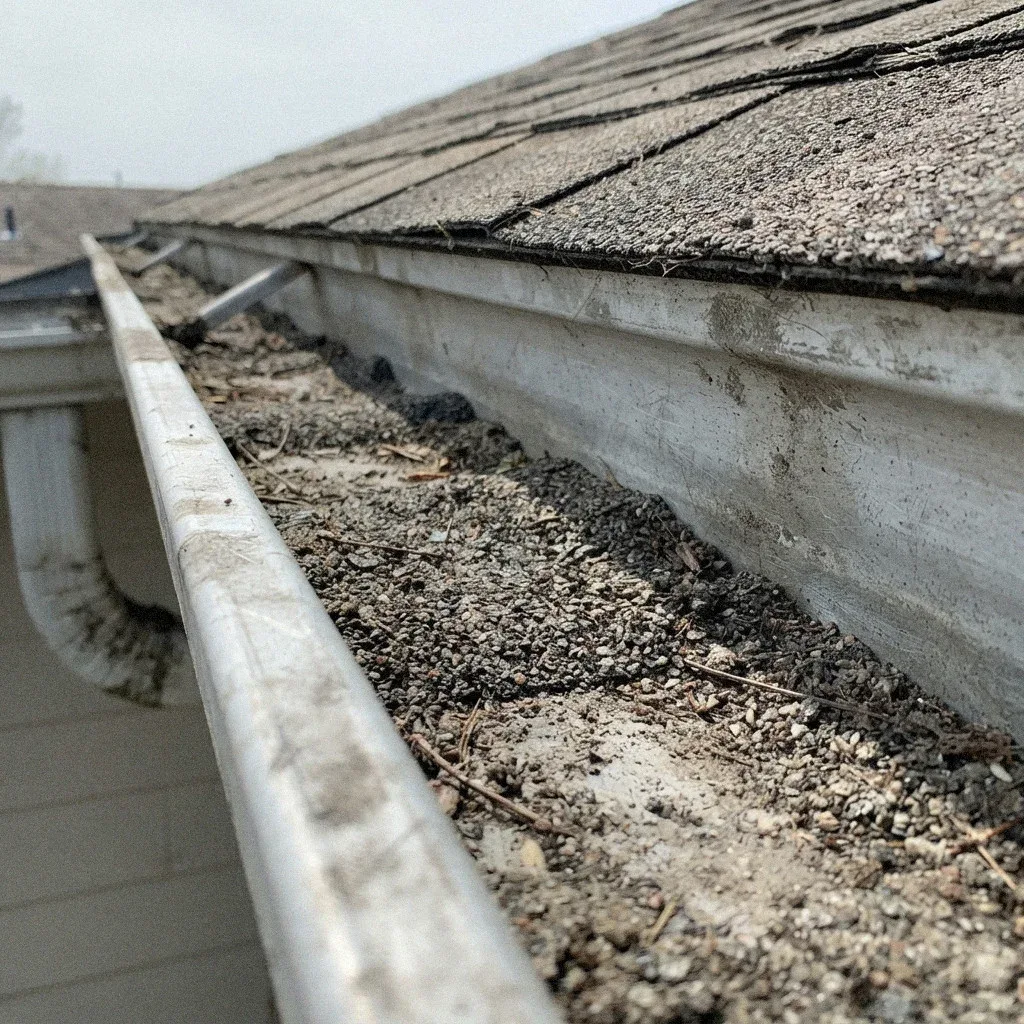
Every composition shingle roof in Simi Valley loses ceramic granules over its life. They're embedded in the asphalt mat during manufacturing to shield the material from UV degradation, and some always work loose. Finding a few in a gutter trough near Cochran Street or Sycamore Drive isn't unusual on its own. The question worth asking is whether the amount and pattern fit normal granule shedding or something further along.
Why New Roofs Shed First
A roof gets its heaviest granule shedding in the first year or two after install, as loose material from manufacturing and shipping works free during early rain and wind. In a dry valley like this one, that window can stretch out simply because there are fewer rain events to wash it down. A pile after the first storm following a reroof on a Wood Ranch or Big Sky home is expected, not concerning.
When Loss Turns Progressive
Progressive loss looks different. It shows up on shingles well past that early window, often 12 to 20 years old, and the volume doesn't taper off with each cleaning the way break-in shedding does. Instead it holds steady or grows, cleaning after cleaning. Years of direct sun on a Simi Valley roofline wear down the asphalt mat's grip on the surfacing, so more granules let go with each hot stretch and each windy day.
Spotting Bald And Shiny Spots
Bald spots are where granule loss becomes visible on the shingle itself, not just in the gutter. Look for patches where the asphalt underneath shows through with a darker, shinier finish instead of the usual matte texture. That shine means the protective surfacing is thin or gone in that spot, leaving raw asphalt exposed to sun and heat. A shingle with several bald patches has less shingle exposure protection left than one that's uniformly worn.
Slope Position Changes The Count
Granule loss rarely happens evenly. A south or west-facing slope over a Simi Valley home takes the brunt of the afternoon sun for most of the year, and that heat load speeds up surfacing wear compared to a north-facing side shaded part of the day. If one side of the roof consistently fills a gutter section faster than the other, sun exposure by slope is usually the reason, not a flaw spread across the whole roof.
Reading The Actual Volume
Volume only means something when it's compared against itself over time. A cup or two of granules after clearing a gutter near Tapo Canyon is unremarkable. What matters is whether that amount repeats at every cleaning for years or climbs noticeably from one season to the next. A steady trickle points to ordinary aging; a jump in quantity, especially paired with visible bald spots, points to accelerated wear worth watching.
Blisters Releasing Granules At Once
Blistering happens when moisture or air gets trapped beneath the shingle's outer layer and pushes up small bubbles in the surfacing. When those blisters eventually pop, they release a cluster of granules in one spot rather than a gradual scatter. A homeowner near Erbes Road might notice a sudden concentrated patch of granules after a hot stretch rather than the steady dusting typical of ordinary aging, which is a useful distinction when reading what a gutter is holding.
What The Splash Block Shows
Checking where a downspout empties onto a splash block is an easy way to see what's been carried off the roof, since runoff funnels straight through that point during any rain. A thin scatter there after a storm is routine. A noticeable mound, especially one that reappears quickly after being cleared, suggests the roof upslope is shedding more than typical wear would explain and deserves a second look.
Uneven Wear Across The Roof
Uneven loss by slope isn't automatically a defect. Roof orientation, tree shade, and how much afternoon sun a section catches all shift the rate at which granules let go. A home near Rancho Simi Community Park with mature landscaping on one side may show a real difference between its shaded and exposed slopes. What matters is whether one section is shedding far ahead of the others, not that some variation exists at all.
Tile Roofs Don't Apply Here
Concrete and clay tile still show up on older Simi Valley tracts near Wood Ranch and Santa Susana Knolls, and granule loss simply doesn't apply to them. Tile sheds mineral surfacing, not ceramic granules bonded to an asphalt mat. What collects in a tile roof's gutter trough is usually mortar dust, moss fragments, or broken tile edges near a splash block, not the sandy runoff described here. If your home has tile, skip the shingle-specific signs below and watch for cracked or slipped pieces instead.
Deciding If A Look Is Warranted
A gutter or splash block check gives a starting clue, not a full answer. Confirming whether granule loss is ordinary aging or something moving faster than expected means walking the slopes, comparing bald spots against shingle exposure elsewhere, and checking whether blistering is part of the picture. The licensed pros we connect you with can look at the full roof rather than guessing from what settled at one downspout.
Tracking It Season To Season
The most useful approach is watching the same spots over multiple seasons instead of judging from one cleaning. Note roughly how much collects at each splash block, whether one slope keeps outpacing the others, and whether new bald spots show up between checks. That kind of pattern, tracked over a year or two on a Simi Valley roof, tells a homeowner far more than any single gutter cleanout ever could.
Dealing with this in your home?
Simi Valley roofs face a different clock than shaded lots elsewhere. Tract homes off Erringer Road and near Rancho Simi Community Park sit exposed under direct sun for decades, with Santa Ana winds testing every loose tile between First Street and the Santa Susana foothills. Red flag warning days push that timeline faster than most homeowners expect.