Fall does not feel like weather here. The heat holds into October, the sky stays clear, and nothing about the roof looks any different from August. Then two things arrive in quick succession: Santa Ana wind, which peaks in exactly these months, and the first real rain, which lands on a roof still carrying everything the dry season put on it. That order is what matters. By the time water arrives, the wind has already loosened whatever was going to come loose, and the debris is already sitting in the channels that were supposed to carry the water away.
Wind Season Comes Before Rain Season
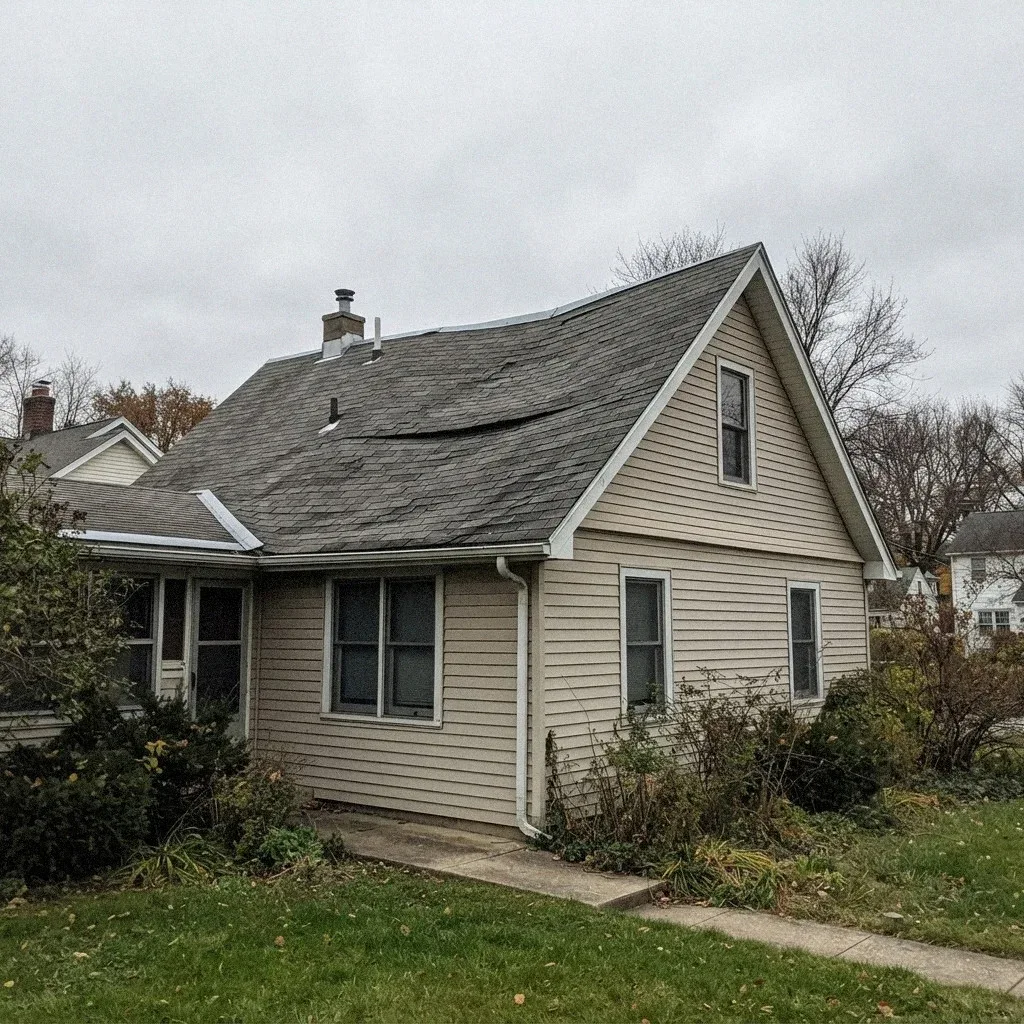
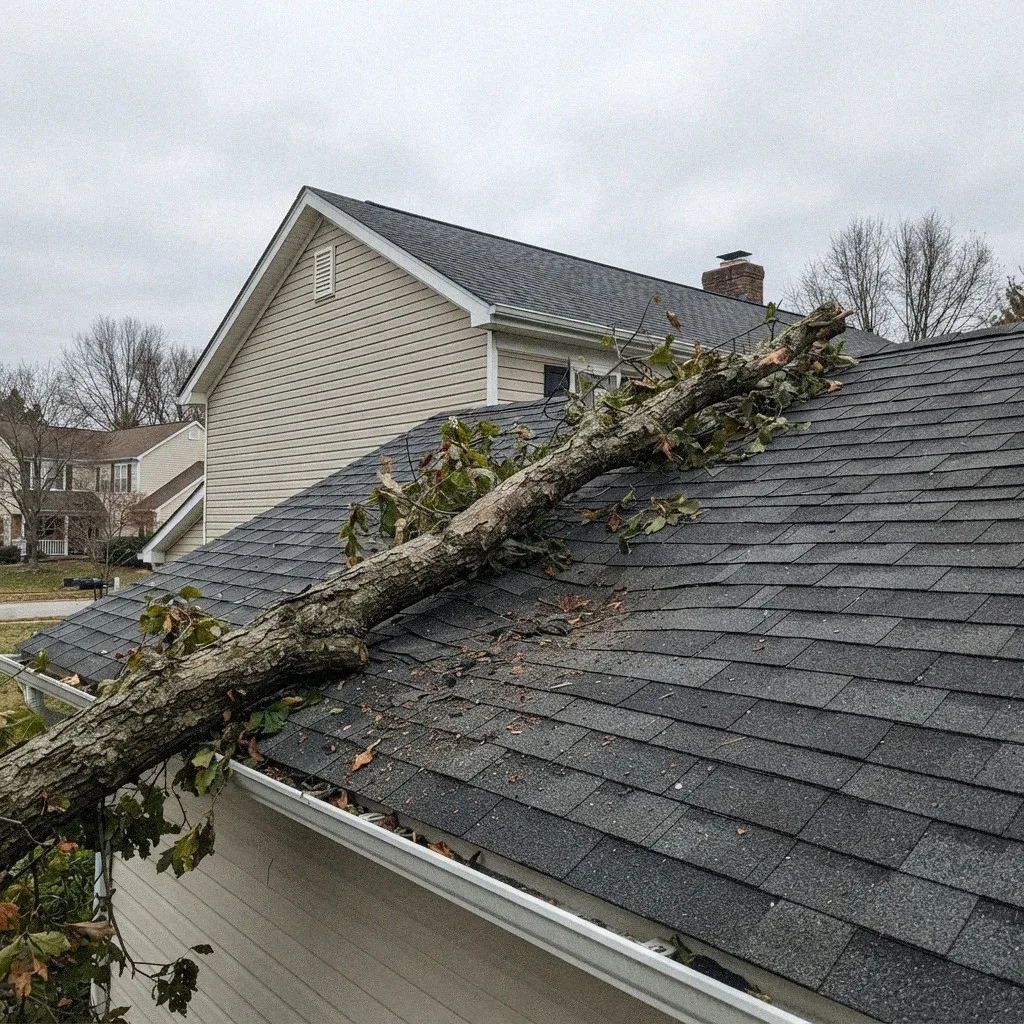
The strongest Santa Ana events of the year run through autumn, and they arrive while the roof is at its driest and most brittle. Sealant has spent a summer hardening, granule cover is thinnest on the west slopes, and any tab or tile that was going to lift has had months of heat preparing it. Wind does not create those weaknesses. It finds them. That is why a house can go through a dozen windy days without incident for years and then lose shingles in a single afternoon, once the covering has aged past a certain point.
The First Rain Lands on a Dirty Roof
Months without rain mean months of accumulation. Leaf litter, seed pods and fine grit blow off surrounding trees and hillside brush and settle wherever the roof will hold them, which is exactly where water needs to move: valleys, the strip behind a chimney, the gutter line. The first storm of the season does not arrive to a clean surface. It arrives to a set of blocked channels, and that is why the first heavy rain of the year produces more leak calls than the wetter months that follow it.
What Comes Loose First
Edges, always. Wind works at the perimeter of a roof rather than the middle of it, so the first losses are at the rake edge, along a ridge cap, at the first course above the gutter, and anywhere a course had already lifted. On tile it is the pieces at the eave and the ridge, held down with less than most people assume. Once a single piece has gone, the one beside it has an exposed edge of its own, which is how one missing tile becomes six across two seasons.
Vent Boots and Sealant After the Heat
The rubber collars around plumbing vents finish the year in the worst condition they will be in. They have taken a full summer of direct ultraviolet exposure, and by autumn a boot at the end of its life is hard and cracked around the pipe. Sealant along flashings is in much the same state. Neither leaks while everything is dry, which is why nobody notices, and both are being tested for the first time in months by the first storm. On a roof past fifteen years this is the single most common place a fall leak starts.
Why the Stain Appears Days Later
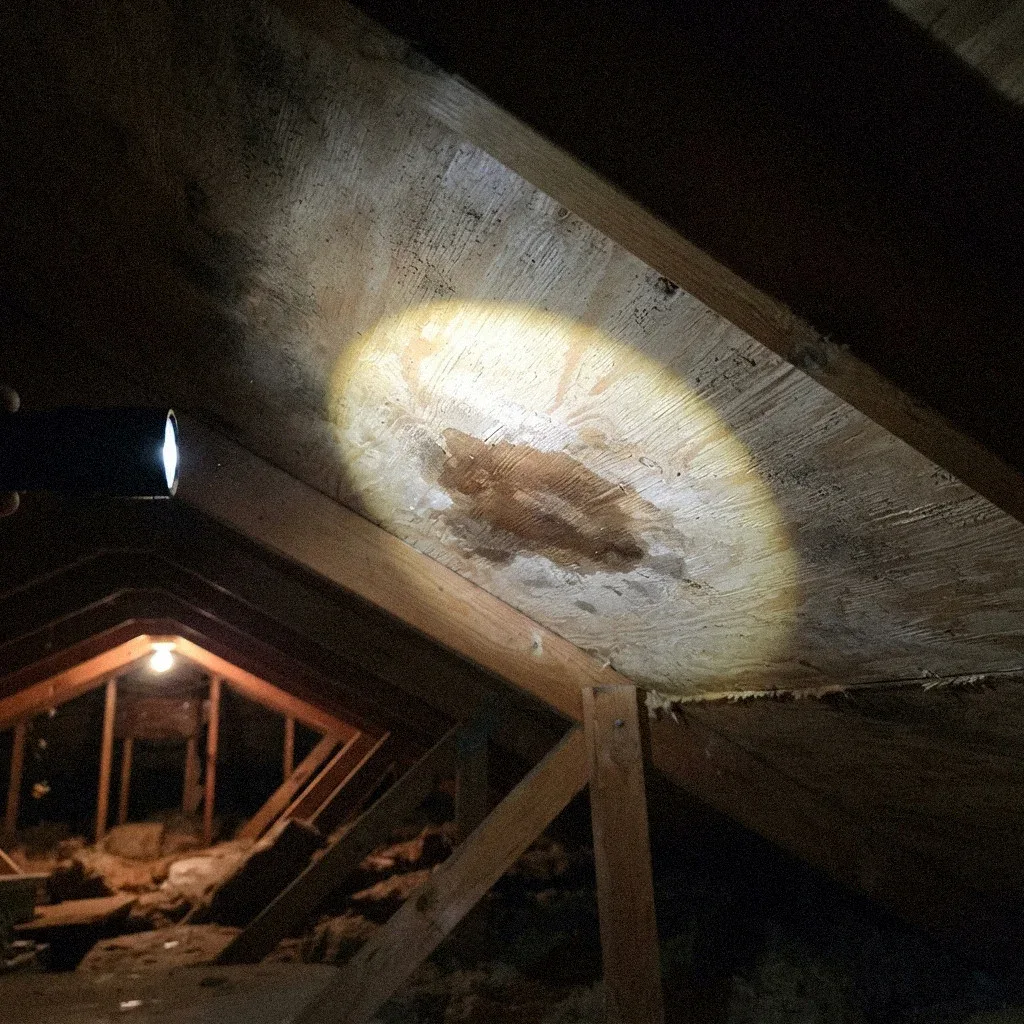
Water rarely drops straight through. It gets in at a flashing or a boot, runs along the top of the deck or down a rafter, and appears at the first low point it finds, which can be several feet away and a day or two after the rain stopped. That delay is why a homeowner ties a January stain to a January storm rather than to the wind event in October that actually started it. Tracing it means working uphill from the stain instead of assuming the roof failed directly above it.
Tile Roofs and the Wind Question
Concrete and clay tile is heavy, which leads to a fair assumption that wind is not its problem. Usually it is not, for the field. The exceptions are the edges, the ridge, and the underlayment beneath. Wind-driven rain in a hard autumn storm goes sideways under tile edges in a way steady rain never does, and it reaches the felt underneath. On an older tile roof where that felt has already gone brittle, a windy storm does considerably more than a calm one carrying the same amount of water.
What Fall Weather Does to Gutters
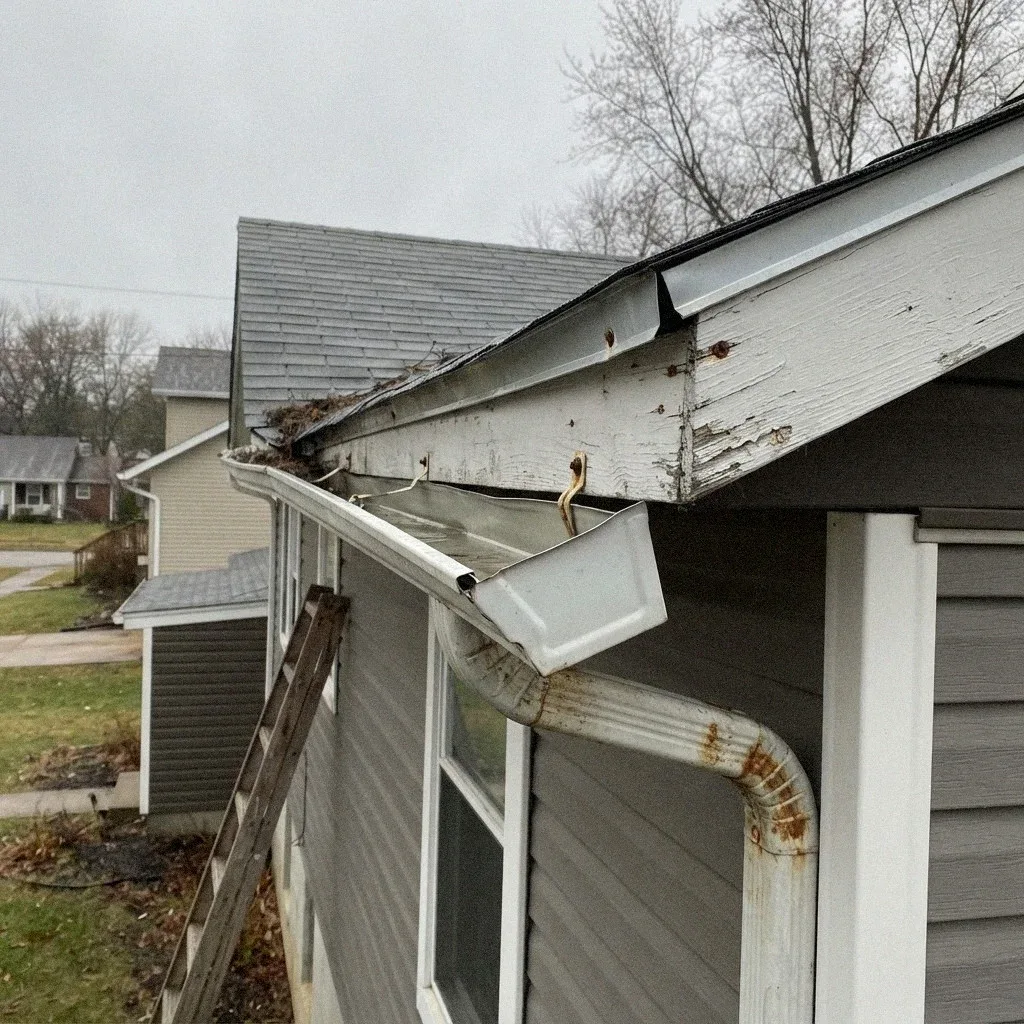
A gutter that sat empty and hot for six months is not in the condition it was in last spring. The fascia behind it has dried out, so the screws holding the hangers have less to grip, and the gutter itself is carrying whatever the wind put in it. Then the first storm asks it to move a large volume of water in a short window. That combination, rather than the weight of any single storm, is what pulls a run of gutter away from the eave.
The Window That Actually Matters
The useful time to deal with all of this is before the first storm rather than after it, and that window is narrower than people expect. Once the rain has started, a wet roof cannot be safely walked or properly inspected, and every roofer in the valley is answering leak calls instead of doing scheduled work. The same job booked in September is a maintenance visit with a choice of dates. Booked in December it is an emergency with a wait attached to it.
A Short List Worth Checking
Five things cover most of it. Whether the valleys are clear down to the metal. Whether the gutters and downspouts run rather than hold. Whether the vent boots have cracked around the pipe. Whether anything along the ridge or the rake edge has lifted. And whether the attic shows daylight or staining on the underside of the deck. None of those needs a roof walk to answer, and a ladder at the eave plus a look in the attic gets most of the way there.
What Not to Do in a Storm
Nobody should be on a wet roof, and that goes double for tile, which is slippery and cracks under a boot at precisely the moment a crack costs the most. Blind patching with roofing cement in the rain is the other thing to avoid, since it rarely holds on a wet surface and it covers the exact spot somebody will need to find afterwards. During a storm the work is indoors, containing water and photographing what it reached, and the roof waits until it is dry.
Getting Ahead of the Next One
Fall damage is almost always the visible end of something that started earlier, and that is the useful thing to take from it. A roof that loses shingles in an October wind was already past the point where its sealant held. A roof that leaks in the first storm already had a cracked boot in July. So the honest response to a fall problem is not only the repair, but a straight answer about what stage the whole covering has reached, and whether next autumn is worth planning for now.
Dealing with this in your home?
Simi Valley roofs face a different clock than shaded lots elsewhere. Tract homes off Erringer Road and near Rancho Simi Community Park sit exposed under direct sun for decades, with Santa Ana winds testing every loose tile between First Street and the Santa Susana foothills. Red flag warning days push that timeline faster than most homeowners expect.