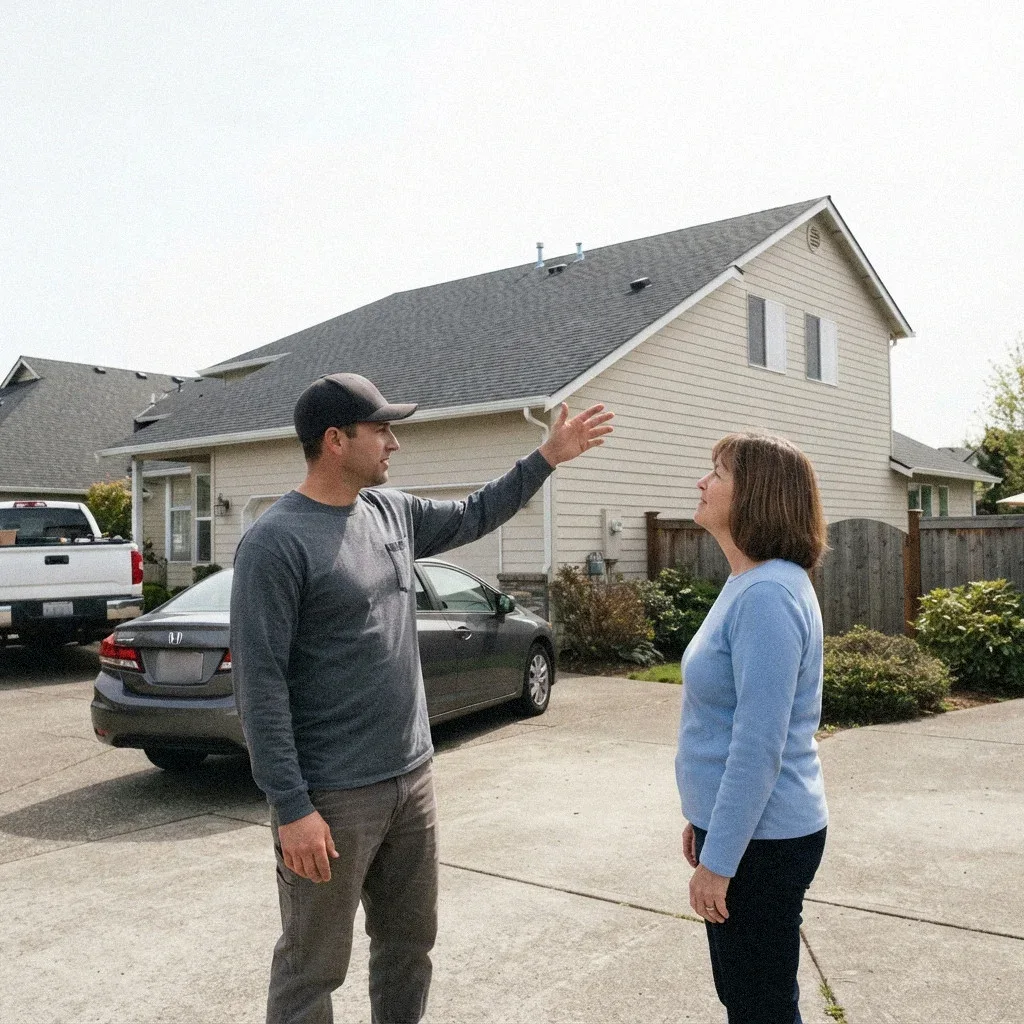
What The Valley Floor Does To Roofs
Wood Ranch and Bridle Path have ranch-style and custom hillside homes where wood shake fits the architecture, and the pitched rooflines common there give the material the slope it needs to shed water properly between courses.
Santa Ana winds and red flag warning days put shake roofs under more scrutiny in Simi Valley than in milder climates, since dry, wind-driven conditions raise ember exposure risk on an untreated wood surface near hillside brush.
Roof damage in Simi Valley usually builds quietly across dry seasons, not in a single dramatic event. Sun-baked tile can crack, fasteners loosen, and small gaps widen year after year until a hard rain finally finds them. Catching that slow wear early costs far less than waiting for water to show up inside.
Choosing Who Climbs Up There
- Service Life
- A well-maintained cedar shake roof runs roughly 20 to 30 years before widespread curling and splitting call for a full reroof.
- Roof Weight
- Wood shake sits in the middle of the range, lighter than clay tile or concrete tile but heavier than a three-tab shingle.
- Min. Slope
- Shake needs a steeper minimum slope than most coverings to shed water, which is why it rarely appears on a low-slope addition.
- Walkability
- Foot traffic is possible for quick repairs but should stay light, since a misplaced step can crack a dry, sun-baked shake.
- Repair Method
- A split or curled shake slides free and a matching replacement slides into the same course, no wider tear-off needed.
- Time of year
- Late spring through early fall gives the most reliable conditions for a wood shake reroof in Simi Valley, before red flag warning days become frequent. Scheduling around the driest stretch also lets treated shakes cure properly before Santa Ana winds pick up.
- Guide price
- an estimated $11000–$30000
The Part of the Roof You Cannot See
Wood shake is most often weighed against concrete tile, the other heavy, textured roofing common on Simi Valley's older tract homes and hillside properties near Santa Susana. The deciding difference is fire exposure and repair method. Shake is combustible unless treated and rated, and a damaged shingle is pried out and slid in one at a time. Concrete tile is noncombustible by nature and repaired by swapping a cracked tile without disturbing the field around it.
What You Can Expect to Pay
A wood shake reroof starts with sound decking, a fire-rated underlayment system, and shakes laid course by course with the exposure spaced to shed water correctly, which the licensed pros we connect you with confirm before the first course goes down.
Ridge caps, valley flashing, and the transition where shake meets a chimney or skylight decide whether the roof sheds Simi Valley's occasional hard rain, so ask the licensed pros we connect you with how each transition is detailed before work starts.
Most roof problems here start with heat, not water. Years of baking sun dry out sealants and curl shingle edges long before a storm ever tests them. By the time a leak shows up indoors, the damage on top has usually been building for a while. The licensed pros we connect you with look for that early wear.
Repair it, or replace it?
| The situation |
Usually the right call |
|---|
| A single leak with a clear source | A one-off repair |
| The same leak coming back in the same place every winter | A planned re-roof |
| Anything where the sheathing is soft underfoot | Full tear-off and replacement |
Permits That ApplyA wood shake reroof needs a permit through the city's online portal once the work exceeds the 10% or 100-square-foot threshold. Given wildfire history near Santa Susana and Corriganville, confirm current fire-rating rules with the licensed pros we connect you with before choosing materials.
What Inspectors Look for Before They Bid
A curled or split shake lets water track under the course above it before any ceiling stain appears, so a section that looks only cosmetically worn can already be passing moisture to the underlayment. Left unaddressed, that moisture reaches the decking and the repair grows from one shingle to a patch of sheathing.
Reading Your Roof Before You Climb
Replacing one split or curled shake is within reach for a careful homeowner with the right tool to slide the old piece free. Re-flashing a valley or matching fire-rated underlayment at a repair is not, and a wrong patch can undo the roof's ember resistance.
Why Wind-Driven Ember Damage Starts Small
A wood shake roof that holds moss or damp debris near the eaves keeps that section wetter than the rest of the roof, which can lead to soft, rotting wood over time. Clearing gutters and trimming overhanging branches reduces that risk.
Find Out What Repairs Would Run
Expect an estimated $11000 to $30000 for wood shake roofs here, with the pitch, the access and how much decking is sound doing most of the moving. Simi Valley's dry season leaves most tile and shingle roofs facing sun and Santa Ana wind wear, not insect damage, so a re-roof estimate here rarely carries a pest line item. If the licensed pros we connect you with find soft decking near Bridle Path or an older tract home, they'll flag moisture or age first, then check further before pricing any treatment. pricing guide.