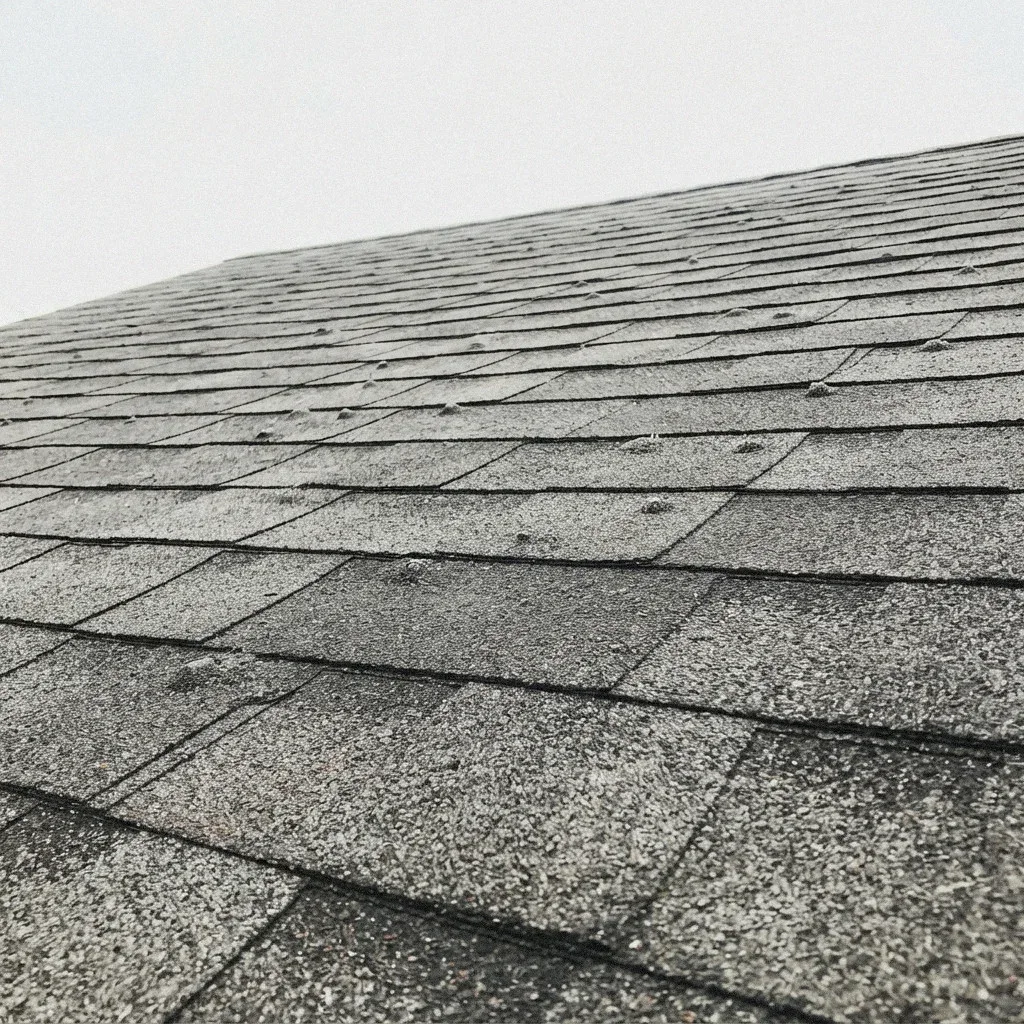
A nail pop happens when a roofing nail no longer sits flat against the shingle above it. The shank has worked partway free of the deck below, pushing the shingle up into a small bump. On a tract home off Cochran Street or Erringer Road, this shows up first as a raised dot, sometimes with a crust of sealant around it where the shingle was patched at installation and the fastener has since moved.
Spotting The Raised Bump
Walk the driveway and look up at the roofline when the sun sits low, and a nail pop reads as a tiny shadowed hump breaking the flat plane of a shingle course. It often lines up with the fasteners in the row below or above it, since a crew usually works a nail line straight across a section of roof. Homes in Wood Ranch or along Tapo Canyon Road with steep pitches make this pattern easier to spot from the street.
Why Fasteners Work Loose
Wood framing in a Simi Valley attic breathes with the seasons: summer heat drives moisture out of the sheathing, then cooler months let it creep back in. Each cycle shrinks and swells the deck slightly, and a roofing nail's shank cannot flex to match. After enough cycles the shank works upward, and the nail head rides above the shingle surface. Add a Santa Ana gust catching a tab, and the loosened fastener gets levered a little farther out with every pass.
Deck Moisture And Grip
Sheathing that has taken on moisture, even briefly during one of the valley's short but hard winter storms, loses some of its grip on a fastener. A nail set into a soft or slightly warped section of deck has less wood fiber holding it in place than one driven into solid material. As the deck dries back out under the summer heat, that loosened nail has room to work its way further out with each hot and cool cycle that follows.
The Nailing Line Explained
Every shingle has a printed nailing line, a strip showing installers exactly where the shank should pass through so it catches the course underneath and, on many designs, the reinforced laminate strip built for holding power. A nail set above that line, called a high nail, only grips a single layer of shingle instead of two. Single-layer grip fails faster under wind and heat cycling, which is why a high nail is often the first one seen backing out on an older Simi Valley roof.
Why The Exposed Head Matters
An exposed nail head breaks the shingle's water path at exactly the spot designed to be covered. Once the head sits above the surface, wind-driven rain during one of the valley's harder winter storms can find that gap and follow the shank straight down through the deck. The opening is small, often smaller than a pencil eraser, which is why a homeowner can miss it for a full season before it becomes an active pinhole leak.
How A Pinhole Leak Travels
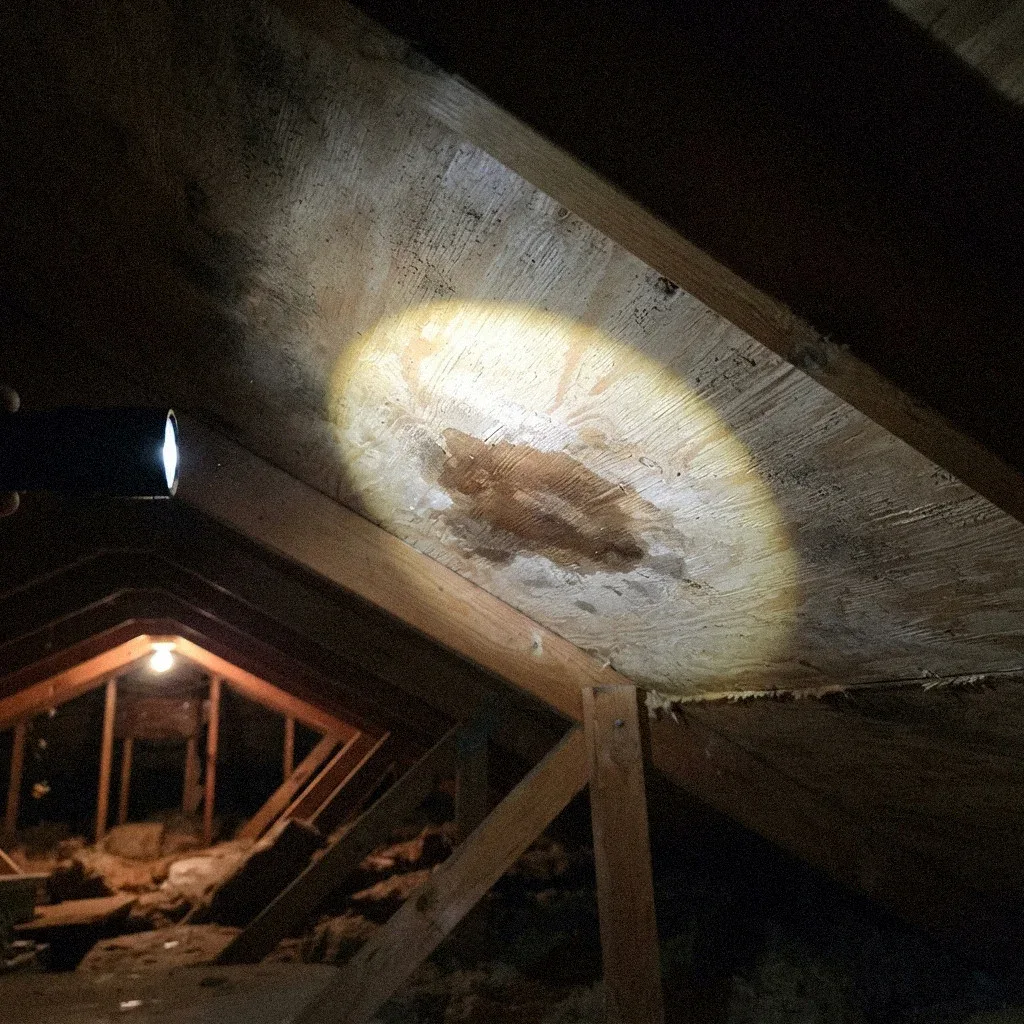
Water entering at a pinhole leak rarely drips straight down into a room right away. It tends to run along the underside of the sheathing or follow a rafter for some distance before it finds a low point or a gap in insulation to drop through. That means a stain on a ceiling in a home near Sinaloa Lake or Berylwood Park can trace back to a nail pop several feet uphill from where the water actually shows itself inside.
Shade, Slope, And Frequency
Shaded sections of roof, and roofs on hillside lots that hold moisture longer after a storm, tend to show more nail pops over the years than a roof baking in open sun all day. The sheathing under shade stays damp longer between storms, giving it more cycles of swelling and drying. North-facing slopes on homes near Santa Susana Knolls or tucked against the hills can carry more of these small raised bumps than a south-facing roof on flatter ground nearby.
A Single Pop Versus A Pattern
A single bump on an otherwise solid roof is a small, contained issue that a roofer can seal or replace in minutes. A full course of them, or bumps repeating in a straight line across several courses, points to something broader; a whole run of nails driven off the nailing line, or a section of deck that is flexing more than it should. That distinction changes how the fix gets scoped once someone is actually up there looking at it.
What A Bump Does Not Prove
A raised bump on its own does not mean the sheathing underneath has failed, and it does not mean the entire roof needs work. Most of the time it means one fastener has lost its grip while everything around it is still sound. Jumping straight to a full inspection cost or a bigger repair scope before anyone has climbed up and looked is guesswork. The bump is a signal worth checking, not proof that something bigger has gone wrong.
Checking It From The Ground
From the ground, a pair of binoculars or a phone camera zoomed in during low morning light along Los Angeles Avenue-facing rooftops can often show whether bumps sit scattered here and there or line up in a repeating row. Getting an actual answer means eyes on the shingle itself, checking whether the sealant dab has cracked, whether the shank is exposed, and whether the deck underneath feels firm or gives slightly when pressed near the fastener.
Why Timing Changes The Fix
Caught early, while the sealant dab is still intact and the shingle hasn't split around the raised head, a nail pop is a quick, contained fix. Left through another season of Santa Ana heat swings and winter rain, the shingle around it can crack, and the opening widens into a steady point of entry. The licensed pros we connect you with can check a suspected nail pop on a Simi Valley roof and tell you what it actually needs.
Dealing with this in your home?
Simi Valley roofs face a different clock than shaded lots elsewhere. Tract homes off Erringer Road and near Rancho Simi Community Park sit exposed under direct sun for decades, with Santa Ana winds testing every loose tile between First Street and the Santa Susana foothills. Red flag warning days push that timeline faster than most homeowners expect.